Boho Home Decor Ideas: Free-Spirited Style for Every Room

Bohemian style is more than a decorating trend — it is a philosophy of living that celebrates individuality, warmth, and creative freedom. Rooted in the counter-cultural movements of the 1960s and 70s and inspired by global travel, artisan craftsmanship, and the beauty of imperfection, boho home decor has evolved into one of the most enduring and beloved interior design styles of our time. Whether you are drawn to layers of richly patterned textiles, the organic warmth of rattan and macrame, or the effortless charm of a collected-over-time aesthetic, bohemian decorating offers something for every personality and every room.
This guide covers everything you need to create authentic bohemian style home decor throughout your home — from foundational design principles and essential decor elements to room-by-room styling advice and the latest boho substyles trending in 2026. For a broader look at all decorating styles and how boho fits into the bigger picture, explore our complete home decor ideas guide for 2026.
Quick Overview: What Defines Bohemian Style
The word "bohemian" originally referred to the Roma people of Bohemia and, later, to artists and writers in 19th-century Paris who rejected conventional society in favor of creative, unconventional lifestyles. By the 1960s, bohemian style had merged with the counterculture movement, embracing global influences, handcrafted goods, and a deliberate rejection of mass-produced uniformity.
Today, boho home decor is defined by several core characteristics that set it apart from every other interior design style:
- Layered textures — Woven textiles, chunky knits, velvet cushions, and natural fibers create depth and tactile richness in every room.
- Global influences — Moroccan rugs, Indian block prints, Turkish kilims, and African mud cloth bring the spirit of world travel into your home.
- Natural materials — Rattan, wicker, jute, bamboo, reclaimed wood, and terracotta ground the aesthetic in organic warmth.
- Earthy and jewel-tone palette — Warm neutrals like terracotta, sand, and cream pair with rich jewel tones such as mustard yellow, burnt orange, deep teal, and sage green.
- Collected, not decorated — Boho rooms look like they evolved over years of travel, thrifting, and meaningful collecting rather than being purchased from a single store in a single afternoon.
- Plants everywhere — Lush greenery, trailing vines, and dried botanicals are essential to the boho atmosphere.
What makes bohemian style endure while other trends cycle in and out is its fundamental flexibility. There are no rigid rules, no mandatory color codes, and no requirement for matching sets. Boho invites you to break conventions and create a space that feels authentically yours.

Boho Design Principles: The Art of Beautiful Imperfection
Understanding the core principles behind bohemian decorating is the key to creating rooms that feel genuinely boho rather than simply cluttered. These principles guide every successful bohemian style interior:
Layering Is Everything
The single most important skill in boho decorating is layering. This means layering rugs over rugs, throws over cushions over blankets, and wall hangings alongside framed art alongside trailing plants. Each layer adds visual and tactile depth. Start with a neutral base — a simple sofa, a wooden bed frame, a plain wall — and build outward with progressively more textured and colorful layers.
Mix Patterns with Confidence
Bohemian spaces fearlessly combine patterns that traditional design rules would consider clashing. A kilim rug alongside ikat pillows alongside floral curtains can work beautifully in a boho room because the unifying element is the overall warmth of the color palette, not pattern coordination. The trick is maintaining a consistent color temperature — keep everything within the warm spectrum or the cool spectrum, and patterns will harmonize naturally.
Earth Tones Meet Jewel Tones
The boho color palette balances grounding earth tones with energizing jewel accents. Use terracotta, sand, warm cream, and natural wood tones as your foundation, then punctuate with mustard yellow, deep teal, burnt sienna, sage green, or dusty rose. The ratio should lean heavily toward neutrals — roughly 70 percent earthy base to 30 percent jewel-tone accents — to prevent the space from feeling overwhelming.
Collected vs. Curated
The most authentic boho rooms tell a story. Every object has a reason for being there — a vintage find from a flea market, a textile brought back from travels, a handmade piece from a local artisan. This collected-over-time quality is what separates true bohemian style from a store-bought recreation. If you are starting from scratch, build your collection gradually. Visit thrift stores, browse antique markets, and look for handcrafted pieces with visible imperfections and natural character.
Breaking the Rules on Purpose
Conventional interior design emphasizes symmetry, matching sets, and careful coordination. Boho deliberately breaks these rules. Mismatched dining chairs, asymmetrical gallery walls, furniture arranged for conversation rather than alignment, and intentionally imperfect styling are all hallmarks of the aesthetic. The freedom to break rules is what draws many people to bohemian decorating in the first place.
Essential Boho Decor Elements
Every bohemian home relies on a vocabulary of signature elements that instantly communicate the style. Here are the pieces that form the foundation of any boho home decor scheme:
Macrame
From wall hangings and plant hangers to curtain panels and table runners, macrame is the quintessential boho textile. The knotted cotton or jute fiber adds handcrafted texture to walls, windows, and shelving. For a modern take, choose macrame in natural undyed cotton or linen rather than the heavy, dark-stained versions of the 1970s. A large-scale macrame wall hanging can serve as a stunning focal point above a sofa or bed. If you enjoy crafting, macrame is also one of the most satisfying DIY home decor projects to learn.
Rattan and Wicker
Rattan chairs, wicker baskets, cane-front cabinets, and bamboo light fixtures bring natural warmth and organic shape to boho interiors. The iconic peacock chair remains a statement piece, but smaller rattan accents like mirror frames, shelf brackets, and pendant lights work beautifully in more subtle applications. Rattan furniture also pairs exceptionally well with rustic home decor elements for a nature-inspired hybrid look.
Woven Textiles and Rugs
Kilim rugs, Moroccan Beni Ourain carpets, Turkish flatweaves, and handwoven throws are the workhorses of boho styling. Layer multiple rugs in a single room — a large neutral jute rug as a base with a smaller, more colorful kilim layered on top. Look for rugs with visible weaving imperfections, fringe edges, and faded patina that suggest age and authenticity.
Floor Cushions and Poufs
Nothing says boho quite like additional seating at floor level. Moroccan leather poufs, oversized floor cushions in ethnic prints, and meditation cushions invite casual, relaxed gathering. Place them around a low coffee table, beside a fireplace, or in a reading nook to create intimate, informal seating areas.
Plants, Dried Flowers, and Pampas Grass
Greenery is non-negotiable in bohemian spaces. Trailing pothos, hanging ferns, large-leafed monstera, and clusters of succulents bring life and freshness to every room. For a fuller exploration of styling with plants, see our guide to indoor plant decor ideas. Complement living plants with dried flower arrangements, eucalyptus bundles, and pampas grass plumes for texture that requires no watering and lasts year-round.
Boho Living Room Decor
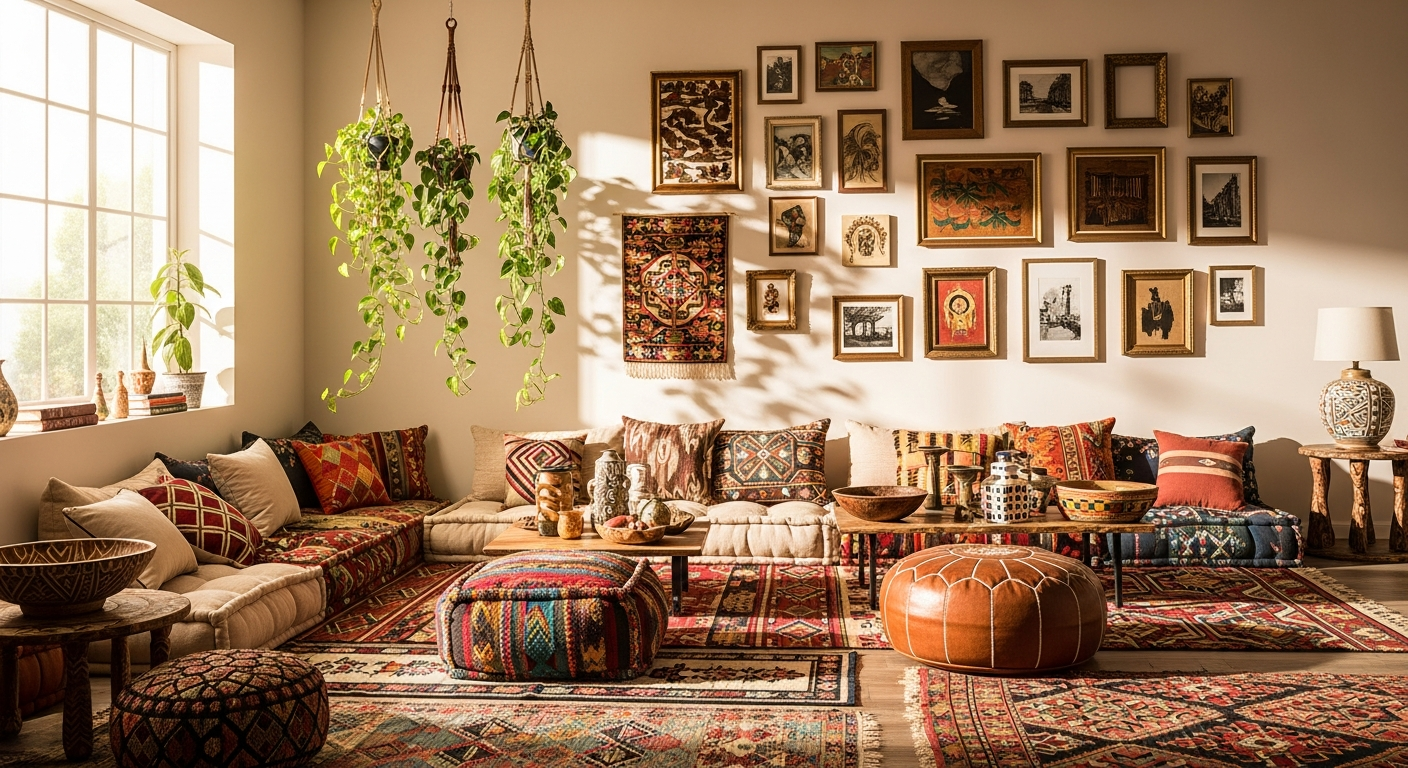
The living room is where bohemian style truly shines — it is the room where layering, pattern mixing, and eclectic collecting come together most dramatically. Here is how to create a boho living room that feels both inviting and visually rich:
Layered Rugs
Start with a large natural-fiber rug — jute or sisal — as your foundation layer. On top, place a smaller vintage kilim, Moroccan rug, or Persian runner at an angle. The overlap creates visual interest and defines seating zones within the room. Do not worry about perfect alignment; the slightly askew placement is part of the charm.
Eclectic Gallery Wall
A boho gallery wall mixes media types freely: framed botanical prints alongside macrame hangings alongside woven baskets alongside mirrors alongside small shelves holding tiny plants. Use frames in different materials — wood, brass, rattan — and vary the sizes dramatically. For detailed gallery wall techniques, explore our wall decor ideas guide.
Rattan and Wicker Furniture
Incorporate at least one rattan or wicker statement piece — a peacock chair, a rattan bookshelf, or a wicker-sided credenza. Pair these organic pieces with a plush, low-slung sofa in a neutral linen or cotton slipcover. The contrast between structured wicker and soft, sink-in upholstery is quintessentially boho.
Floor Seating and Low Tables
Add floor cushions and poufs around a low wooden or brass-topped coffee table. This encourages casual, intimate gathering and gives the room a relaxed, ground-level energy. A carved Indian table, a vintage trunk, or a reclaimed wood slab all work beautifully as boho coffee table alternatives.
Boho Lighting
Replace standard fixtures with woven pendant lights, Moroccan brass lanterns, beaded chandeliers, or macrame-wrapped pendants. Layer in table lamps with ceramic or textured bases and consider adding string lights draped along a bookshelf or window frame for warm, ambient glow. The goal is soft, golden light from multiple sources rather than a single bright overhead fixture.
Boho Bedroom Decor
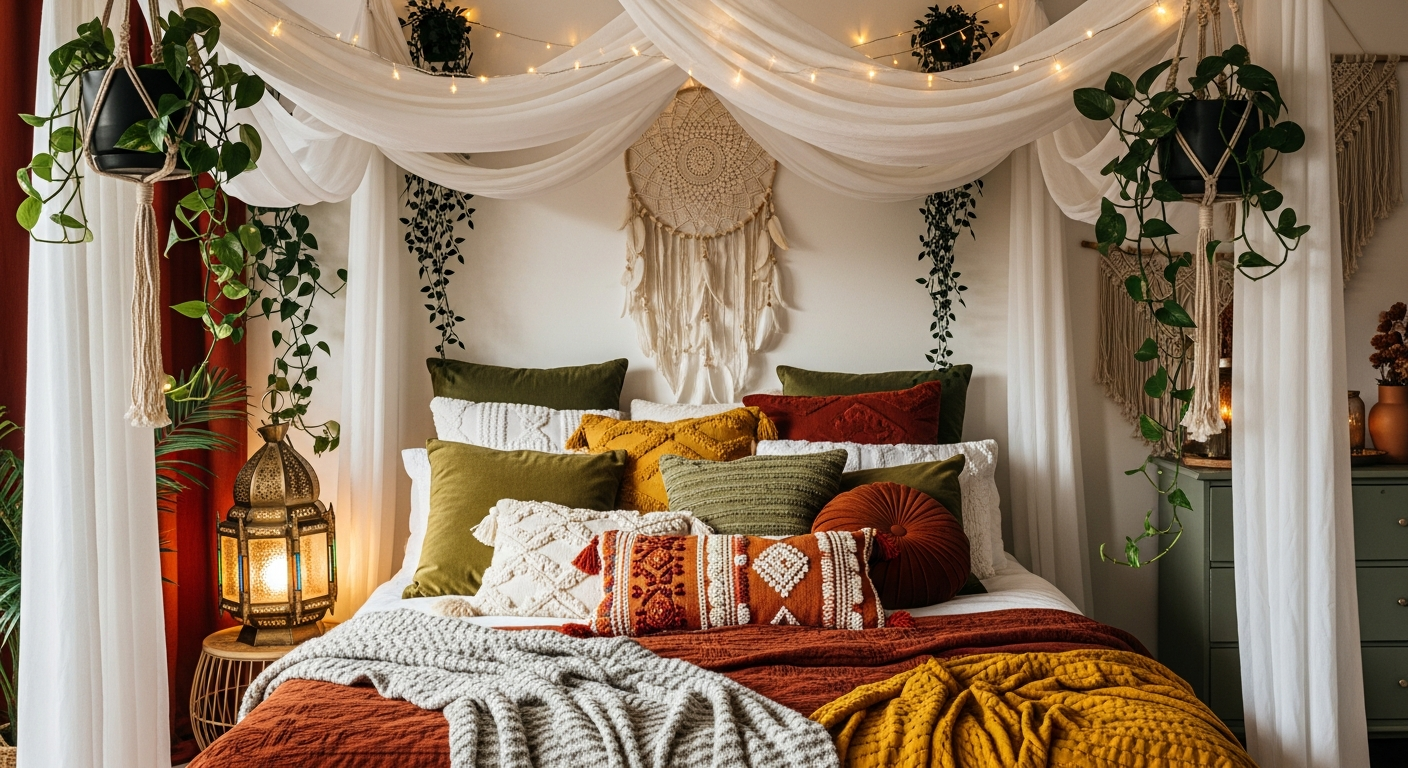
The boho bedroom is a sanctuary of softness, warmth, and dreamy romanticism. This is where the layering principle reaches its peak, transforming the bed into a cloud of textiles and the walls into a gallery of personal treasures.
Canopy or Macrame Headboard
Create a dramatic focal point with a sheer fabric canopy draped from the ceiling above the bed, or install a large-scale macrame wall hanging as a textural headboard. Both options add height, romance, and visual softness. For a budget-friendly version, hang a vintage textile or a woven tapestry behind the bed instead of a traditional headboard.
Layered Bedding
Start with white or cream linen sheets, add a textured cotton coverlet, layer a vintage quilt or Moroccan wedding blanket at the foot, and pile on mismatched throw pillows in varying sizes, textures, and patterns. The bed should look impossibly inviting — abundant, soft, and slightly undone. This layered approach also aligns beautifully with cozy home decor principles.
Dreamcatchers and Wall Hangings
Hang a dreamcatcher above the bed or beside a window. Add woven wall hangings, small shelves with crystals and candles, and framed prints of botanical illustrations or celestial motifs. The boho bedroom wall is personal and curated, telling the story of the person who sleeps there.
Hanging Plants and Trailing Greenery
Install hooks from the ceiling for hanging planters with trailing pothos, string of pearls, or spider plants. Position a large floor plant like a fiddle-leaf fig or a bird of paradise in the corner. The combination of overhead and floor-level greenery creates a lush, garden-like atmosphere.
Fairy Lights and Soft Glow
String fairy lights along the headboard wall, drape them through a canopy, or fill glass jars and lanterns with them for a warm, magical glow. Complement with beeswax candles, salt lamps, and bedside lanterns. The boho bedroom should feel like a warm cocoon when the lights dim.
Boho Kitchen and Bathroom
Bringing bohemian style into functional spaces like the kitchen and bathroom requires a thoughtful balance between practicality and aesthetic warmth. These rooms benefit from boho accents without sacrificing usability.
Open Shelving with Pottery and Ceramics
Replace upper cabinets with open wooden shelves and display handmade pottery, stoneware bowls, vintage glass jars, and woven baskets. The visible storage becomes part of the decor, showcasing beautiful everyday objects. Group items in odd numbers and vary heights for the most visually appealing arrangement.
Woven Baskets for Storage
Use woven baskets of varying sizes for storing produce, linens, toiletries, and cleaning supplies. Hang baskets on the wall as a functional gallery, or stack them on countertops and under-sink areas. Basket storage is both beautiful and practical — a hallmark of bohemian functionality.
Natural Wood Accents
Introduce butcher block countertops, wooden cutting boards displayed as decor, reclaimed wood open shelving, or a live-edge breakfast bar. Natural wood tones warm up kitchens that might otherwise feel sterile, especially in rental apartments with white cabinetry.
Terracotta and Earthy Tiles
Terracotta floor tiles, Zellige backsplash tiles, or hand-painted Moroccan tile patterns bring warmth and global character to both kitchens and bathrooms. These tiles age beautifully, developing a patina that enhances the boho aesthetic over time.
Boho Bathroom Tiles and Textiles
In the bathroom, use patterned cement tiles or Moroccan-inspired mosaics for the floor or shower wall. Add a vintage Turkish towel, a woven bath mat, a macrame-framed mirror, and potted ferns on the vanity. Even a small bathroom can feel bohemian with the right textiles and accessories.
Boho Substyles for 2026
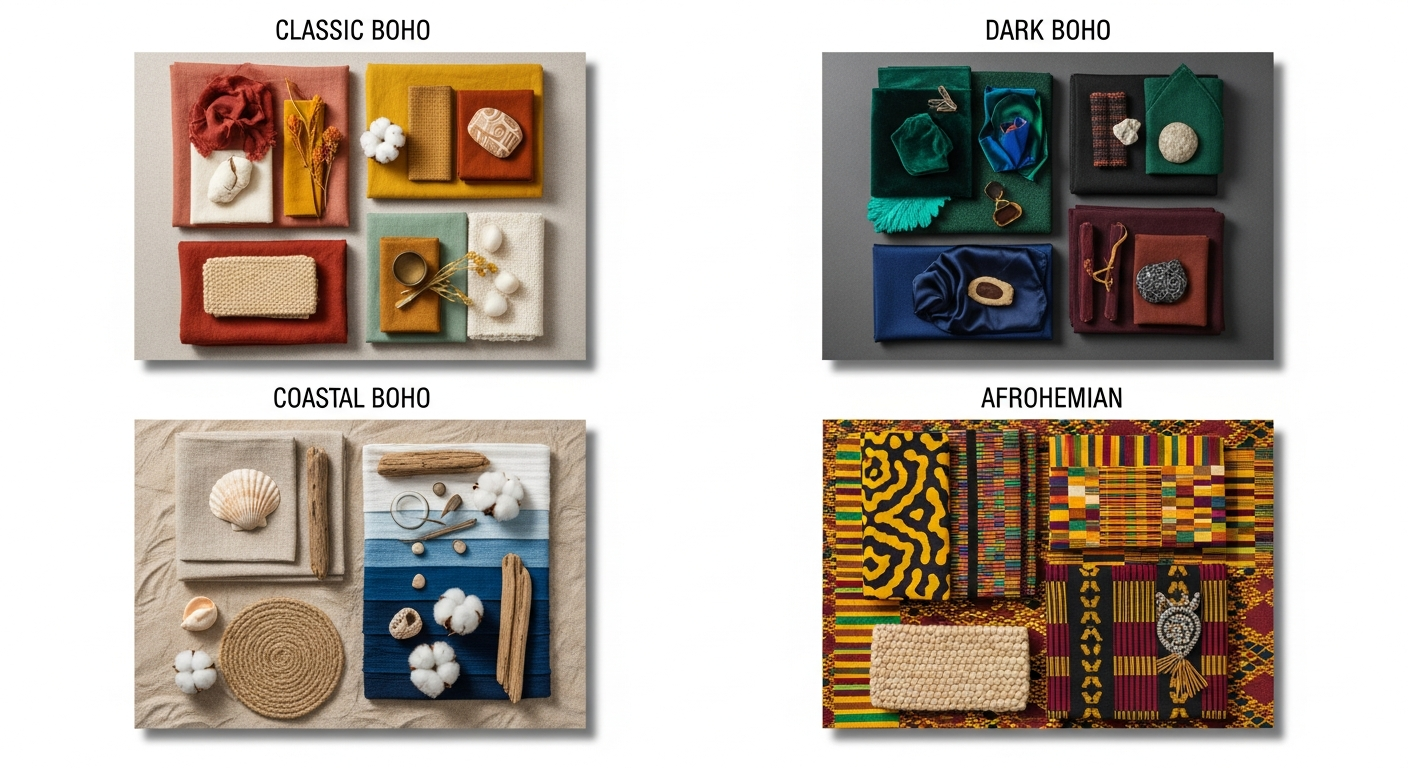
Bohemian style is not monolithic — it has branched into several distinct substyles that allow you to customize the aesthetic to your personal taste. Here are the five boho substyles gaining the most momentum in 2026:

Dark Boho
Dark boho replaces the typical light, airy palette with deep, moody tones — black walls, dark forest green, deep burgundy, and charcoal. The signature boho textures remain (macrame, rattan, woven textiles) but against a dramatically dark backdrop. Think velvet in midnight blue, brass lanterns glowing against dark walls, and deep-toned vintage rugs. Dark boho suits bedrooms and living rooms that crave intimacy and drama.
Coastal Boho
Coastal boho merges beachy relaxation with bohemian warmth. The palette lightens to sandy neutrals, bleached whites, soft seafoam, and natural driftwood tones. Rattan takes center stage alongside seagrass, jute, and linen. Shell accents, coral motifs, and ocean-inspired art complement the free-spirited layering of traditional boho. This substyle works brilliantly in beach houses and any home seeking a relaxed, sun-washed atmosphere.
Modern Boho
Modern boho streamlines the traditional bohemian aesthetic by reducing clutter and pairing boho textures with clean, contemporary lines. A modern boho living room might feature a sleek mid-century sofa layered with kilim pillows, a single statement macrame hanging on an otherwise minimal wall, and a few carefully chosen rattan accents. The key is restraint — fewer pieces, each one carefully selected. For more on balancing modern and decorative elements, see our guide to modern home decor ideas.
Afrohemian
Afrohemian style blends African-inspired textiles, patterns, and art with bohemian layering and warmth. Expect bold Kente cloth pillows, mud cloth throws, carved wooden masks, beaded wall hangings, and warm earth-tone palettes inspired by the African landscape. This substyle celebrates African diaspora culture and craftsmanship while embracing the free-spirited, collected quality of bohemian design.
Jungalow
Coined by designer Justina Blakeney, the jungalow aesthetic takes boho maximalism to its most vibrant expression. Walls are painted in bold colors or covered in tropical wallpaper, every surface holds a plant, and patterns clash joyfully with abandon. Jungalow is boho with the volume turned all the way up — ideal for maximalists who want their home to feel like a lush, colorful jungle retreat.
Boho on a Budget
One of the most appealing aspects of bohemian style is that it does not require a designer budget. In fact, some of the most authentic boho homes are furnished almost entirely with secondhand finds, handmade pieces, and repurposed treasures.
Thrift Store and Flea Market Finds
Thrift stores are goldmines for boho decor. Look for vintage rugs, woven baskets, ceramic vases, brass candlesticks, wooden frames, and fabric remnants. Estate sales and flea markets are especially good for finding one-of-a-kind pieces with the patina and character that boho style celebrates. The hunt is half the fun — and each find adds a story to your space. For more ideas on sourcing unique vintage pieces, explore our vintage home decor guide.
DIY Boho Projects
Many signature boho elements are surprisingly easy to make yourself. Macrame wall hangings, dip-dyed curtains, painted terracotta pots, woven wall baskets, and no-sew pillow covers are all weekend projects that cost a fraction of store-bought equivalents. YouTube tutorials and craft blogs offer free step-by-step guidance for every skill level.
Where to Splurge vs. Save
Spend more on pieces you use daily and that anchor the room — a quality sofa, a statement rug, and good lighting fixtures. Save on accessories, accent pillows, wall decor, and decorative objects, which are easily found at thrift stores, discount retailers, and online marketplaces. A single beautiful vintage rug can elevate an entire room of budget-friendly furnishings.
Frequently Asked Questions About Boho Decor
What is the difference between boho and bohemian style?
There is no difference — boho is simply the shortened, casual form of bohemian. Both terms refer to the same free-spirited, layered, globally-inspired decorating style rooted in artistic counter-culture. Boho chic, bohemian chic, and boho style are all interchangeable terms.
Can boho decor work in a modern home?
Absolutely. Modern boho is one of the fastest-growing substyles, combining clean architectural lines with boho textures and warmth. A modern home with minimal trim, open layouts, and neutral walls provides an excellent canvas for layered boho textiles, rattan accents, and collected art. The contrast between sleek architecture and organic, handcrafted decor creates a sophisticated, livable balance.
Is boho decor going out of style?
Bohemian style has endured for decades because it is rooted in personal expression rather than trend cycles. While specific elements rise and fall in popularity — pampas grass surged in 2021 and has since softened — the core principles of layering, natural materials, global influence, and individuality remain timeless. In 2026, boho continues to evolve through substyles like dark boho and Afrohemian while maintaining its foundational appeal.
How do I make boho decor look intentional rather than messy?
The key is a cohesive color palette. Choose three to four dominant colors and repeat them throughout the room. Layer textures within that palette — a terracotta-and-cream scheme with varying textures of linen, wool, rattan, and ceramic will feel rich but unified. Edit ruthlessly: not every surface needs an object. Leave breathing room between vignettes so the eye can rest.
What are the best boho colors for a small room?
In small rooms, lean toward the lighter end of the boho palette — warm whites, sandy beige, soft sage, and pale terracotta. Use jewel-tone accents sparingly in pillows, art, and small objects rather than on large surfaces. A light jute rug, white linen curtains, and a few carefully chosen colorful textiles keep the room feeling open while still delivering boho warmth.
Can I mix boho with other decorating styles?
Yes, and this is where boho excels. Boho pairs naturally with rustic style (shared love of natural materials), mid-century modern (shared love of organic shapes), coastal (shared relaxed atmosphere), and even industrial (the contrast between raw metal and soft textiles creates visual tension). The key is maintaining the boho principles of layering and warmth while borrowing structural elements from the complementary style.
What is the most important boho decor element to start with?
Start with a statement rug. A beautiful vintage or handwoven rug anchors the room, establishes the color palette, and immediately communicates bohemian style. Everything else — pillows, throws, wall hangings, plants — can be layered around it over time. A single great rug transforms a room more dramatically than any other single purchase.
How do I incorporate boho style into a rental apartment?
Focus on non-permanent elements: layered rugs over existing flooring, removable wall hooks for macrame and art, standing plants and hanging planters with ceiling hooks, textile-based changes like curtains and cushion covers, and freestanding furniture like rattan bookshelves and floor lamps. Everything should be removable without damage when you move out.
Visualize Boho Style in Your Space
Reading about boho decor is inspiring, but seeing how these ideas look in your actual rooms is transformative. Our AI Room Designer lets you upload a photo of any room in your home and instantly visualize bohemian styling — layered rugs, macrame wall hangings, rattan furniture, lush greenery, and warm boho color palettes — applied to your unique space.
Whether you want to explore dark boho drama for your bedroom, coastal boho serenity for your living room, or jungalow vibrancy for your home office, the Room Designer generates photorealistic previews that help you make confident decorating decisions before spending a single dollar. Try different substyles, compare color palettes, and experiment with varying levels of maximalism — all from the comfort of your couch.
Try the AI Room Designer now and bring your bohemian vision to life.
For more style inspiration, explore our guides to rustic home decor, vintage home decor, and cozy home decor — styles that pair beautifully with bohemian elements. Browse our design gallery for real-world boho transformations, or check our pricing page to get started with your own boho makeover.
Boho Home Decor Ideas FAQs
Written by
Emily Rodriguez
Interior Design Editor covering living spaces, styling trends, and room makeovers. Former Architectural Digest contributor with a focus on accessible, budget-conscious design.