How to Use Geometric Patterns in Decor: 6 Striking Tips for Modern Homes
Quick Summary
This guide covers 6 expert tips for incorporating geometric patterns into home decor to create a modern, dynamic look. Learn how to apply geometric designs through tiles, textiles, wall art, and rugs while maintaining visual balance through scale variation, color restraint, and strategic placement.
Why Geometric Patterns Are the Backbone of Modern Decor
Understanding how to use geometric patterns in home decor unlocks one of the most versatile and visually dynamic design tools available. Geometric patterns — hexagons, chevrons, herringbone, diamonds, triangles, and repeating linear designs — have been used in architecture and interiors for thousands of years, from ancient Roman mosaics to Moroccan zellige tiles to Art Deco skyscrapers. In contemporary design, geometric patterns add structure, energy, and visual rhythm to spaces that might otherwise feel flat or monotonous. Browse our living room ideas gallery to see geometric patterns in action across a range of styles.
According to trend data from the American Society of Interior Designers, geometric patterns ranked among the top five most requested design elements in 2025 and 2026, with demand driven by their compatibility with modern, mid-century, Scandinavian, and even transitional aesthetics. The appeal lies in their mathematical precision — geometric shapes create visual order that the human eye finds inherently satisfying. The challenge lies in using them with restraint, because the strong visual presence of geometric patterns can overwhelm a room if applied without a plan.
Tip 1 — Start with One Bold Geometric Statement Piece
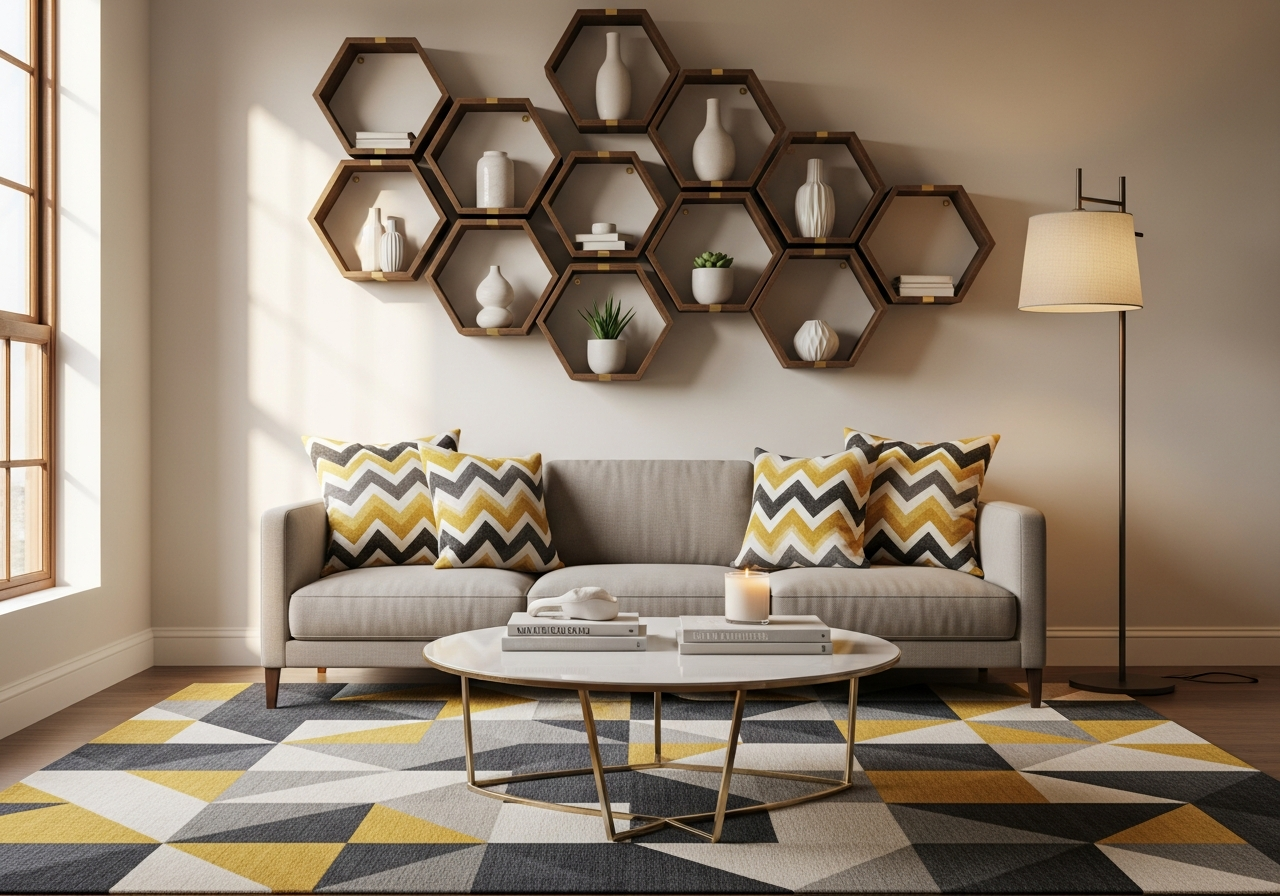
The safest entry point for geometric patterns is a single statement piece that anchors the room's geometry. A large-scale geometric area rug, a bold hexagonal tile backsplash, a chevron accent wall, or an oversized geometric wall art print establishes the pattern vocabulary without overwhelming the space. This statement piece becomes the room's geometric anchor — all other pattern choices reference its scale, color, and style.
Choose the statement placement based on the room's focal point. In living rooms, a geometric rug beneath the coffee table is the most impactful position because it grounds the seating arrangement and is visible from every angle. In kitchens, a geometric tile backsplash behind the stove or sink draws the eye to the workspace without competing with cabinetry. In bathrooms, a geometric floor tile transforms the smallest room into a design statement. In bedrooms, a geometric headboard wall or large-scale print above the bed creates a focal point without introducing visual noise throughout the sleep space. For bedroom-specific decorating strategies, see our bedroom decorating guide.
Tip 2 — Vary the Scale of Patterns Across the Room
When using geometric patterns in multiple elements throughout a room, vary the scale dramatically to prevent visual competition. Large-scale patterns (6-inch or larger repeat) work best on floors, accent walls, and area rugs. Medium-scale patterns (2 to 5-inch repeat) suit throw pillows, curtains, and upholstery. Small-scale patterns (under 2-inch repeat) are ideal for accessories like vases, picture frames, and tableware. This hierarchical scale approach ensures each pattern element occupies its own visual lane.
The 60/30/10 pattern distribution rule from professional interior design applies perfectly to geometric decor. Dedicate 60% of the room's visual field to solid colors or subtle textures (walls, large furniture, flooring). Assign 30% to your primary geometric pattern (the statement piece — rug, accent wall, or backsplash). Reserve 10% for a secondary geometric accent at a different scale (pillows, a vase, a throw blanket). This ratio keeps the geometric elements impactful without tipping into visual chaos. For more on pattern mixing techniques, see our guide on how to mix patterns in decor.
Tip 3 — Anchor Geometric Patterns with a Restrained Color Palette
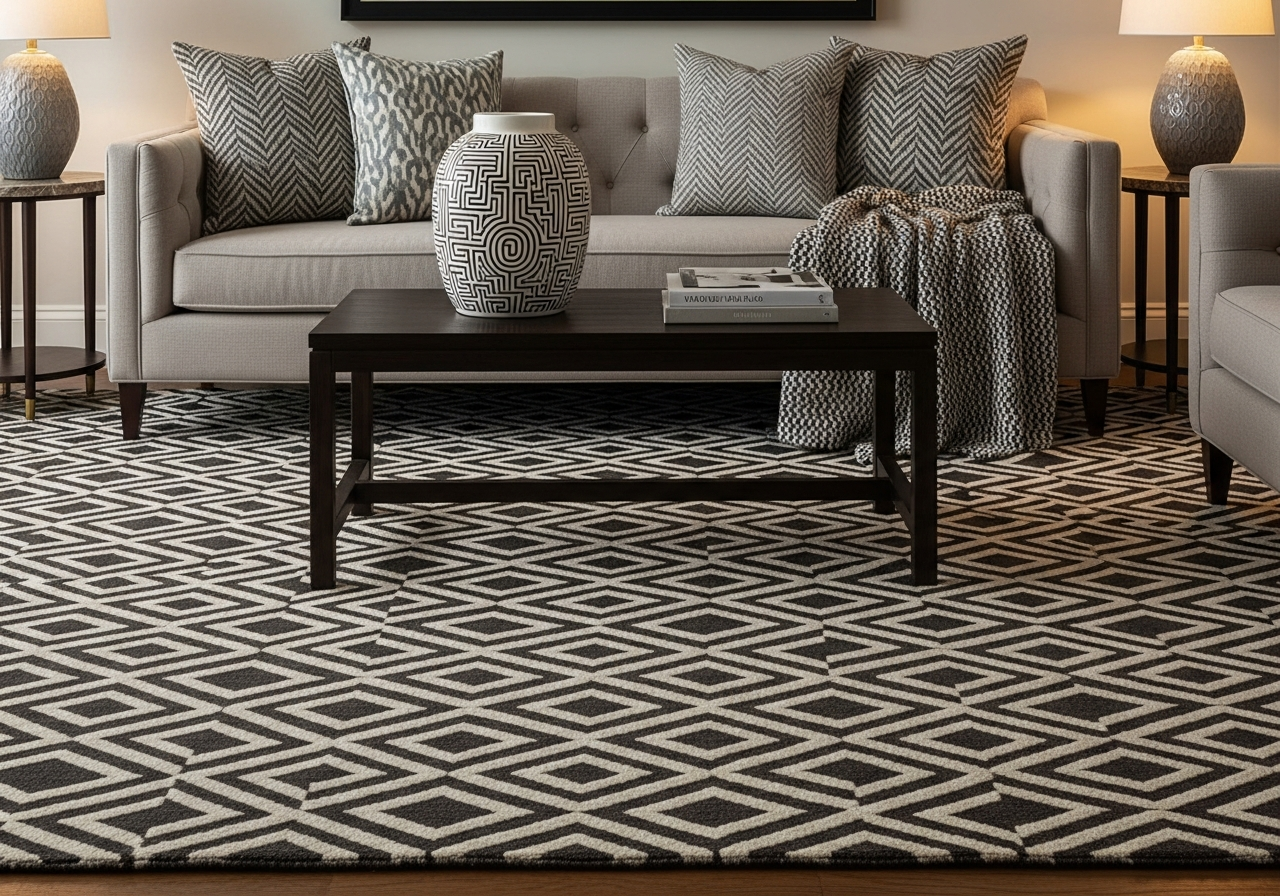
The strongest geometric pattern applications use a limited color palette — two to three colors maximum within the pattern itself. Monochromatic geometrics (black and white, navy and cream, gray tones) create the boldest graphic impact while remaining easy to coordinate with surrounding decor. Two-tone patterns let the geometric shape do the talking without the added complexity of color mixing. When a geometric pattern includes more than three colors, it begins to read as busy rather than structured.
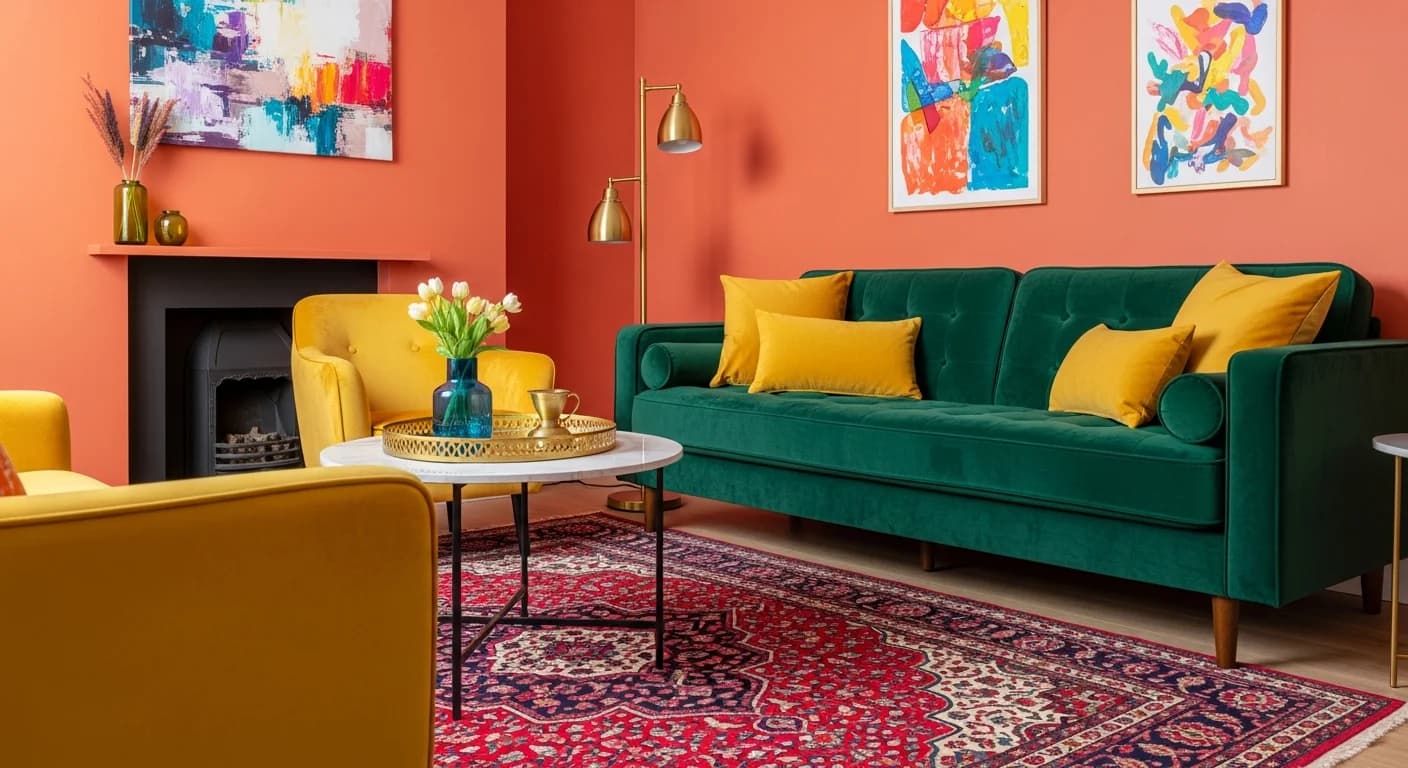
Connect the pattern colors to the room's existing palette. If your living room features a navy sofa and warm wood furniture, a geometric rug in navy, cream, and a warm caramel accent pulls the entire room together. The rug's colors reference existing elements, making the pattern feel integrated rather than introduced. For color palette guidance, see our guide on how to choose a color palette for home decor. Avoid introducing new colors through geometric patterns — the pattern itself adds enough visual energy without the added stimulus of unfamiliar hues.
Tip 4 — Apply Geometric Tiles for Permanent, High-Impact Design
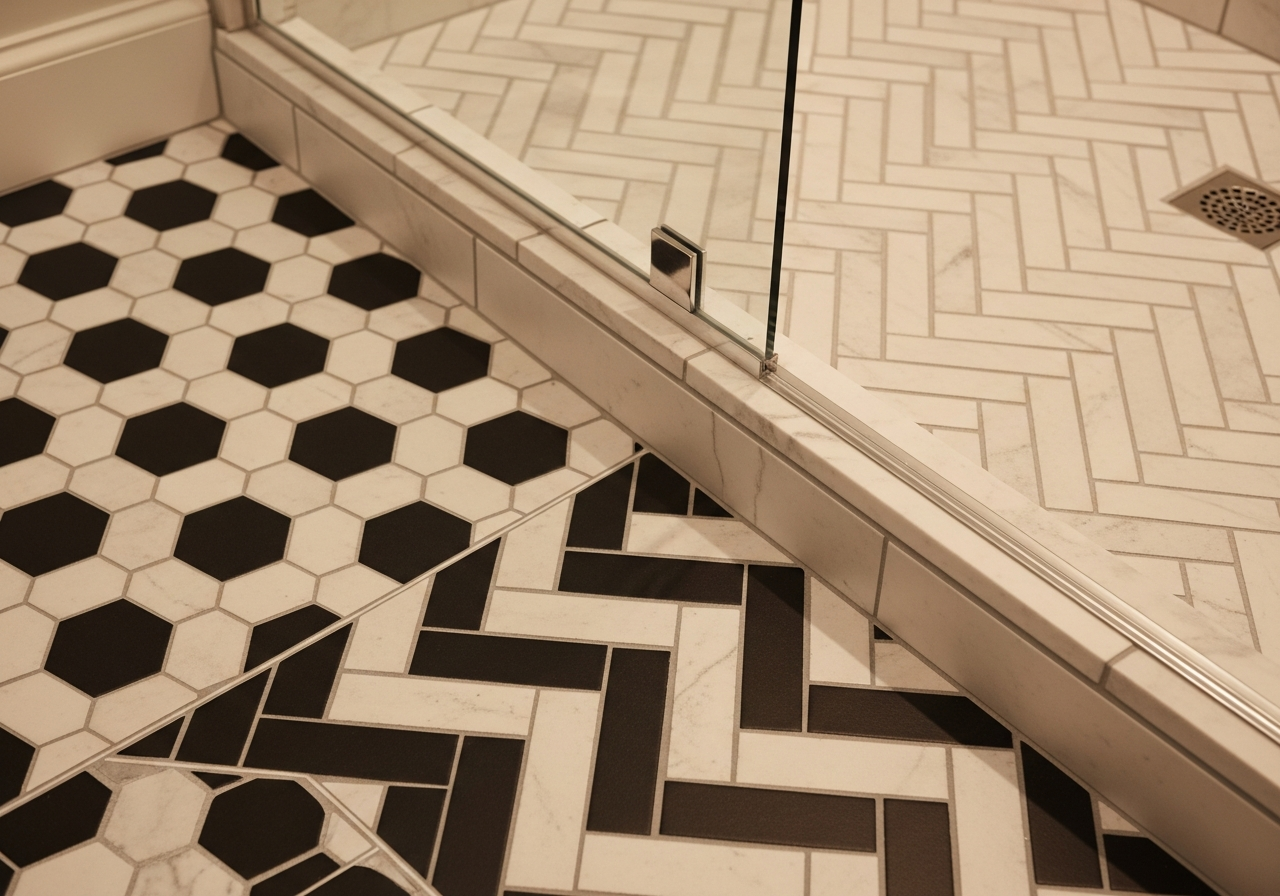
Geometric tiles represent the most dramatic and permanent way to incorporate geometric patterns into a home. Hexagonal tiles in matte white, glossy black, or natural marble create a honeycomb effect that suits both modern and transitional spaces. Encaustic cement tiles with Moroccan-inspired geometric motifs add artisanal character to kitchen backsplashes, bathroom floors, and entryway surfaces. Herringbone-laid subway tiles transform a standard rectangle into a dynamic pattern through installation angle alone, without requiring specially shaped tiles. For more tile pattern inspiration, browse our kitchen backsplash ideas.
When selecting geometric tiles, consider the scale of the installation area. Large hexagons (6-inch or larger) work best on floors where the full pattern unfolds across the surface. Small hexagons (1 to 2 inches, often called penny tiles) suit shower floors and small powder room floors where they add texture without overwhelming the compact space. For backsplashes, medium-scale geometric tiles (3 to 4 inches) provide enough pattern visibility at the typical 18 to 24-inch viewing distance without looking too busy. Grout color dramatically affects the pattern's visibility — matching grout to the tile minimizes the grid effect, while contrasting grout accentuates each geometric shape.
Tip 5 — Layer Geometric Textiles for Flexible, Non-Permanent Pattern
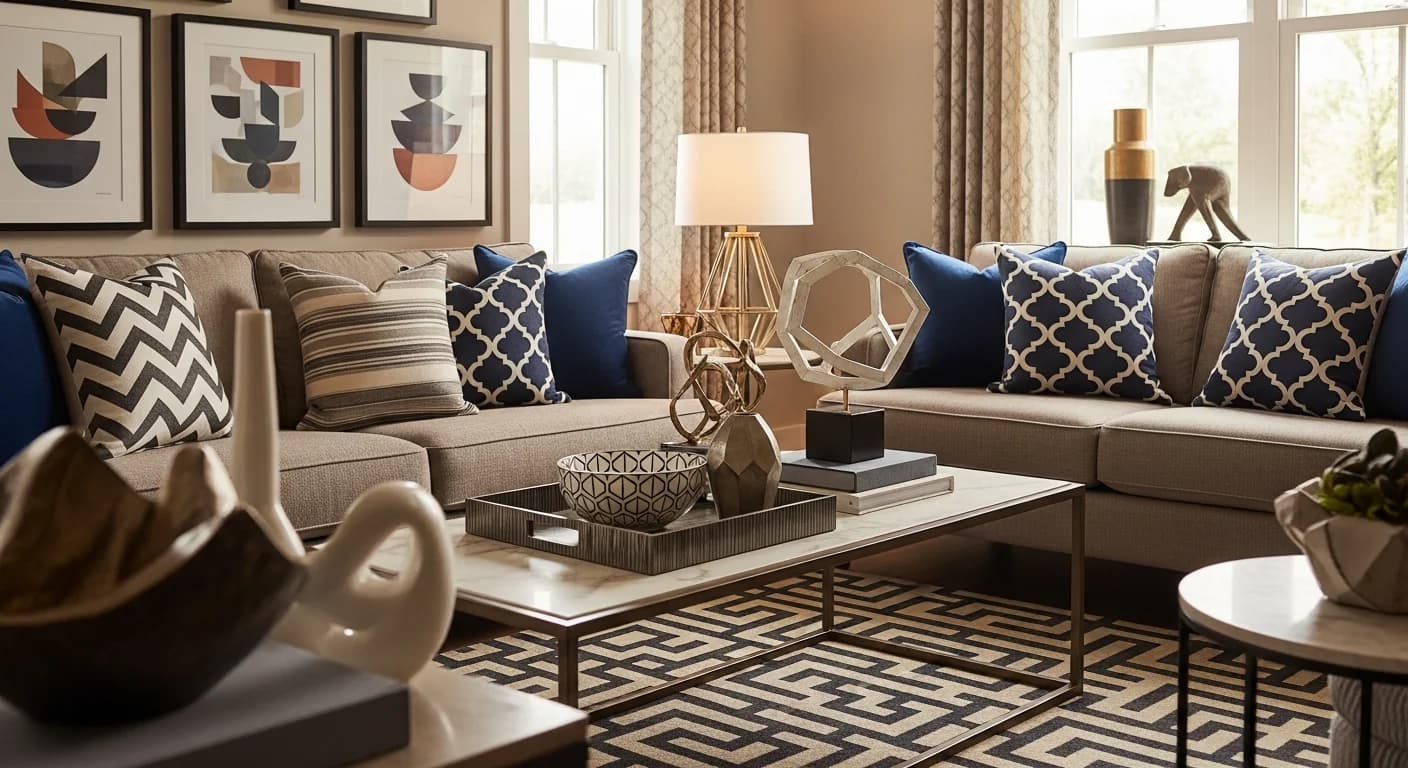
Textiles offer the most flexible and reversible way to introduce geometric patterns. Throw pillows in chevron, diamond, or Greek key patterns add geometry to sofas and beds without permanent commitment. A geometric throw blanket draped over an armchair introduces pattern and texture simultaneously. Curtain panels in a bold geometric print transform a window wall into a design feature that can be swapped seasonally.
The layering strategy for geometric textiles follows the same scale principle as tiles: mix one large-scale geometric textile (a rug or curtain) with one or two small-scale geometric accents (pillows, a table runner). Keep the geometric textiles within the same color family to maintain cohesion. A herringbone wool throw in charcoal gray pairs naturally with a geometric pillow in charcoal and cream, creating pattern variety through shape while maintaining color unity. Avoid placing two bold-scale geometric textiles side by side — a geometric rug directly beneath geometric curtains creates visual competition that exhausts the eye.
Tip 6 — Use Geometric Wall Art and Decor Objects as Finishing Accents
Geometric wall art, mirrors, shelves, and decorative objects serve as the finishing layer that ties the geometric theme together without adding full-surface pattern. A set of hexagonal wall shelves arranged in a honeycomb cluster creates both storage and geometric visual interest. A round mirror with a sunburst or geometric metal frame adds a focal point with inherent geometric structure. Metal or wood geometric wall sculptures — abstract arrangements of triangles, circles, or intersecting lines — function as three-dimensional art that casts interesting shadows.
On surfaces like coffee tables, console tables, and shelves, geometric objects add subtle pattern reinforcement. A faceted ceramic vase, a geodesic terrarium, a set of geometric bookends, or a concrete hexagonal planter introduces the geometric vocabulary at the smallest scale. These objects reference the larger geometric elements in the room — the hexagonal shelf echoing the hexagonal tile, the triangular bookend echoing a chevron rug — creating a thread of visual continuity that makes the design feel cohesive and intentional rather than random.
Geometric Pattern Style Guide by Room
| Room | Best Geometric Application | Recommended Patterns | Scale |
|---|---|---|---|
| Living Room | Area rug, throw pillows, wall art | Chevron, diamond, Greek key | Large rug + small pillows |
| Kitchen | Backsplash tile, floor tile | Hexagon, herringbone, Moroccan | Medium (3-4" tile) |
| Bathroom | Floor tile, shower wall, mirror frame | Hexagon, penny tile, chevron | Small-medium (1-4" tile) |
| Bedroom | Headboard wall, bedding, accent rug | Subtle herringbone, diamond, linear | Medium-large (muted tones) |
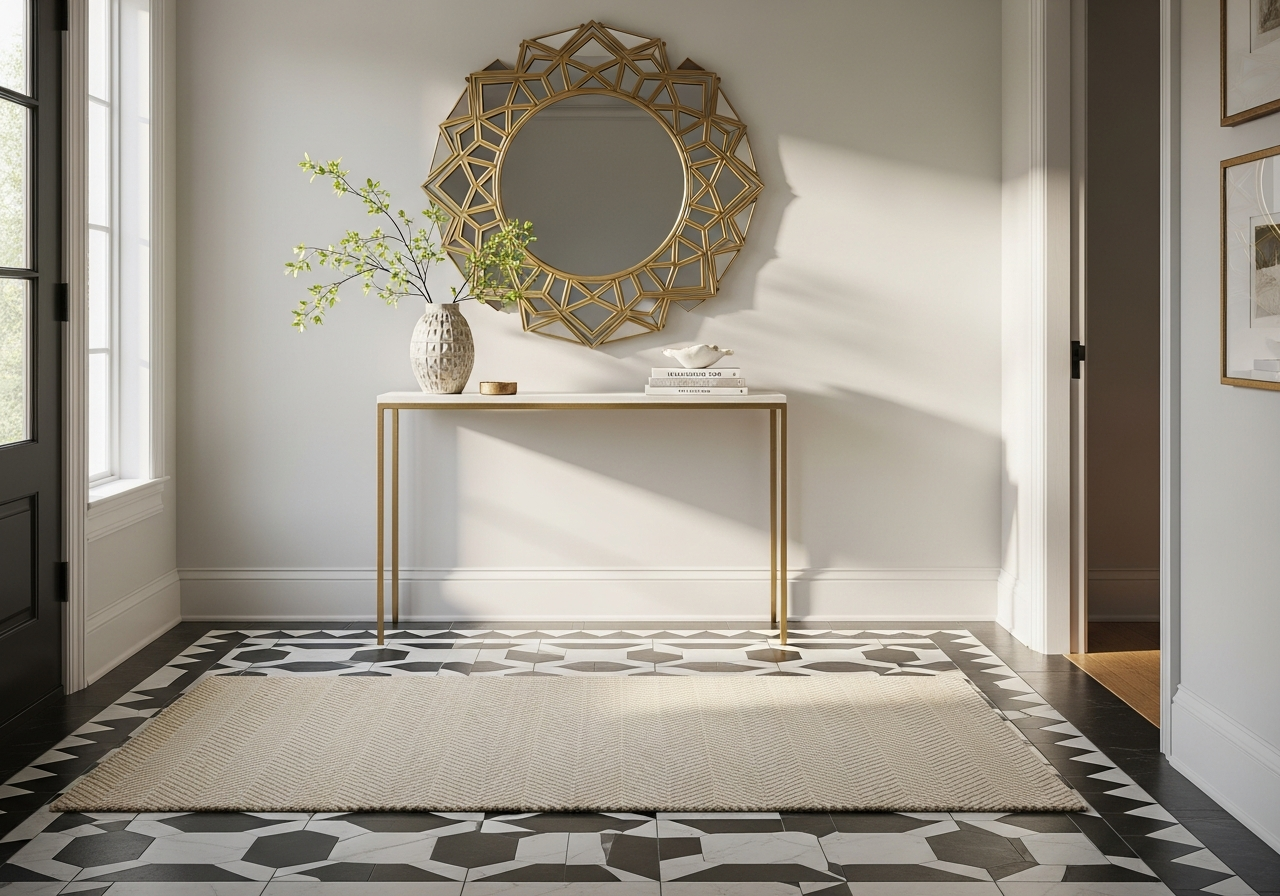
| Entryway | Floor tile, wall mirror, runner rug | Encaustic tile, geometric mirror | Medium (statement floor) |
| Home Office | Desk accessories, wall shelves, rug | Hexagonal shelves, linear patterns | Small-medium (focused area) |
Related Articles
Explore more pattern, color, and texture guides: learn how to use pastel colors in decor for softer geometric palettes, or discover how to use plants in home decor to balance structured geometry with organic softness. For wall-based geometric applications, see our guide on hanging wall decor at the right heights and spacing. Browse bathroom tile design ideas for geometric tile inspiration in wet spaces, or try our Room Designer tool to preview patterns in your own room.
Frequently Asked Questions
Can I mix geometric patterns with other pattern types like florals?
Yes, geometric patterns pair well with organic patterns like florals, botanicals, and abstract motifs when you follow the scale variation rule. Use one pattern type at a large scale (a floral rug, for example) and the other at a small scale (geometric throw pillows). Keep both patterns in the same color family for cohesion. The contrast between structured geometric shapes and organic floral curves creates visual interest that feels dynamic and layered rather than chaotic.
What geometric patterns work best in small rooms?
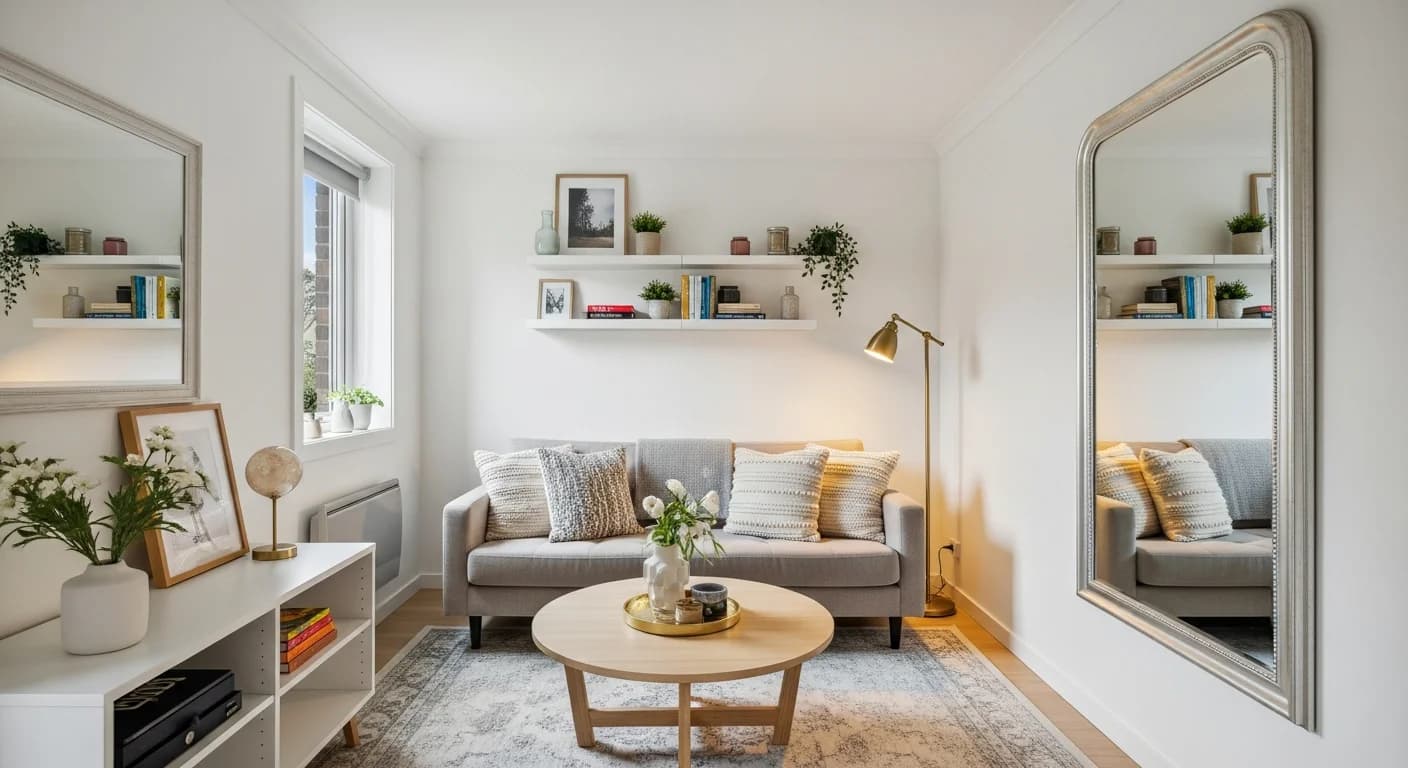
Small rooms benefit from geometric patterns with light color palettes and medium to small scales. Narrow linear patterns and herringbone layouts create a sense of elongation that makes walls and floors appear larger. Avoid bold, dark geometric patterns on all four walls — confine them to a single accent wall or the floor. Light-colored hexagonal tiles on bathroom floors and small-scale chevron textiles add geometric interest without shrinking the visual space.
How do I add geometric patterns without renovating?
The fastest non-renovation approach is layering geometric textiles: swap in a geometric area rug, add chevron or diamond-patterned throw pillows, and hang a geometric wall art print. Peel-and-stick geometric wallpaper on a single accent wall adds bold pattern that removes cleanly for renters. Geometric mirrors, hexagonal shelves, and faceted decorative objects add the pattern vocabulary through accessories alone, with zero permanent changes to the space.
What colors work best for geometric patterns in home decor?
Monochromatic color schemes — black and white, navy and cream, or tonal grays — create the most striking geometric impact because they let the shape do the visual work. For a warmer approach, pair geometric patterns in earth tones like terracotta, olive, and sand. Metallic geometric accents in brass, copper, or matte gold add glamour without overwhelming the space. Limit geometric patterns to two or three colors maximum to maintain the structured, orderly quality that makes geometric design effective.
Are geometric patterns trendy or timeless?
Classic geometric patterns — herringbone, chevron, hexagon, and Greek key — have been used in architecture and interiors for centuries and are considered timeless. Specific applications may cycle in and out of trend (like the mid-2010s hexagonal tile craze), but the underlying geometric vocabulary endures across every design era. Choosing classic geometric shapes in neutral colors ensures your decor remains relevant for years. More complex, colorful geometric patterns may feel trend-specific and are best applied through easily changed elements like pillows and rugs.
Visualize Geometric Patterns in Your Space with HanoDecor
Committing to a geometric tile floor or accent wall is a significant design decision. Before purchasing materials, see how different geometric patterns — hexagonal tiles, herringbone layouts, chevron wallpaper, and patterned rugs — look in your actual room with your existing furniture, wall colors, and natural lighting conditions. AI visualization eliminates the guesswork and helps you choose the right pattern scale, color, and placement with confidence.
Ready to experiment with geometric patterns? Try the HanoDecor Room Designer to preview geometric tiles, textiles, and wall treatments in your own space. For more pattern and style guidance, explore our tips on using bold colors in decor or learn how to mix metals for complementary texture and finish coordination alongside geometric patterns.
How to Use Geometric Patterns in Decor FAQs
Written by
Priya Sharma
Priya is an award-winning UX designer who previously led design teams at Airbnb and Pinterest. Her focus on user-centered design ensures that HanoDecor's tools are intuitive and accessible to everyone, regardless of their technical background.