The Lived-In Interior Trend: How Vintage, Patina, and Imperfection Are Redefining Luxury
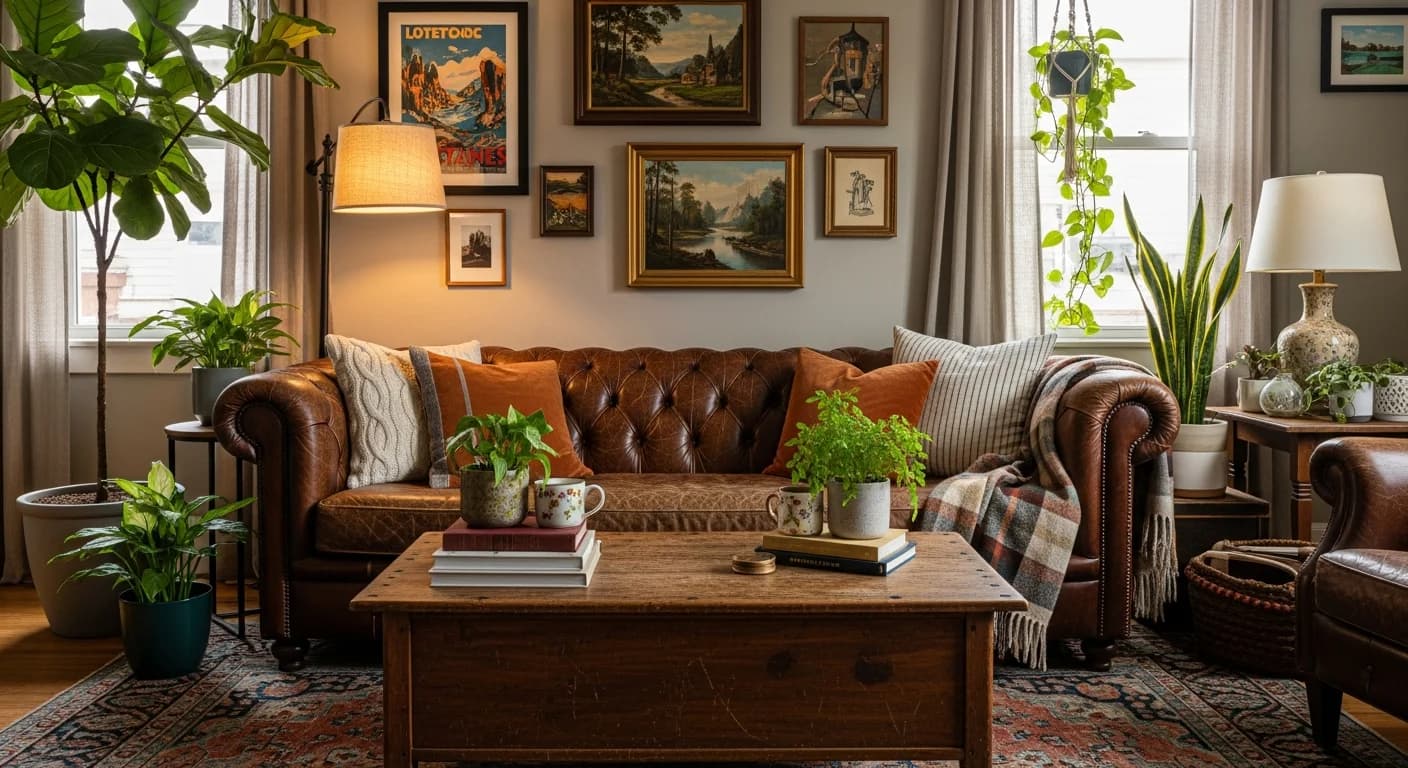
Walk into any designer showroom or scroll through the most-saved images on Pinterest and Instagram in 2026, and you'll notice something striking: the rooms that captivate us most are no longer the pristine, perfectly curated spaces of years past. Instead, the interiors generating the most admiration are beautifully imperfect — rooms that look like they've been assembled over years, not ordered from a single catalog; spaces where a worn leather armchair sits comfortably beside a sleek contemporary lamp; where the patina on a brass door handle is a feature, not a flaw.
Welcome to the lived-in interior — 2026's most emotionally resonant design movement. This isn't about being messy or careless. It's a deliberate, thoughtful approach to creating spaces that feel genuinely inhabited: warm, layered, personal, and rich with story. It's a rejection of the showroom aesthetic and an embrace of authenticity — and it's fundamentally changing how we think about luxury in the home.
In this comprehensive guide, we'll explore what defines the lived-in aesthetic, why it resonates so deeply right now, how to master the art of mixing eras, and practical strategies for creating a collected, character-rich home without it descending into chaos. Whether you're a vintage devotee or a modernist looking to add soul to your space, this movement has something transformative to offer.
What Are Lived-In Interiors, Exactly?
The lived-in interior movement is fundamentally about designing for real life rather than for photography. It prioritizes comfort, personal meaning, and authentic beauty over perfection, matching, and following prescribed formulas.
Key characteristics of lived-in interiors include:
- Mixed provenance: Furniture and objects from different eras, sources, and price points — a inherited dining table alongside chairs found at a flea market and a modern pendant light from a contemporary designer
- Visible wear as beauty: Patina on metals, softened edges on wood, faded upholstery, worn stone floors — signs of use are celebrated rather than concealed or replaced
- Personal artifacts: Travel souvenirs, family photos, collected books, inherited objects — items with personal story and meaning rather than generic decorative accessories
- Imperfect arrangements: Stacked books, casually draped throws, art leaned against walls, slightly asymmetrical groupings — arrangements that feel organic rather than styled
- Material honesty: Real materials that show their nature — unlacquered brass that tarnishes, natural wood that grains and knots, handmade ceramics with slight irregularities, linen that wrinkles beautifully
As interior stylist and Vogue contributor Mieke ten Have describes it: rooms should feel "genuinely used, imperfect, gently cluttered" — not in a neglectful way, but in a way that communicates warmth, history, and authenticity. This aligns perfectly with what we're seeing across the broader 2026 interior design trends landscape: a wholesale shift toward warmth, character, and substance over surface-level styling.
Why Lived-In Interiors Resonate So Deeply in 2026
The rise of lived-in interiors isn't random — it's a direct response to several cultural forces converging simultaneously:
The Reaction Against Digital Perfection
After years of algorithmically optimized, identical-looking spaces flooding social media, there's a deep collective fatigue with perfection. The "Instagram interior" — white walls, fiddle leaf fig, mid-century sofa, geometric rug — became so ubiquitous that it paradoxically became impersonal. Lived-in interiors offer the antidote: spaces that could only belong to their specific owner, shaped by individual history rather than algorithmic recommendation.
Sustainability as a Core Value
The lived-in aesthetic is inherently sustainable. By valuing vintage furniture, inherited pieces, and secondhand finds, it naturally reduces demand for new manufacturing. By celebrating patina and wear, it extends the life of existing objects indefinitely. By rejecting the fast-furniture cycle of trend-chasing, it promotes a "buy once, love forever" mentality that's both environmentally and financially responsible.
The Search for Authenticity
In an era of AI-generated content, deepfakes, and mass-produced everything, authenticity has become the ultimate luxury. A hand-thrown ceramic bowl with visible fingerprints from its maker, a wooden table with genuine age marks, a brass fixture with decades of natural patina — these objects carry a truth and realness that no algorithm can replicate. In 2026, genuine beats perfect.
Post-Pandemic Homebody Culture
The pandemic permanently shifted our relationship with home. Having spent extended time living in our spaces — not just passing through them — we now demand interiors that support real daily life. A white sofa looks stunning in a showroom but induces anxiety when toddlers have juice. A lived-in interior embraces the reality of actually living in a home, which is precisely why it feels so liberating.
The Art of Mixing Eras: The 70/30 Rule
The heart of the lived-in aesthetic is the skillful mixing of different periods, styles, and provenances. This is also where most people feel intimidated — how do you combine a Victorian side table with a contemporary sofa without it looking like a jumble sale?
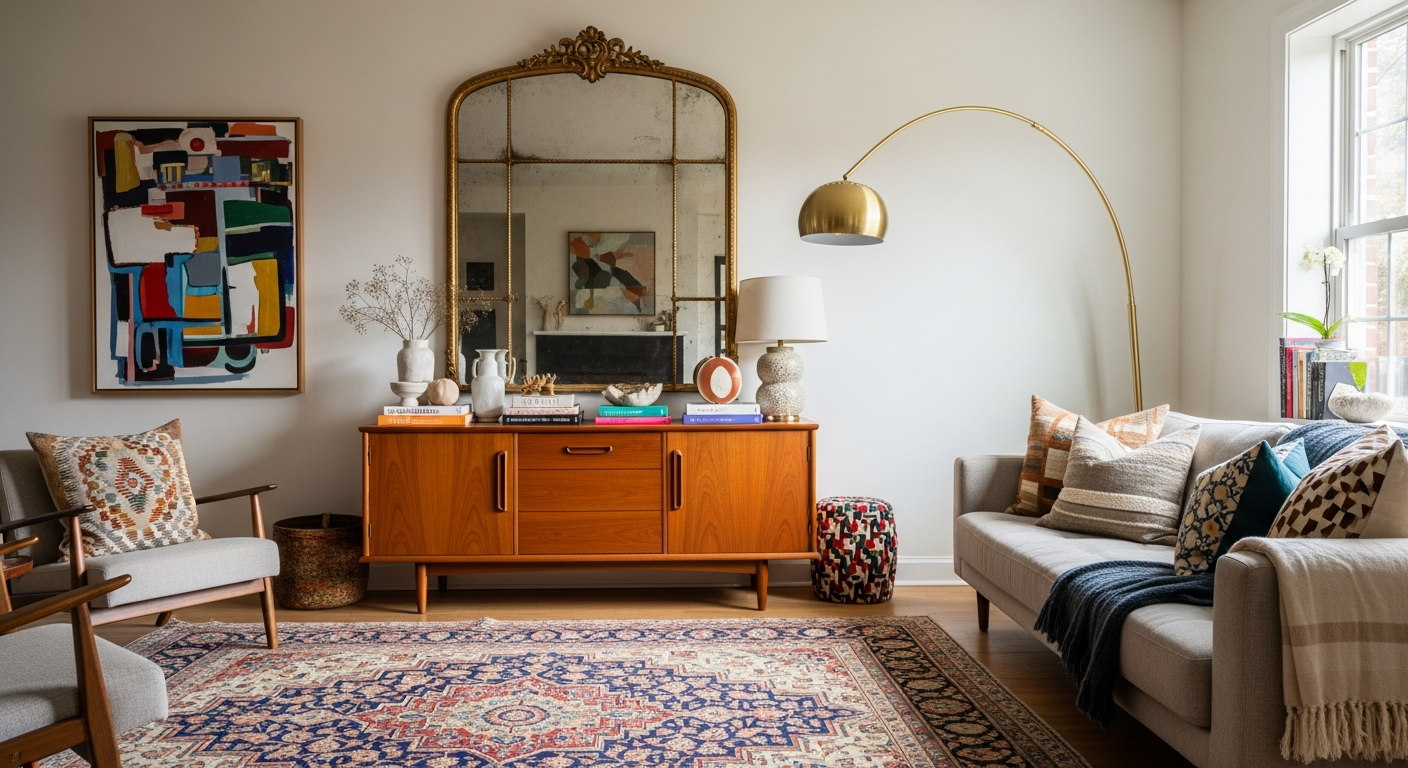
The answer lies in the 70/30 rule: approximately 70% of your room should share a general sensibility (your "dominant era" or style), while 30% introduces contrasting elements from different periods. This creates visual interest and character while maintaining enough coherence to feel intentional rather than accidental.
Here's how this works in practice:
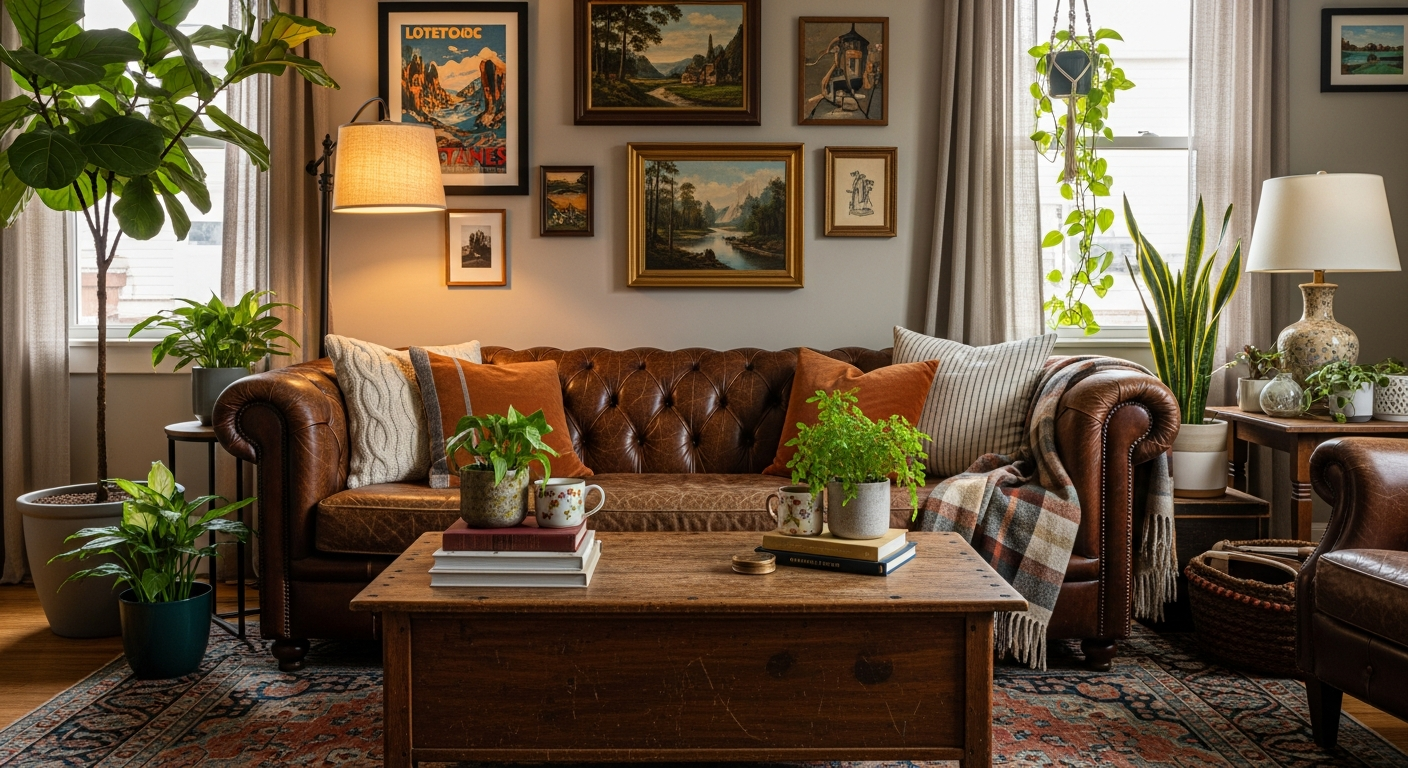
- Contemporary dominant (70%) + Vintage accents (30%): A room with modern architecture, clean-lined seating, and contemporary lighting — punctuated by an antique Persian rug, a vintage wooden chest used as a coffee table, and a pair of inherited candlesticks. The modern framework provides coherence; the vintage pieces provide soul.
- Traditional dominant (70%) + Modern accents (30%): A room with classical proportions, quality millwork, and traditional furniture silhouettes — energized by a piece of contemporary abstract art, a modern floor lamp, and sleek minimal hardware. The traditional bones provide warmth; the modern touches prevent stuffiness.
- Mid-century dominant (70%) + Antique and contemporary mix (30%): A room anchored by iconic mid-century pieces — a Wegner chair, a teak credenza, an Arco lamp — with a 19th-century oil painting, handmade contemporary ceramics, and a weathered industrial metal side table adding unexpected depth.
The secret to making these combinations work is finding common threads between your pieces: similar wood tones, complementary color palettes, or shared material qualities. A Victorian brass candlestick and a contemporary brass pendant share material DNA even though they're separated by 150 years of design history.
Patina and Wear as Design Features
Perhaps the most radical aspect of the lived-in movement is its relationship with imperfection. In a design culture that has long equated luxury with pristine newness, celebrating wear marks, tarnish, fading, and age requires a genuine shift in perspective.

But consider how we already embrace patina in other areas of life: we prize aged wine over young, value vintage denim over new, and pay premiums for reclaimed wood. The lived-in interior simply extends this sensibility to the home environment.
Materials that develop beautiful patina include:
- Unlacquered brass: Develops a warm, complex patina within months. High-touch areas like door handles develop faster, creating natural variations. Many designers, including those featured in our dark wood trend analysis, specifically recommend unlacquered brass to complement rich wood tones.
- Natural leather: Quality full-grain leather develops a distinctive patina with use, becoming softer and more characterful. A twenty-year-old leather Chesterfield has a warmth and depth that no new piece can match.
- Hardwood floors: Genuine wood floors develop character with age — subtle wear patterns at doorways, a gentle mellowing of color, slight variations that map decades of family life. Some homeowners are now deliberately choosing hand-scraped or distressed floors to accelerate this lived-in quality.
- Natural stone: Marble countertops that develop gentle etching from lemon juice and wine, limestone floors that wear smooth at thresholds, soapstone that darkens with use — these "imperfections" add authenticity that engineered materials specifically lack.
- Copper and bronze: These metals develop verdigris and darkening that many designers consider more beautiful than their polished state. Copper kitchen sinks and bronze hardware are particularly coveted for their evolving character.
- Linen textiles: Linen curtains, bedding, and upholstery become softer and more beautifully draped with every wash. The "perfectly imperfect" wrinkled quality of linen is central to the lived-in aesthetic.
Creating the "Collected Over Time" Look: A Practical Framework
The most common question about lived-in interiors is deceptively simple: "How do I make my home look collected without looking cluttered?" The answer lies in four key principles:
1. Start with Anchor Pieces
Every well-collected room needs two or three substantial "anchor" pieces that establish the room's character and scale. These might be a large vintage dining table, a quality sofa with classic lines, or a statement armoire. Anchor pieces should be:
- The largest or most visually significant items in the room
- Made from quality materials (real wood, genuine leather, natural stone)
- Classic in silhouette, even if they show age and wear
- Pieces you genuinely love and can imagine keeping for decades
Once your anchors are in place, everything else arranges itself around them. A vintage walnut dining table becomes the anchor; mismatched chairs, a modern pendant light, and collected tableware organize naturally around its presence.
2. Layer Modern Comfort
The lived-in look shouldn't mean sacrificing comfort. The most successful lived-in interiors layer contemporary comfort elements — like a cozy collection of textiles and warm lighting — with vintage character pieces. This means:
- Quality modern mattresses and bedding (no one sleeps well on a vintage mattress, however charming the frame)
- Comfortable contemporary seating — even if it's paired with a vintage coffee table and antique side tables
- Modern lighting for tasks (reading lamps, kitchen under-cabinet lights) even when ambient fixtures are vintage
- Current technology integrated thoughtfully — vintage cabinets adapted to hold media equipment, antique desks fitted with cable management
3. Incorporate Personal Artifacts
The difference between a "styled" vintage room and a genuinely lived-in one is personal meaning. Lived-in interiors are full of objects that tell the story of their inhabitant:
- Travel finds — ceramics from a trip to Portugal, textiles from Morocco, artwork from a local gallery in a favorite city
- Family pieces — a grandmother's mirror, a parent's armchair, inherited china displayed on open shelving
- Collected interests — stacked books that you've actually read, musical instruments you actually play, art that you chose because it moved you (not because it matched the sofa)
- Handmade objects — pottery from a local maker, a hand-carved wooden bowl, a woven basket from a craft market
These objects, displayed with care on thoughtfully styled bookshelves or arranged as meaningful coffee table vignettes, transform a house into a home in a way that no amount of catalog shopping ever could.
4. Resist Matching Sets
Nothing says "purchased all at once" quite like a perfectly matching furniture set — dining table with six identical chairs, matching bedroom suite, coordinated living room set. The lived-in aesthetic actively avoids this:
- Dining rooms: Mix chair styles around a single table. Perhaps four matching vintage chairs with two different end chairs, or a complete mix united by a shared seat cushion fabric
- Bedrooms: Different nightstands on each side of the bed, a vintage dresser paired with a modern mirror, an antique bed frame with contemporary linens
- Living rooms: A sofa paired with two different accent chairs rather than a matching set. Side tables from different periods. Collected lamps rather than a coordinated pair
The key constraint is intentional variation, not random chaos. Unifying elements — a consistent wood tone, a shared color palette, or similar scale — keep the mix feeling curated rather than careless.
The Secondhand Economy and Sustainable Luxury
The lived-in movement has catalyzed a renaissance in secondhand furniture. Platforms like Chairish, 1stDibs, Facebook Marketplace, and local estate sales have become primary shopping destinations for design-conscious homeowners. This shift represents more than just an aesthetic preference — it's a fundamental redefinition of luxury.
Consider the value proposition: a vintage Henredon walnut sideboard purchased at an estate sale for $400 is better built, more distinctive, and more environmentally responsible than a $2,000 new piece from a mass-market furniture brand. It has genuine craftsmanship — dovetail joints, solid wood construction, quality hardware — that's increasingly rare in new manufacturing. And it carries a story, a provenance, a sense of history that simply cannot be manufactured.
This dovetails perfectly with the broader sustainable design movement shaping 2026 interiors. By choosing secondhand, you're simultaneously reducing demand for new manufacturing, keeping quality furniture out of landfills, and building a home with genuine character. It's environmental responsibility that actually looks and feels better than the alternative.
Room-by-Room Lived-In Styling Guide
Living Room
The living room is where the lived-in aesthetic shines brightest. Start with a quality sofa in a neutral tone (your anchor), then layer in vintage side tables, collected art, inherited decorative objects, and mixed textiles. Stack books you've actually read on coffee tables. Display objects with personal meaning. Let throws drape casually over chair arms. The goal is a room that looks like someone interesting actually lives there.
Kitchen
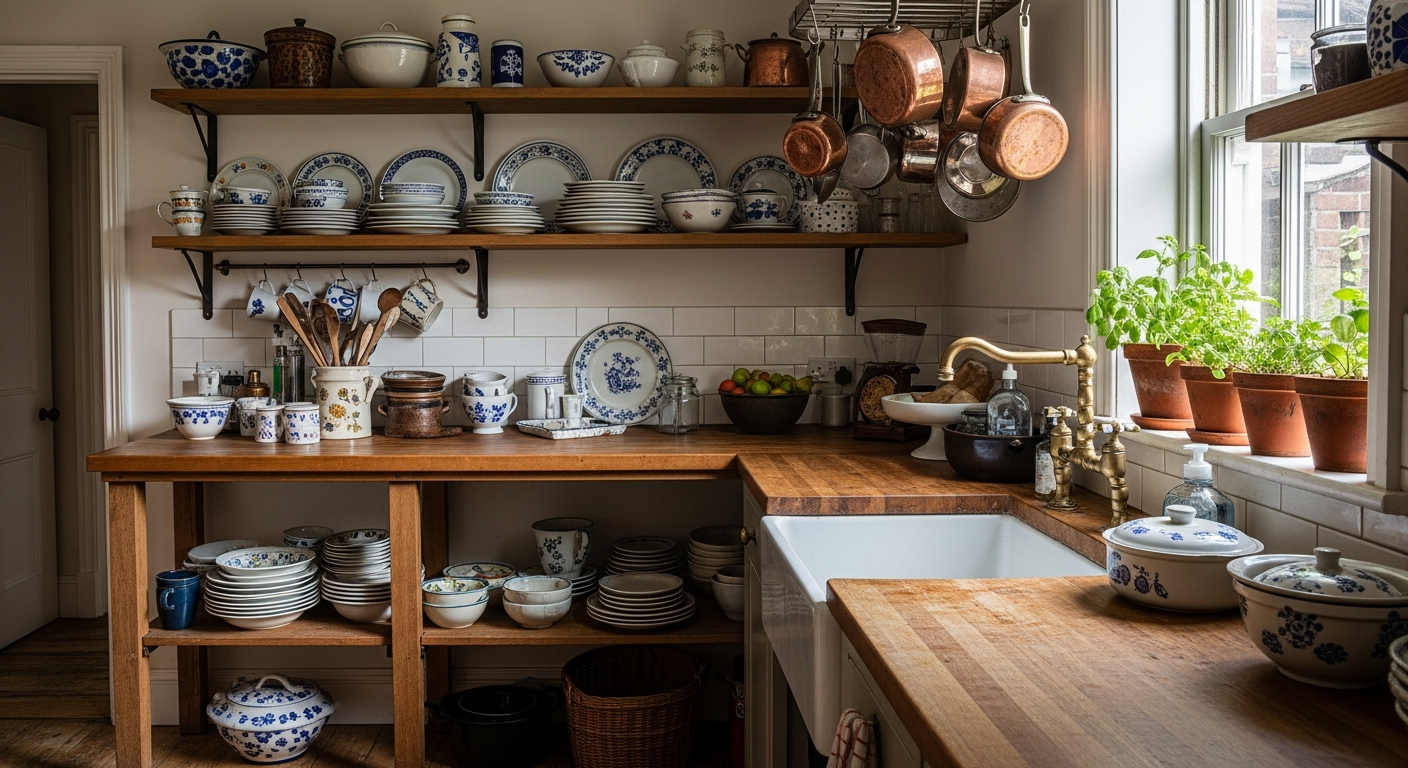
Kitchens benefit enormously from the lived-in treatment. Open shelving displaying mismatched ceramics and vintage serving pieces, worn butcher-block countertops, brass hardware with natural patina, vintage cutting boards leaned against the backsplash, fresh herbs in collected pots — these elements transform a kitchen from a sterile workspace into the warm, inviting heart of the home it's meant to be.
Bedroom
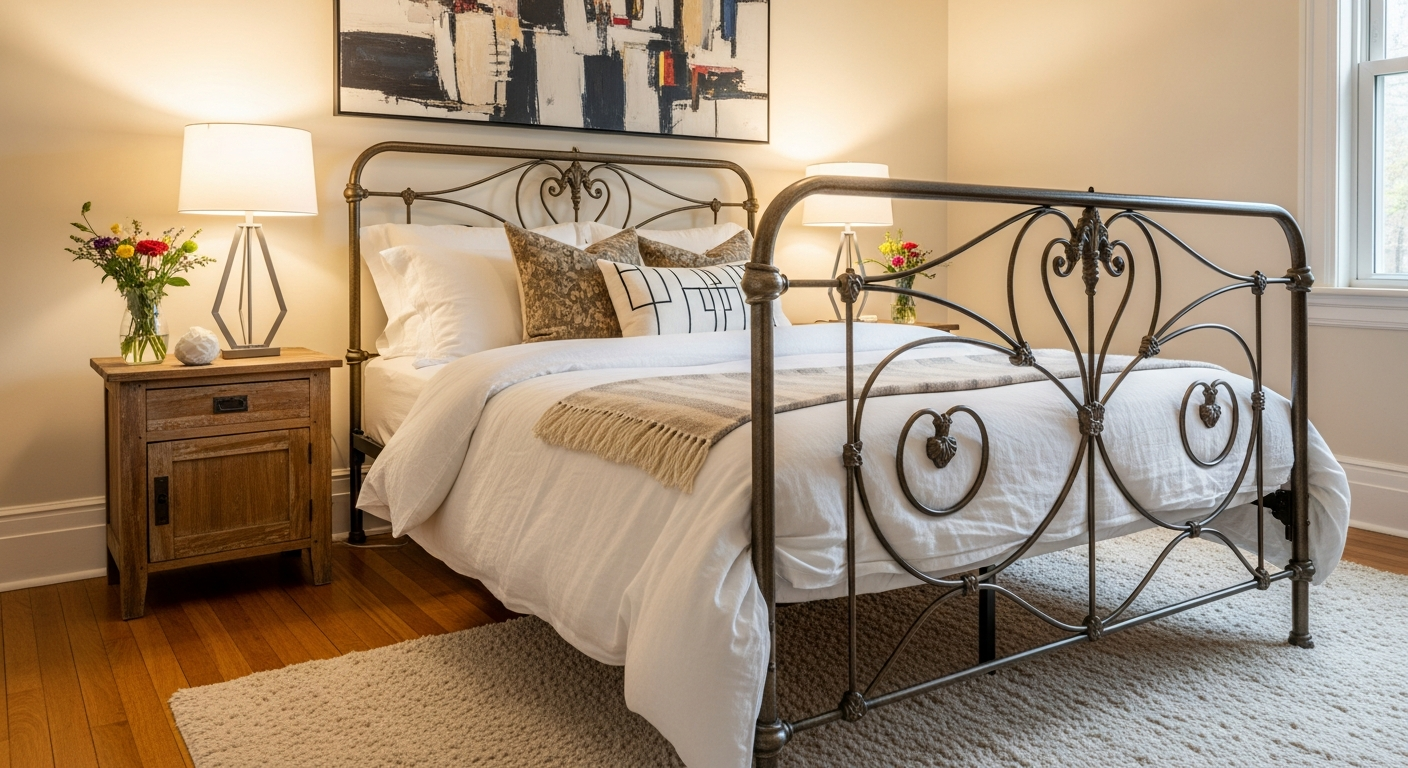
In the bedroom, the lived-in look creates an environment of comfort and intimacy. A vintage bed frame paired with luxurious modern bedding, mismatched nightstands, a collected gallery wall of personal photographs and art, stacked books on the bedside, and layered textiles — vintage quilts with contemporary throws, antique cushions with linen pillowcases — create a space that feels like a personal retreat.
Entryway
The entryway sets the tone for the entire home. A vintage console table, a collected grouping of framed family photos, an inherited mirror, hooks made from repurposed vintage hardware, and a worn Persian runner immediately communicate that this is a home with history, warmth, and character. It tells guests, before they've even entered the main rooms, that they're somewhere special.
Bathroom
Even bathrooms — traditionally the most utilitarian room — can embrace lived-in warmth. Vintage mirrors, collected ceramic vessels for soap and accessories, a reclaimed wood vanity, brass fixtures with natural patina, and stacked cotton towels in natural tones transform a functional space into one with genuine personality.
Visualize the Lived-In Look in Your Space
One of the beautiful paradoxes of the lived-in aesthetic is that achieving it intentionally requires careful thought. You're not actually waiting decades for your space to develop character organically — you're curating that collected feeling deliberately.
This is where visualization becomes invaluable. HanoDecor's AI design studio lets you experiment with the lived-in aesthetic in your actual space — testing how vintage furniture pieces might look in your modern apartment, how warm wood tones interact with your existing architecture, or how a collected, layered approach transforms a room that currently feels too sterile or too matchy.
The best lived-in interiors balance what's already timeless and enduring with personal touches that make a space uniquely yours. Our visualization tools help you find that balance before making any purchases or commitments.
Frequently Asked Questions
How do I achieve a lived-in look without my home looking messy?
The distinction between "lived-in" and "messy" lies in intentionality and quality. Lived-in spaces feature carefully chosen objects with personal meaning, quality materials that develop beautiful patina, and thoughtful arrangements that appear casual but are actually curated. The key rules: maintain adequate storage so actual clutter is managed, choose fewer but better pieces, ensure everything visible is either beautiful or meaningful (ideally both), and maintain clean underlying architecture (clean walls, well-maintained floors) as the backdrop for your collected elements.
What's the difference between the lived-in trend and shabby chic?
While both aesthetics celebrate imperfection, they're fundamentally different. Shabby chic was a specific decorative style with defined visual codes: distressed white paint, floral fabrics, pastel colors, and cottage-inspired motifs. The lived-in movement is style-agnostic — it applies to modern, traditional, eclectic, and minimalist interiors alike. It's about mixing genuine vintage with contemporary, embracing authentic patina (not artificially distressed surfaces), and creating rooms that reflect individual personality rather than adhering to any prescribed aesthetic formula.
Where are the best places to find vintage furniture?
Estate sales offer the best combination of quality and value — you're buying directly from the source with no dealer markup. Antique malls and vintage shops provide curated selections with expert knowledge. Online platforms like Chairish, 1stDibs (higher-end), and Facebook Marketplace (bargain finds) offer vast selection and convenience. Architectural salvage yards are unbeatable for hardware, lighting, and structural elements. Thrift stores and charity shops require more patience but can yield remarkable finds at minimal cost. The key is developing your eye over time and being willing to look past surface condition to see the quality underneath.
Can I achieve the lived-in look in a brand-new home?
Absolutely — and many designers argue that brand-new homes actually benefit most from the lived-in approach, precisely because they need warming up. Start by introducing natural materials with inherent character: unlacquered brass fixtures, natural stone surfaces, real wood flooring. Add vintage or antique furniture pieces to counter the newness. Incorporate personal artifacts, collected art, and inherited objects. Choose textiles in natural fibers that soften and develop character quickly. Within six months, a thoughtfully "lived-in" new home can feel like it has decades of history.
How does the lived-in trend relate to sustainability?
The lived-in movement is inherently one of the most sustainable approaches to interior design. By valuing vintage and secondhand furniture, it reduces demand for new manufacturing. By celebrating patina and wear, it extends the lifespan of existing pieces indefinitely. By rejecting the fast-furniture cycle of buying new pieces every trend cycle, it dramatically reduces waste. And by prioritizing quality craftsmanship and natural materials, it supports objects that last generations rather than years. The lived-in aesthetic proves that the most environmentally responsible choice is often also the most beautiful one.
What if my partner prefers everything new and matching?
Start small and demonstrate the concept. Replace one matching nightstand with a beautiful vintage find. Swap out a generic decorative bowl for a hand-thrown ceramic piece from a local potter. Add a single piece of inherited furniture to a modern room. Often, seeing one well-curated vintage piece in context converts skeptics faster than any argument. The lived-in aesthetic works on a spectrum — you don't have to go full maximalist vintage overnight. Even a 90/10 ratio of new to vintage adds tremendous warmth and character.
The Lived-In Interior Trend FAQs
Written by
Sarah Mitchell
Sarah is a certified interior designer (CID) with experience designing residential and commercial spaces across three continents. She curates our design style library and ensures all AI-generated designs follow established design principles.