Painting Different Siding Types: Wood, Vinyl, Stucco, Brick, and Fiber Cement
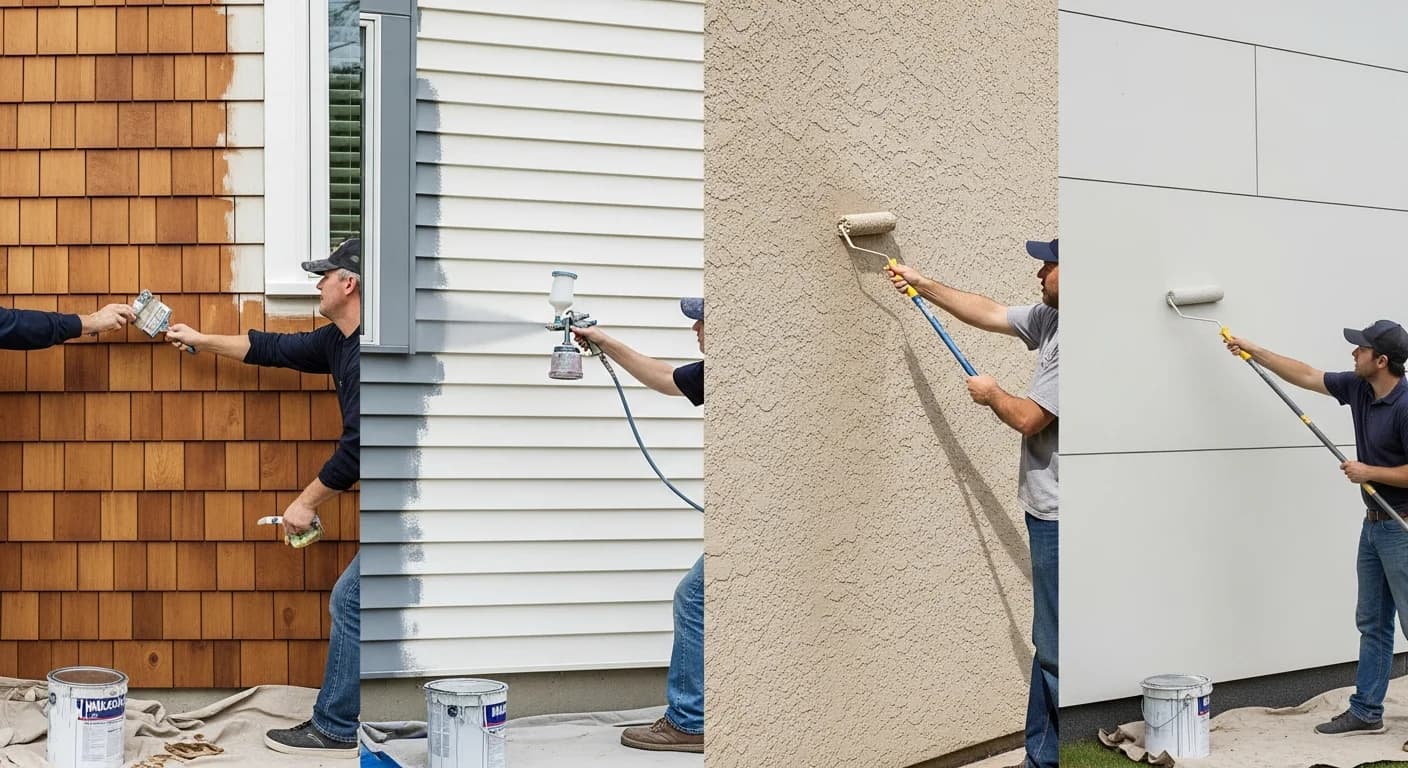
One of the most expensive mistakes homeowners make is treating every type of siding the same way when painting. Wood, vinyl, stucco, brick, and fiber cement each have unique properties that demand different preparation methods, primers, paints, and application techniques. Using the wrong approach on the wrong material leads to adhesion failure, premature peeling, and wasted time and money. After painting every type of siding imaginable over a 20-year career, I have learned exactly what works and what fails on each substrate. This guide gives you the material-specific knowledge to get professional results regardless of what your home is made of.
Why One Approach Does Not Fit All Siding
The fundamental differences between siding materials come down to four properties: porosity, adhesion characteristics, expansion and contraction rates, and moisture behavior. Each of these properties affects how paint bonds to the surface, how the coating performs over time, and what failure modes you need to prevent.
Porosity determines paint absorption. A porous material like stucco absorbs paint into its surface, creating a mechanical bond but also consuming significantly more product. A smooth, non-porous material like vinyl relies entirely on chemical adhesion between the paint and the surface, making primer selection and surface preparation critical in different ways.
Expansion and contraction rates vary dramatically between materials. Wood siding can expand and contract up to 1/8 inch per board with seasonal moisture changes. Vinyl expands with heat — a 12-foot piece can grow by nearly half an inch on a hot day. Brick and fiber cement are relatively stable. These different movement patterns require paints with different flexibility levels to prevent cracking and delamination.
Understanding these material properties is the foundation for choosing the right products and techniques. If you are also comparing siding material options as part of a larger project, understanding how each material paints and maintains can influence your material selection as well.
Painting Wood Siding
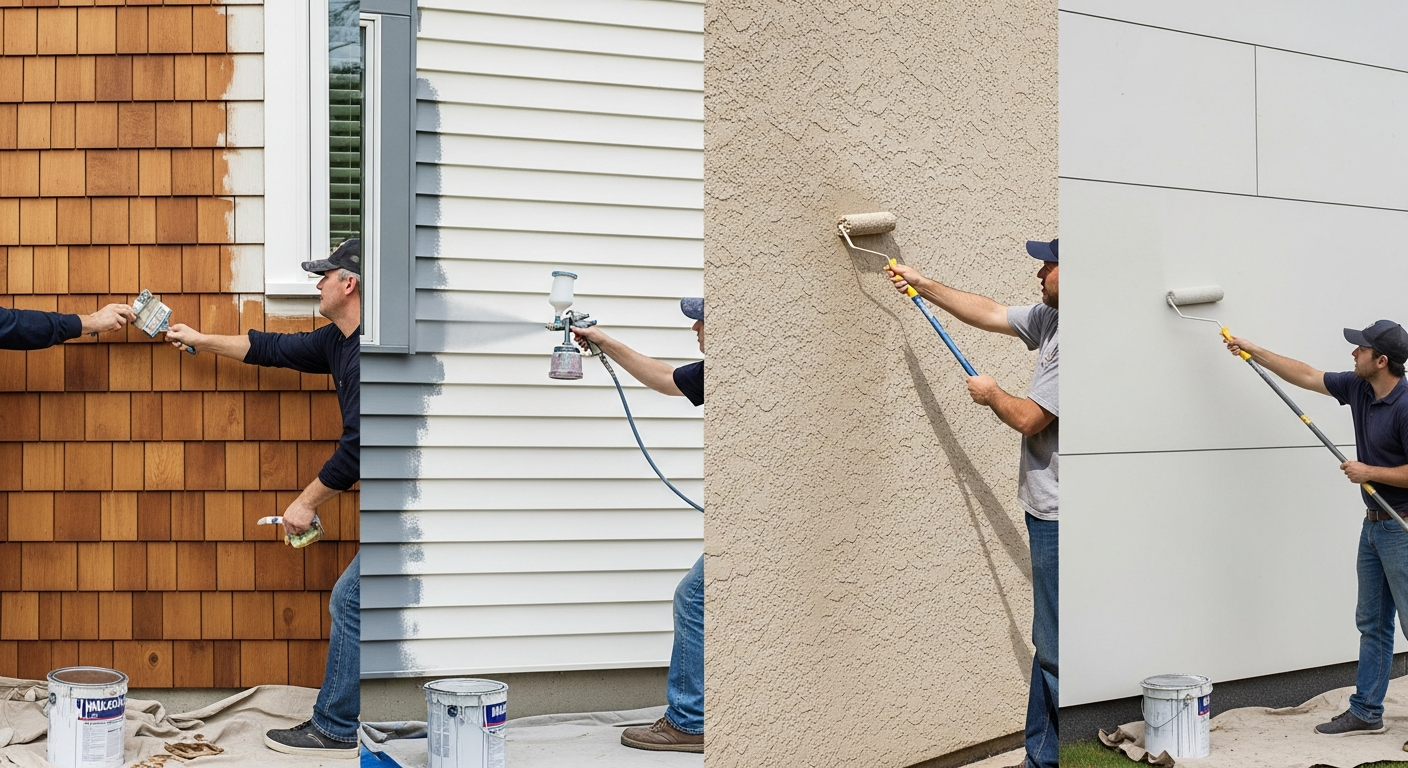
Wood siding is the most traditional and also the most maintenance-intensive material to paint. The organic nature of wood means it absorbs and releases moisture with every weather change, creating constant stress on the paint film. However, properly painted wood siding delivers a rich, classic appearance that many homeowners prefer.
Cedar, pine, and redwood each present different challenges. Cedar and redwood contain natural tannins — water-soluble compounds that bleed through latex paint as brown or reddish-brown stains. Pine is less prone to tannin bleed but is more susceptible to moisture absorption and rot. Old-growth wood (increasingly rare) has tighter grain and better paint retention than the fast-growth lumber commonly available today.
Tannin bleeding prevention requires an oil-based primer. For cedar and redwood, always use a stain-blocking oil-based primer such as Zinsser Cover Stain or KILZ Original before applying your topcoat. Latex primers do not adequately block tannin migration, and you will see brown stains bleeding through your finish paint within months, especially on sun-heated surfaces. Apply the primer on bare and freshly sanded wood within the same day to prevent moisture absorption.
Best paints for wood siding include Sherwin-Williams Duration and Benjamin Moore Aura, both of which offer the flexibility and adhesion characteristics that wood demands. Expect a paint lifespan of 5 to 7 years on wood siding with premium paint and proper preparation, or 3 to 5 years with mid-range products. The decision between paint and solid-body stain is also worth considering — stain penetrates the wood grain and does not peel, making maintenance easier, though it does not provide the same opaque color coverage as paint.
Always prepare wood surfaces thoroughly — scraping, sanding, priming bare spots, and repairing any rot before painting. Wood requires the most intensive prep of any siding type, but the preparation investment directly determines how long your paint job lasts. Back-brushing is essential when spray-applying paint to wood to work the coating into the grain and ensure proper adhesion.
Painting Stucco Exteriors
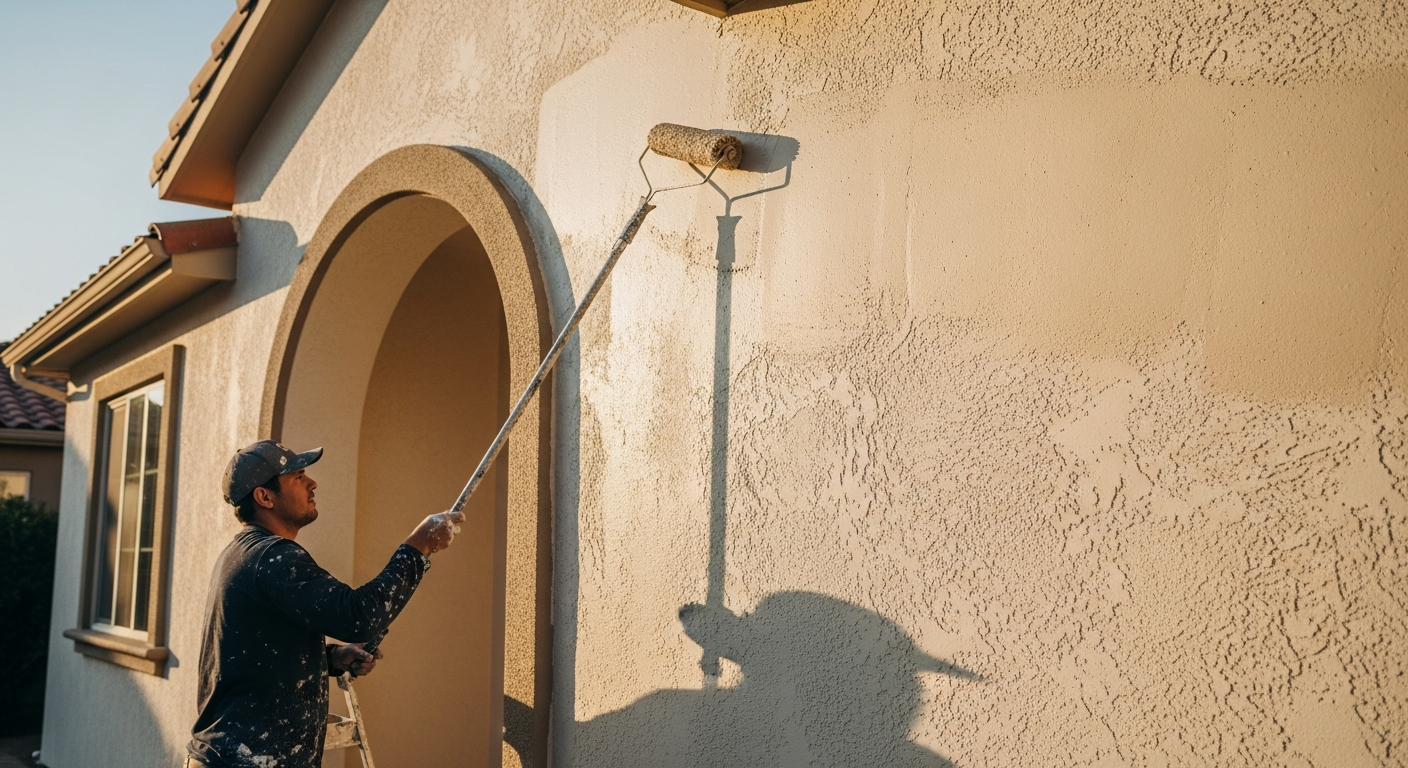
Stucco is a cement-based plaster that creates a distinctive textured surface popular in Mediterranean, Spanish Revival, and Southwestern architectural styles. Its porous nature makes it both durable and challenging to paint, requiring more product and specific coating types for optimal performance.
Crack inspection and repair must come before painting. Stucco develops hairline cracks naturally as it cures and ages. Small cracks up to 1/16 inch wide can be filled with an elastomeric caulk or patching compound. Larger cracks may indicate structural movement and should be assessed by a professional before cosmetic treatment. Painting over unrepaired cracks wastes paint that will just flow into and pool in the damaged areas without providing any protective benefit.
Elastomeric coatings versus standard acrylic paints represent the biggest decision for stucco. Elastomeric coatings are thick, rubber-like paints that stretch up to 300% to 600% without cracking, bridging hairline cracks and providing superior waterproofing. They cost 2 to 3 times more than standard acrylic paint ($60 to $90 per gallon) but can last 10 to 20 years on stucco. Standard 100% acrylic exterior paint costs less but does not bridge cracks and typically lasts 5 to 8 years on stucco surfaces.
New stucco requires a 30-day cure before painting. Fresh stucco contains significant alkalinity that decreases as the cement cures. Painting too soon causes the paint's binder to break down from alkali attack, resulting in premature failure. After 30 days, apply a masonry-compatible primer like Loxon Concrete and Masonry Primer or KILZ Masonry Primer to neutralize remaining alkalinity before topcoating.
Stucco's porous texture absorbs roughly twice as much paint as smooth siding per square foot. Plan for coverage rates of 150 to 200 square feet per gallon instead of the typical 350 to 400 for smooth surfaces. This means a stucco home requires significantly more paint — and more budget — than the same-sized home with smooth siding. Factor this into your project cost estimate.
Painting Brick Exteriors
Painting brick is a major decision because it is largely irreversible. Once painted, brick must be maintained with fresh paint indefinitely — stripping paint from brick without damaging the underlying masonry is extremely difficult and expensive. Make sure you are committed to the painted look before proceeding.
Consider limewash and mineral paint alternatives first. Limewash creates a chalky, European-inspired finish that allows the brick texture to show through and can be removed or refreshed easily. Mineral silicate paints like KEIM Mineral bond chemically to the masonry rather than forming a film on top, providing a breathable, durable finish that ages gracefully. These alternatives preserve the option to return to natural brick later.
If you choose to paint, efflorescence treatment is essential. Efflorescence is the white, powdery deposit of mineral salts that migrates to the surface of brick as moisture evaporates through it. Painting over efflorescence guarantees adhesion failure. Treat affected areas with a solution like Sherwin-Williams Loxon Conditioner or muriatic acid (used carefully, with proper safety equipment), scrub, rinse, and allow to dry completely before priming.
New brick requires one full year of weathering before painting. This allows residual construction moisture to evaporate, efflorescence cycles to stabilize, and the mortar to fully cure. Painting new brick prematurely traps moisture and alkali behind the paint film, causing blistering and peeling within the first year. After weathering, apply a masonry primer followed by a breathable 100% acrylic latex paint that allows moisture vapor to pass through the film. This breathability is critical for brick because moisture will always migrate through masonry from the interior.
Painted brick, when properly prepared and coated with quality products, can last 8 to 17 years between repaintings — the longest of any commonly painted siding type. The key is using the right primer and a breathable topcoat that does not trap moisture inside the wall assembly. Explore how different color schemes work on brick homes before making your final decision.
Painting Vinyl Siding
Vinyl siding is the easiest material to prepare for painting because it does not require scraping, sanding, or priming in most situations. However, vinyl has a unique and critical limitation that every homeowner must understand before choosing a paint color: heat distortion risk.
Never paint vinyl siding a color significantly darker than the original. Dark colors absorb more solar radiation, causing the vinyl to heat beyond its thermal distortion threshold (typically 160 to 165 degrees Fahrenheit for standard vinyl). This can cause warping, buckling, and permanent damage that requires siding replacement, not just repainting. As a general rule, you can go the same shade or lighter safely, and some vinyl-safe paint formulations with heat-reflective technology allow slightly darker colors.
Vinyl-safe paint formulations are specifically designed for this substrate. Products like Sherwin-Williams VinylSafe colors and Benjamin Moore's vinyl-safe palette use heat-reflective pigments that reduce thermal absorption, allowing for a wider (though still limited) color range. Always verify that your chosen color is rated as vinyl-safe by the paint manufacturer.
Preparation for vinyl is straightforward: clean thoroughly with a pressure washer at 1,500 to 2,000 PSI or by hand-scrubbing with a solution of TSP or simple dish soap and water. Allow to dry for 24 hours. No sanding is needed because vinyl's smooth surface does not have a profile to maintain. Most premium exterior acrylic latex paints adhere directly to clean vinyl without a separate primer, though a bonding primer like Sherwin-Williams Extreme Bond provides extra insurance on slick surfaces.
The best finish for vinyl siding is satin, which provides a slight sheen that resists dirt accumulation and cleans easily while not highlighting surface imperfections. Expect a paint lifespan of 5 to 10 years on vinyl siding depending on climate, color choice, and paint quality.
Painting Fiber Cement (HardiePlank)
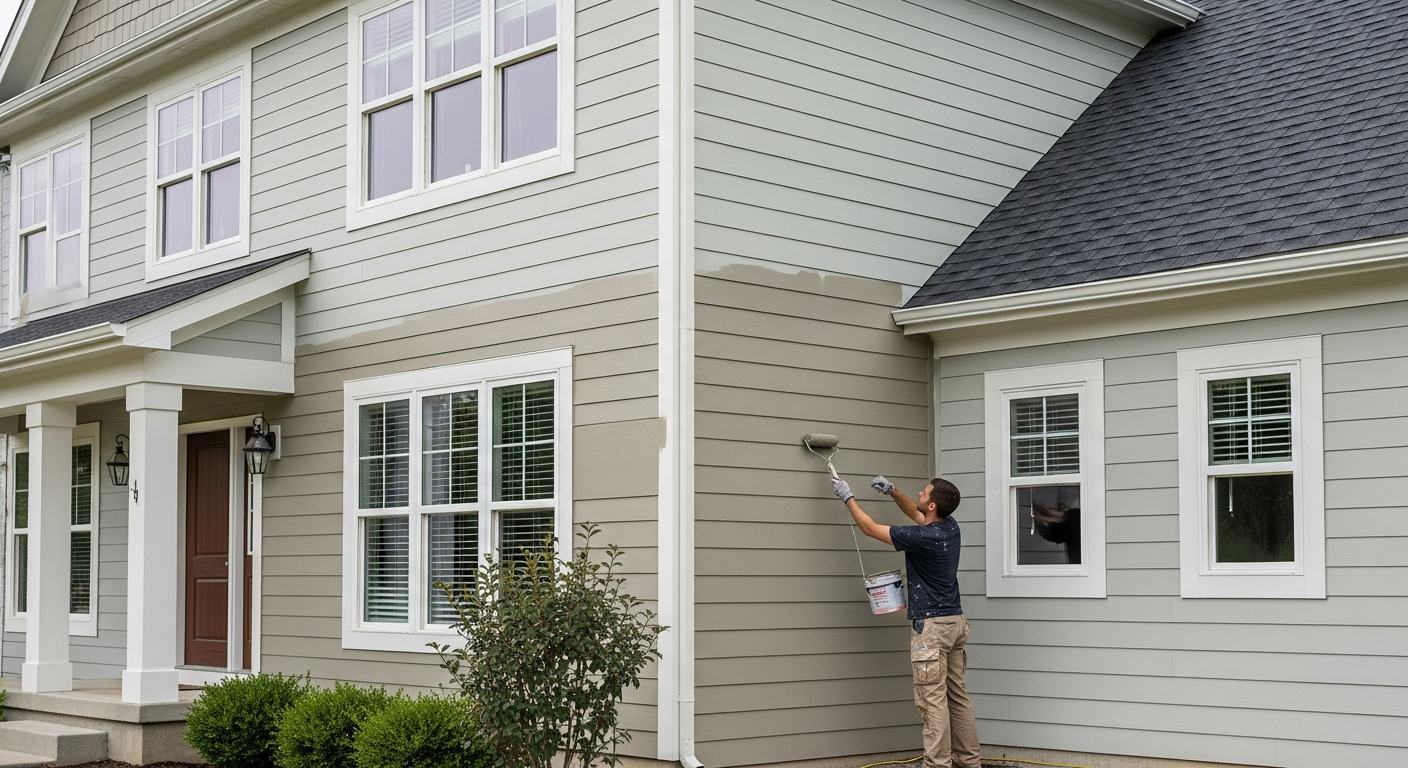
Fiber cement siding, with James Hardie's HardiePlank being the most recognized brand, is one of the best substrates for exterior paint. Its dimensional stability, low porosity, and smooth surface allow paint to bond well and last longer than on any other common siding material — 10 to 15 years between repaintings is typical with quality products.
Factory-primed versus unprimed boards require different approaches. Most fiber cement installed today comes factory-primed from the manufacturer, ready for topcoating. Factory primer provides an excellent base but has a limited exposure window — typically 90 to 180 days — after which UV degradation begins breaking it down. If your fiber cement has been exposed beyond this window without topcoating, you may need to apply a fresh primer coat. Unprimed fiber cement requires a masonry-type primer like Loxon or a bonding primer before topcoating.
Sherwin-Williams Duration and Emerald are excellent choices for fiber cement. Duration's PermaLast technology is specifically tested and recommended for fiber cement applications, and many painting contractors pair it with HardiePlank for a paint system that reliably lasts 12 to 15 years. The one-coat coverage of Emerald can reduce application time significantly on factory-primed boards.
Joint caulking at board intersections is an important maintenance item for fiber cement siding. Use a quality exterior caulk rated for fiber cement, such as OSI Quad or Sherwin-Williams Sher-Max, applied to all butt joints, corners, and trim intersections. Caulk failure at these joints allows water infiltration that can cause edge swelling and damage.
Fiber cement accepts all application methods — brush, roller, and sprayer — equally well. Spraying is the most efficient for large surface areas, with back-brushing recommended only at board overlaps and edges where paint needs to be worked into joints. The material's stability means you spend less time and money on surface preparation compared to wood, making the total project faster and less labor-intensive.
Painting Metal and Aluminum Siding
Metal and aluminum siding were popular in the mid-20th century and are still found on many homes. While durable, metal siding develops chalking and can corrode if the paint film is breached. Proper preparation and primer selection are critical for a long-lasting finish.
Remove all chalking residue by power washing or hand-scrubbing with TSP solution. Test for chalking by rubbing your hand across the surface — if powder transfers, additional cleaning is needed. Any rust spots must be treated with a rust converter or sanded to bright metal and primed with a zinc-rich rust-inhibiting primer the same day. Bare metal that is left unprimed overnight will begin to oxidize, compromising primer adhesion.
Choose a primer specifically rated for metal substrates. Sherwin-Williams DTM (Direct-to-Metal) Bonding Primer and KILZ Metal-specific primers create the adhesion bridge needed between metal and acrylic latex topcoats. Apply primer and topcoat on the same day whenever possible for bare metal areas, as this creates the strongest bond in the paint system.
Metal siding expands and contracts with temperature changes, so a flexible acrylic latex topcoat is essential. Oil-based paints, while traditionally used on metal, are more brittle and prone to cracking on metal siding that undergoes thermal movement. Select a quality acrylic latex exterior paint rated for metal substrates.
Application Methods by Siding Type
The best application method depends on your siding material, texture, and the specific paint product you are using. Each method has advantages for certain substrates.
Brushing provides the best paint penetration into textured surfaces and detailed trim work. It is the preferred primary method for wood siding, particularly rough-sawn or textured boards, and is essential for detail areas on all siding types. Brushing is the slowest method but produces the most thorough coating. Use a high-quality 4-inch brush for siding and 2-inch to 2.5-inch angled brushes for trim.
Rolling covers large, relatively smooth surfaces faster than brushing while still providing good film thickness. It works well on smooth wood, fiber cement, stucco (with a thick-nap roller of 3/4 inch to 1.25 inches), and metal siding. Rolling is less effective on rough textures and lap siding where the roller cannot reach into overlapping joints.
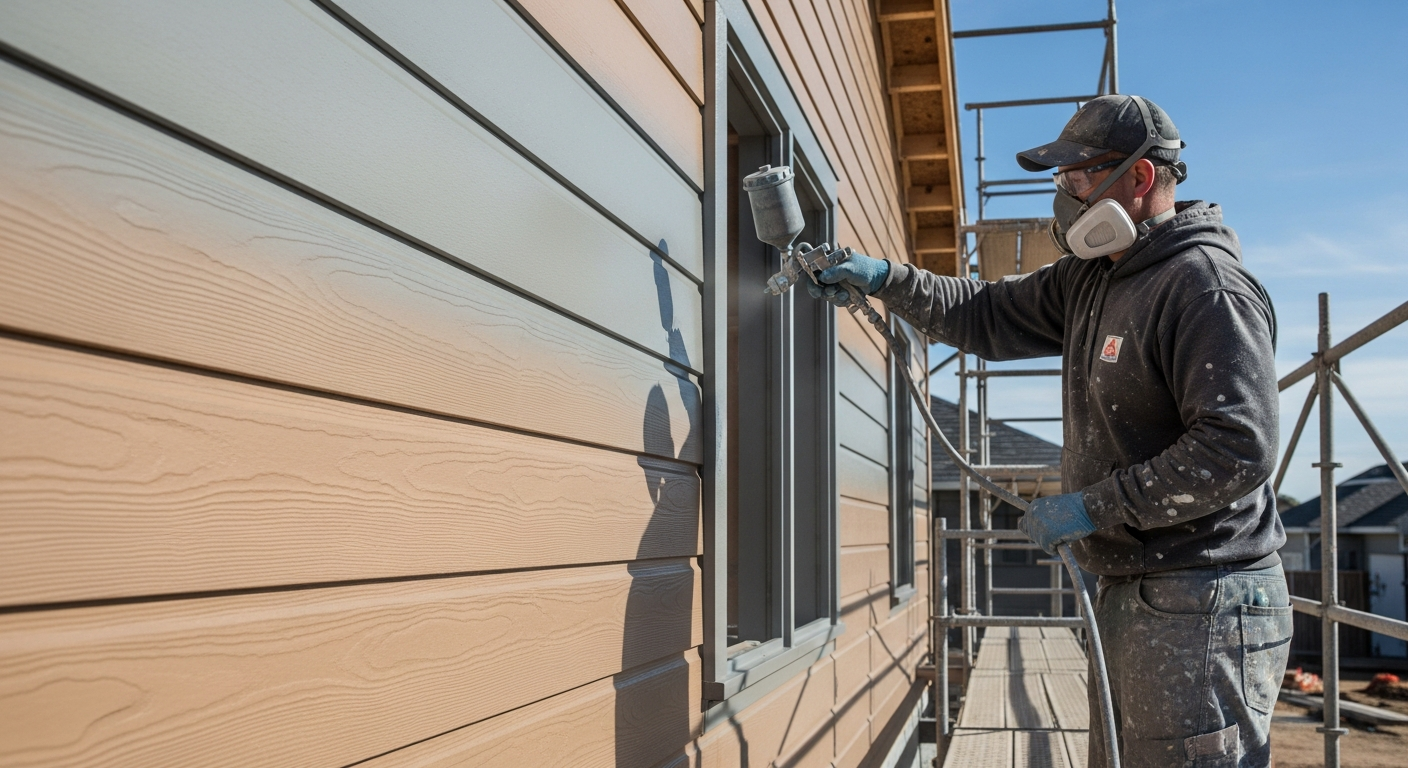
Spray application is the fastest method and provides the most uniform coating on most surfaces. It is ideal for stucco, vinyl, fiber cement, and any large surface area. For wood siding, spraying must be followed by back-brushing — using a brush to work the sprayed paint into the wood grain and overlap joints. Without back-brushing, sprayed paint can bridge over surface pores and joints without fully adhering, leading to premature failure. Stucco benefits from sprayer settings that deliver a heavier coat into the textured surface. Choose the right application approach based on your skill level and equipment availability.
Paint Lifespan Comparison by Siding Type
Understanding how long paint lasts on each siding type helps you plan maintenance schedules and set realistic expectations for your investment.
Wood siding: 3 to 7 years. Factors that shorten lifespan include tannin-rich species without proper blocking primer, high moisture environments, and budget paint products. Factors that extend lifespan include oil-based primer, premium acrylic topcoat, and regular maintenance including annual cleaning and prompt touch-ups.
Stucco: 5 to 12 years with standard acrylic, 10 to 20 years with elastomeric coatings. The wide range reflects the significant performance difference between standard and elastomeric products. Climate plays a major role — arid climates are kinder to stucco paint than humid, rainy environments where moisture constantly challenges the coating.
Brick: 8 to 17 years. Once properly primed and painted, brick's hard, stable surface holds paint exceptionally well. The main failure mode is moisture-related blistering caused by trapped moisture behind an impermeable coating. Using breathable paint is essential. Vinyl: 5 to 10 years. The light color restriction that prevents dark shades also reduces UV stress on the paint, contributing to good longevity. Fiber cement: 10 to 15 years. The most dimensionally stable common siding material provides the best paint longevity. Metal: 5 to 10 years. Chalking and adhesion loss are the primary failure modes on metal siding.
These lifespans assume quality paint, proper preparation, and moderate climate conditions. Monitor your siding annually for the warning signs that indicate repainting is needed, and act promptly when you see them.
Cost Comparison by Material
Painting costs vary by siding type due to differences in preparation requirements, paint consumption, and labor time. Understanding these differences helps you budget accurately.
Wood siding: $1.50 to $4.00 per square foot including prep, primer, and two coats of paint. The higher end applies to homes with extensive scraping, rot repair, and tannin-blocking primer needs. Stucco: $1.75 to $5.00 per square foot, with elastomeric coatings pushing toward the higher end. Stucco's porosity means higher paint consumption, and crack repair adds to labor costs.
Brick: $1.50 to $3.50 per square foot, with efflorescence treatment and masonry primer adding to the baseline cost. Vinyl: $1.00 to $2.50 per square foot, the most affordable to paint due to minimal preparation requirements and no primer needed in most cases. Fiber cement: $1.25 to $3.00 per square foot, moderate preparation needs and good paint coverage keep costs reasonable. Metal: $1.25 to $3.50 per square foot, depending on the extent of chalking removal and rust treatment required.
These ranges cover both DIY and professional application. Professional labor typically adds $1.00 to $2.00 per square foot to the material costs above. For a detailed project estimate tailored to your home, visit our pricing page.
Frequently Asked Questions
Can I paint vinyl siding a darker color? It depends. Standard vinyl siding should not be painted significantly darker than its original color because dark pigments absorb more heat, potentially causing warping and buckling. However, some paint brands offer vinyl-safe color palettes with heat-reflective pigments that allow moderately darker shades. Always check with the paint manufacturer and your siding warranty before choosing a dark color. Insulated vinyl siding has a higher heat tolerance and offers more color flexibility.
How long does painted brick last? Properly prepared and painted brick typically lasts 8 to 17 years between repaintings, making it the longest-lasting painted siding option. The key factors are thorough efflorescence treatment, appropriate masonry primer, and a breathable 100% acrylic latex topcoat. Avoid impermeable coatings that trap moisture inside the brick, as this causes blistering and premature failure.
Is elastomeric paint worth the extra cost for stucco? Yes, in most cases. Elastomeric coatings cost 2 to 3 times more per gallon than standard acrylic paint ($60 to $90 versus $25 to $45 per gallon) but last 10 to 20 years compared to 5 to 8 years for standard paint. They bridge hairline cracks up to 1/16 inch, provide superior waterproofing, and reduce the frequency of repainting. The higher upfront cost is typically offset by the extended lifespan within the first repainting cycle.
Do I need primer on fiber cement that is already primed? If the factory primer is in good condition and within the manufacturer's recommended exposure window (typically 90 to 180 days), you do not need additional primer and can apply your topcoat directly. If the factory primer has been exposed beyond this window and shows chalking or degradation, apply a fresh coat of masonry-compatible primer before topcoating. Always check the siding manufacturer's recommendations for your specific product.
Can I paint over old aluminum siding? Yes, aluminum siding is an excellent candidate for repainting. Remove all chalking residue by power washing or scrubbing with TSP solution, treat any corrosion spots with a metal primer, and apply two coats of quality 100% acrylic latex exterior paint. Properly repainted aluminum siding can look refreshed for 5 to 10 years, making it a cost-effective alternative to replacement.
Visualize Any Paint Color on Your Siding
No matter what type of siding your home has, choosing the right color is a critical decision that affects both curb appeal and property value. Use our AI House Painter to preview any paint color on your actual siding material. Upload a photo of your home and see photorealistic renderings of different colors on your specific siding type — whether it is weathered wood clapboard, textured stucco, painted brick, or smooth fiber cement.
For a complete exterior transformation preview, try HanoDecor's Exterior Visualizer to experiment with different color schemes, siding materials, and architectural details. Browse our design gallery for inspiration from real home makeovers, and explore coordinated color schemes that work beautifully with your siding type. Check out the best exterior paint colors for 2026 to find trending options that complement your material.
Painting Different Siding Types FAQs
Written by
James Park
Architectural Design Advisor specializing in exterior remodeling, siding systems, and structural home improvements. Licensed architect with 18 years of residential project experience.