When to Repaint Your House Exterior: 8 Warning Signs
Your home's exterior paint does far more than look good — it serves as the primary weather barrier protecting your siding, trim, and structural components from moisture, UV radiation, and temperature extremes. Knowing when that protection has failed is critical to preventing expensive damage. As a professional painter who has assessed thousands of homes, I can tell you that catching the warning signs early and acting promptly saves homeowners thousands of dollars in both painting costs and structural repairs. Here are the eight signs that tell you it is time to repaint.
How Long Does Exterior Paint Last?
Before examining the warning signs, it helps to understand the expected lifespan of exterior paint on different siding materials. These ranges assume quality paint applied over properly prepared surfaces in moderate climates.
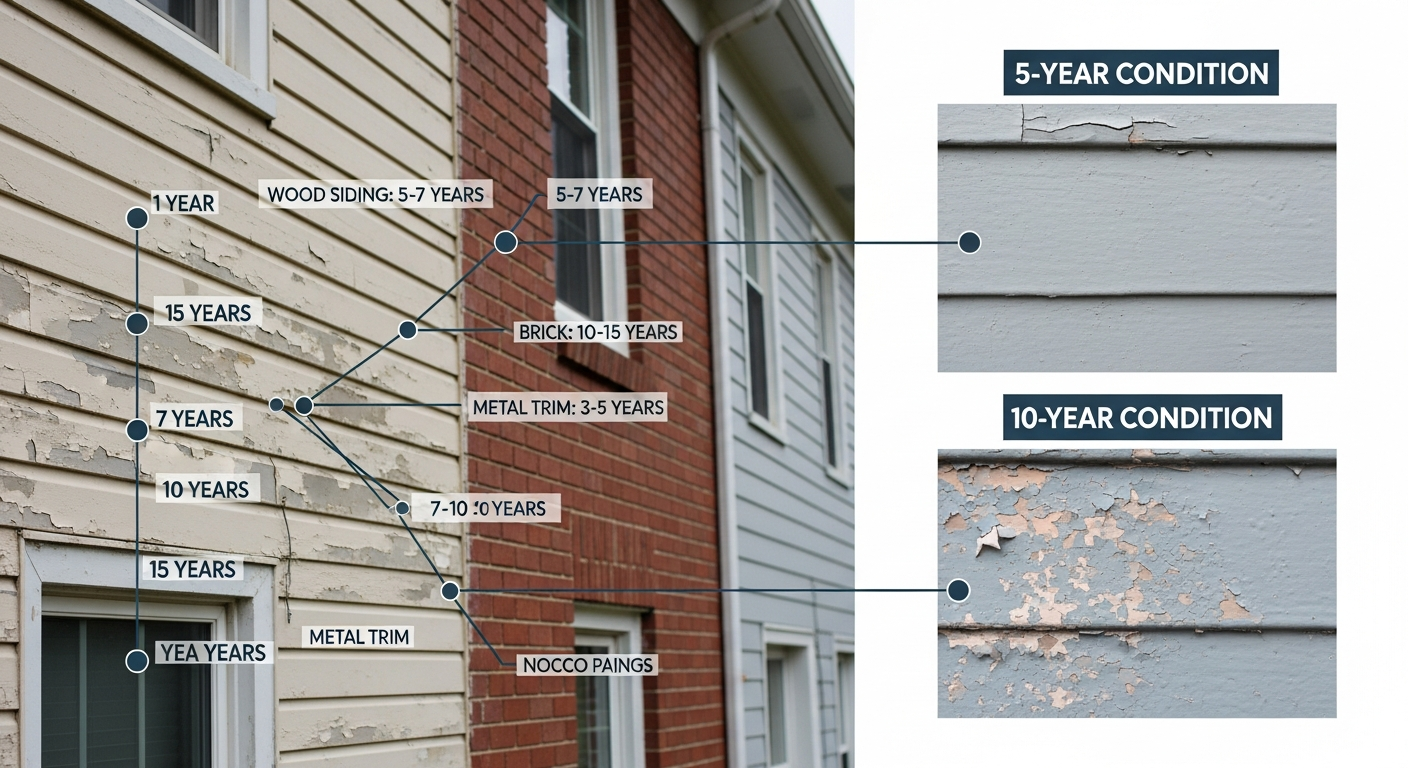
Wood siding: 3 to 7 years, with cedar and redwood on the shorter end due to tannin bleed and natural expansion. Vinyl siding: 5 to 10 years when painted (factory colors last indefinitely). Stucco: 5 to 12 years depending on elastomeric versus standard acrylic coatings. Brick: 8 to 17 years, as brick's hard surface holds paint exceptionally well once properly primed.
Fiber cement (HardiePlank): 10 to 15 years, making it the longest-lasting painted siding option. Factory-applied ColorPlus finishes from James Hardie carry a 15-year warranty. Metal and aluminum: 5 to 10 years, with chalking being the primary failure mode. Learn more about the characteristics of each material in our guide to painting different siding types.
Several factors shorten or extend these ranges. Paint quality matters enormously — premium brands like Sherwin-Williams Duration or Benjamin Moore Aura consistently outperform budget paints by 3 to 5 years. Climate intensity, sun exposure, application quality, and ongoing maintenance all play significant roles. A well-maintained paint job in a mild climate can exceed the upper range, while harsh conditions and neglect can cause failure well before the lower range.
Sign 1 — Peeling, Cracking, or Flaking Paint
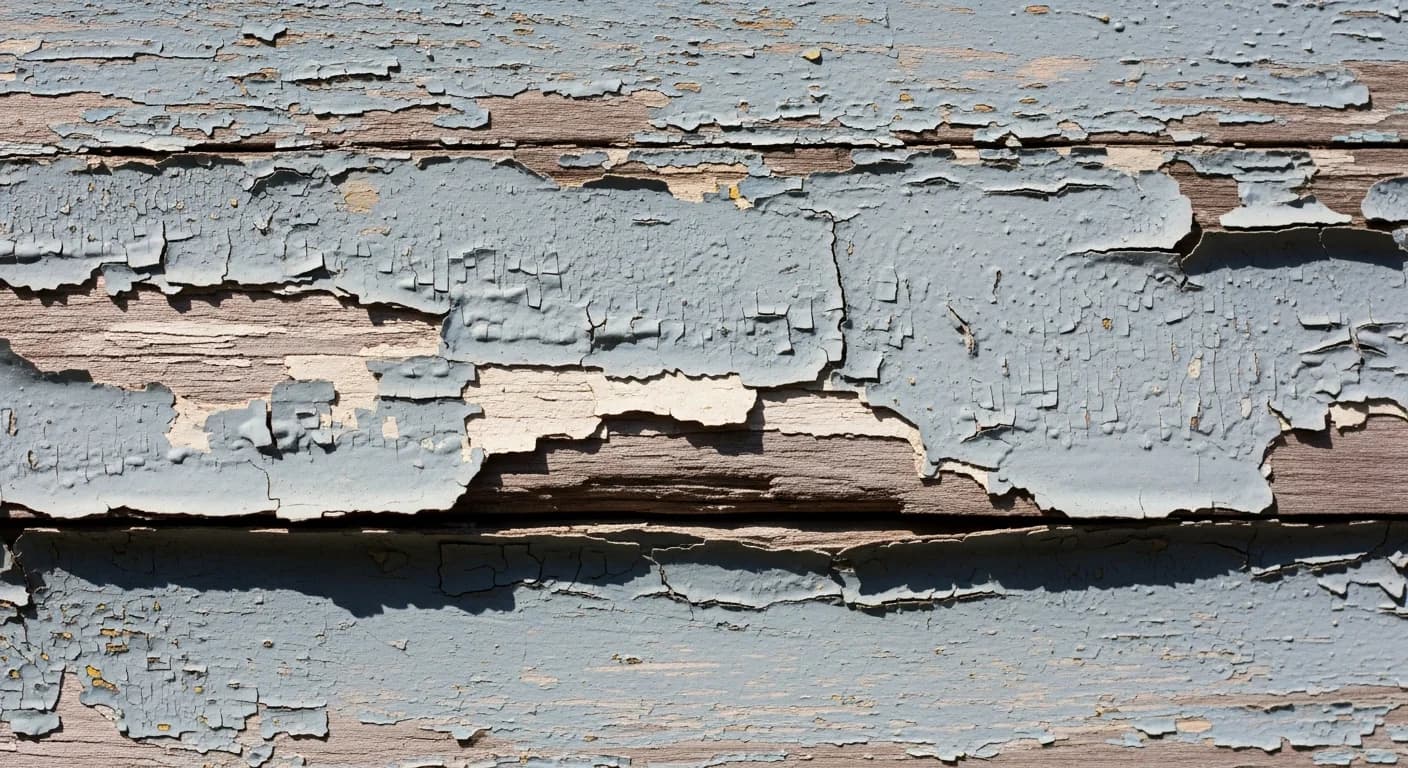
Peeling, cracking, and flaking are the most obvious and urgent signs that your exterior paint has failed. These conditions expose the bare substrate to moisture, UV radiation, and biological growth, creating a cascading cycle of deterioration that accelerates with each passing season.
What causes it: The most common cause is moisture infiltrating behind the paint film, either from exterior sources like rain and splash-back or interior sources like trapped humidity and plumbing leaks. Poor adhesion from inadequate surface preparation is the second leading cause, followed by simple age as the paint's binder breaks down under UV exposure. Applying paint too thickly can also cause cracking as the surface dries faster than the interior, creating stress fractures.
Severity assessment: Small, isolated patches of peeling on trim or windowsills may only require spot scraping, priming, and touch-up painting. When peeling covers more than 15% to 20% of a wall section, a full repaint of that section (or the entire house) becomes more practical and cost-effective. If peeling has progressed to the point where bare wood is exposed and has darkened or softened from moisture absorption, the repair becomes more complex and expensive.
Risk of ignoring it: Exposed wood absorbs moisture at 15 to 20 times the rate of painted wood. Within one to two seasons, this moisture absorption can progress to wood rot, insect infestation, and structural damage that turns a $3,000 paint job into a $10,000-plus siding repair and paint project.
Sign 2 — Fading and Discoloration
Color fading is the most gradual form of paint deterioration, often progressing so slowly that homeowners do not notice until they compare their home to a recently painted neighbor or look at old photographs.
South-facing and west-facing walls fade fastest because they receive the most direct sunlight throughout the day. It is common to see one side of a house still looking vibrant while the opposite side has faded significantly. This uneven fading is actually one of the clearest indicators that it is time to repaint the entire exterior for a consistent appearance.
Dark colors fade more noticeably than light colors. A deep navy blue or forest green will show visible fading within 3 to 5 years on sun-exposed surfaces, while a light gray or cream may maintain its appearance for 8 to 10 years. This is because darker pigments absorb more UV radiation, which breaks down the color molecules faster. Modern premium paints with UV-blocking technology significantly reduce fading rates — Benjamin Moore Aura's Color Lock technology is particularly effective at maintaining deep color accuracy.
Fading is primarily a cosmetic concern in its early stages, but severe fading indicates that the paint's protective binder has also degraded. When fading reaches the point where the original color is no longer recognizable, the paint's weather protection has likely diminished as well, and repainting should be planned. Consider using our tools to explore the best exterior paint colors for 2026 as part of your color refresh.
Sign 3 — Chalking (Powdery Residue on Surface)
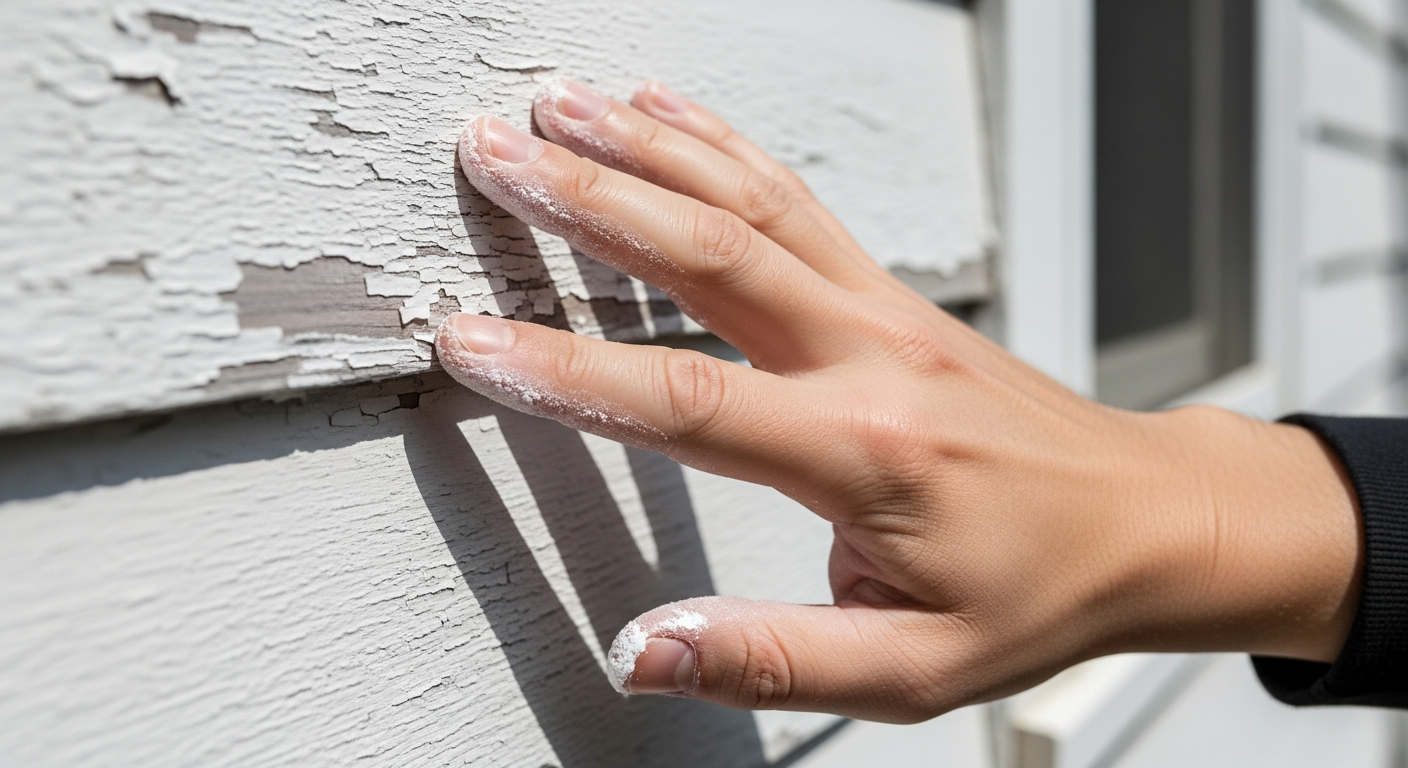
Chalking occurs when the paint's binder breaks down from UV exposure, releasing pigment particles as a fine, powdery residue on the surface. You can test for chalking by rubbing your hand firmly across the painted surface — if your palm picks up a noticeable white or colored powder, chalking has begun.
Some chalking is normal and expected. It is actually a designed self-cleaning mechanism in many exterior paint formulations, allowing the paint to shed a thin layer of surface contamination with each rain. Moderate chalking that has been occurring for several years does not necessarily indicate an immediate need to repaint.
Excessive chalking is the concern. If your hand comes away heavily coated in powder, or if chalky residue is staining surfaces below the painted area (foundations, walkways, plants), the paint has deteriorated significantly. Excessive chalking indicates the UV-protective additives are exhausted and the binder is breaking down rapidly. At this stage, the remaining paint has little protective value and repainting should be scheduled promptly.
Before repainting over a chalky surface, thorough cleaning is essential. Power washing at 2,500 to 3,000 PSI removes most surface chalk, but heavy chalking may require scrubbing with TSP solution followed by rinsing. Any residual chalk left on the surface will prevent the new paint from adhering properly, leading to premature failure of the new coat.
Sign 4 — Blistering or Bubbling
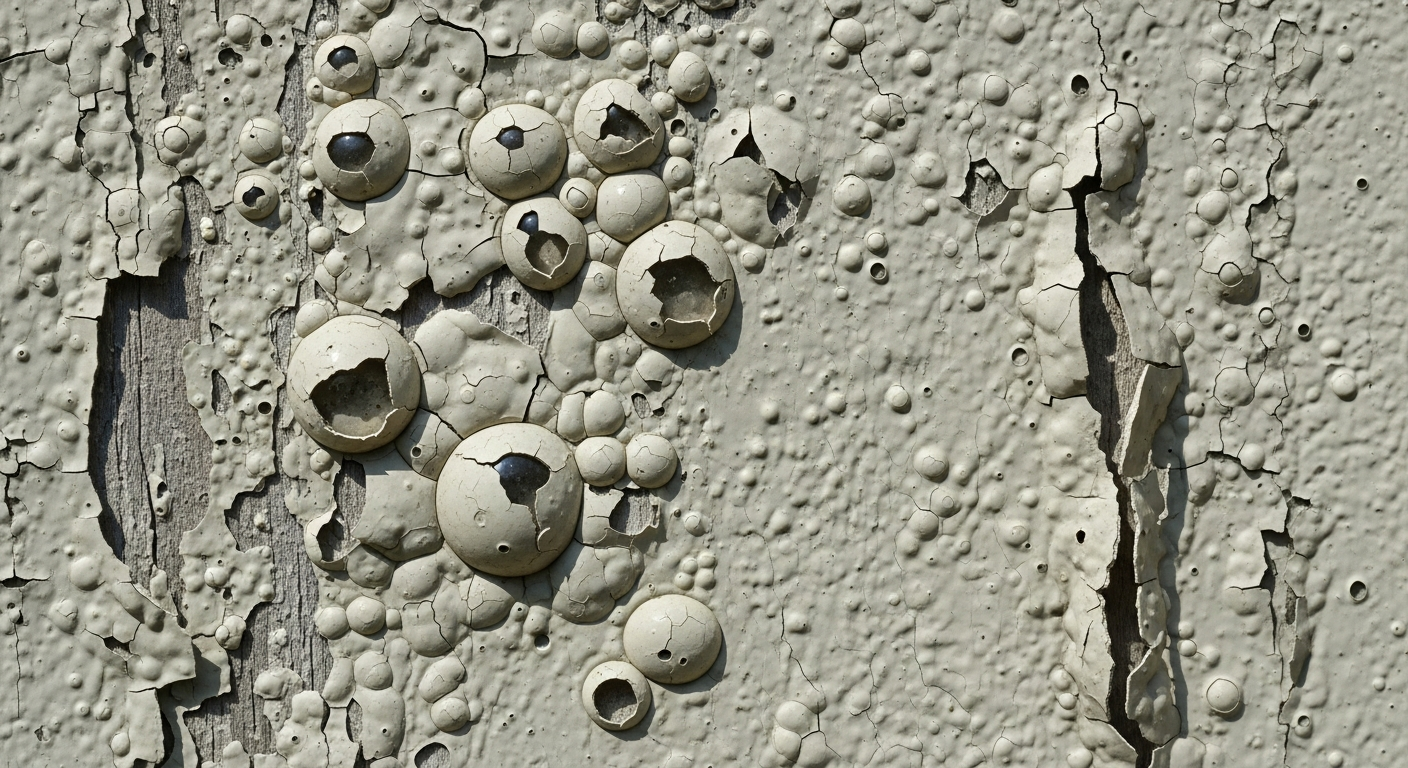
Blisters and bubbles in exterior paint are caused by either heat or moisture, and identifying which type you have is critical because the fix is different for each.
Heat blisters form when paint is applied in direct sunlight or on surfaces that are too hot. The solvent or water in the paint evaporates so quickly that it creates vapor pockets beneath the film before it can fully cure. Heat blisters typically affect only the top coat, and when you pop them, you will find solid, intact paint beneath. These are primarily a cosmetic and application issue. The fix involves scraping the blistered area, sanding smooth, and repainting — preferably in the shade or during cooler hours.
Moisture blisters are more serious. They form when water vapor from inside the wall pushes outward through the substrate and paint film. When you pop a moisture blister, you will often find bare wood or substrate beneath, and the wood may feel damp. Moisture blisters indicate a systemic moisture problem that must be identified and resolved before repainting, or the new paint will blister in the same locations.
Common moisture sources include bathroom and kitchen exhaust venting into wall cavities, missing or damaged vapor barriers, plumbing leaks, poor attic ventilation, and exterior water infiltration through failed caulking or flashing. Address the root cause first, allow the area to dry completely, then scrape, prime with an appropriate primer, and repaint. Simply painting over blisters without fixing the moisture source is a guaranteed recipe for repeated failure.
Sign 5 — Mold, Mildew, or Algae Growth
Black, green, or gray patches on your siding indicate biological growth that is both a health concern and a paint failure indicator. Mold and mildew thrive on shaded, north-facing surfaces and in areas with limited air circulation, such as behind bushes or under eaves.
Biological growth signals that the paint's mildew-resistant additives have been depleted. Modern exterior paints contain fungicidal additives that prevent mold and mildew colonization for several years. When these additives are exhausted, biological growth takes hold and begins degrading the paint film, creating a rough, porous surface that holds moisture and accelerates further deterioration.
In some cases, thorough cleaning with a bleach solution (one part bleach to three parts water) followed by application of an exterior mildew-resistant sealant can extend the paint's life by a year or two. However, if mold and mildew return within a few months of cleaning, the paint has reached the end of its effective life and a full repaint with a premium mildew-resistant product is the proper solution.
Do not paint over mold or mildew without thoroughly killing and removing it first. The organisms will continue to grow beneath the new paint, causing it to fail rapidly. Persistent mold growth may also indicate a moisture issue in the wall assembly that should be investigated before repainting. Check your siding condition to determine if the problem is paint-related or structural.
Sign 6 — Hardened or Cracked Caulking
Caulking around windows, doors, trim joints, and siding intersections is a critical component of your home's weather envelope. When caulk dries out, hardens, and cracks, it creates pathways for water to infiltrate behind the siding, causing rot, mold, and paint failure from the inside out.
Inspect your caulking annually, ideally every spring. Press on caulk joints with your fingertip — healthy caulk should feel flexible and springy. If it is hard, brittle, or crumbles when pressed, it needs replacement. Also look for gaps where caulk has pulled away from one or both surfaces, indicating adhesion failure.
Caulk typically lasts 5 to 7 years for standard products and 10 to 15 years for premium sealants like DAP Big Stretch or GE Dynaflex 230. If your caulking has failed, it is a strong indicator that your paint is also approaching the end of its life, since they were likely applied at the same time. Plan to recaulk all joints as part of your next repainting project — proper caulking is an essential step in exterior painting preparation.
Pay particular attention to horizontal surfaces like windowsills and ledger boards, which are most vulnerable to water pooling. Vertical caulk joints can sometimes be re-caulked independently, but horizontal joints that have failed badly often indicate broader water management issues that a full repaint project should address.
Sign 7 — Visible Wood Grain or Bare Substrate
When paint has worn through to the point where you can see the raw wood grain, concrete texture, or bare metal beneath, the situation is urgent. Bare substrate exposed to the elements deteriorates rapidly, and every week of exposure increases the scope and cost of repair.
Bare wood absorbs moisture like a sponge. Unpainted wood can absorb enough rainwater in a single storm to raise its moisture content well above the 15% threshold that leads to rot and decay. South-facing and west-facing surfaces are particularly vulnerable because they cycle between wet and dry more aggressively, which accelerates cellular breakdown in the wood.
Priority areas that demand immediate attention include windowsills, door thresholds, horizontal trim surfaces, and any area where water tends to pool or run. These locations wear through first because they face the combined assault of UV radiation, direct rain, and standing water. If you can see bare wood on these surfaces, do not wait for a full repaint — spot-prime and paint these areas immediately to prevent rot while you plan the larger project.
Bare substrate also provides a foothold for mold, mildew, and insect damage. Carpenter ants and termites are attracted to moisture-damaged wood. What starts as a paint maintenance issue can escalate into a structural pest control problem if left unaddressed. The cost of repainting is a fraction of the cost of replacing rotted structural members.
Sign 8 — Neighboring Homes Look Noticeably Fresher
This sign is about context and curb appeal rather than technical paint failure. When the homes around you have been freshly painted and yours has not, the visual contrast makes your home look older and less maintained than it actually is.
Curb appeal directly impacts your home's perceived value. Real estate research consistently shows that exterior appearance is the single biggest factor in a buyer's first impression, and first impressions significantly influence offer prices. A fresh exterior paint job delivers a 51% to 55% return on investment according to Remodeling Magazine's Cost vs. Value Report, making it one of the most cost-effective home improvements you can make.
If you are considering selling your home, plan to repaint 2 to 3 months before listing. This gives the paint time to fully cure and any minor touch-ups to be addressed before photography and showings. According to real estate data, a black front door can add up to $6,400 to your sale price (Zillow), and homes with greige or warm neutral exteriors sell for premium prices. Explore exterior color schemes that maximize your home's appeal.
Even if you are not selling, maintaining your home's exterior paint is a matter of neighborhood pride and property value protection. HOA communities may have maintenance requirements that mandate repainting within certain timeframes. And there is genuine satisfaction in knowing your home looks its best from the street.
How to Extend Your Paint Job's Lifespan
Proactive maintenance can add 2 to 4 years to your paint job's effective life, delaying the need for a costly full repaint and keeping your home looking fresh longer.
Annual power washing removes dirt, pollen, mold spores, and atmospheric contaminants that degrade the paint surface over time. A professional power washing costs $200 to $400, or you can rent a pressure washer and do it yourself for $75 to $150 per day. Use moderate pressure (1,500 to 2,000 PSI) for routine cleaning — you are washing, not stripping.
Touch up problem areas immediately. Keep a quart of your exterior paint stored in a climate-controlled space for touch-ups. When you spot a small area of peeling, a crack in the caulk, or a chip from a stray rock from the lawn mower, address it within a week. Small repairs that take 30 minutes and cost nothing can prevent damage that requires hundreds of dollars to fix later.
Maintain your gutters and downspouts. Overflowing gutters dump water directly onto your siding, accelerating paint failure in concentrated areas. Clean gutters twice a year, repair leaking joints, and ensure downspouts direct water at least 4 to 6 feet away from the foundation. Trim vegetation away from your siding, maintaining 6 to 12 inches of clearance. Plants touching siding trap moisture and create conditions perfect for paint failure and rot.
Inspect caulking every spring and recaulk any joints that show cracking or separation. This preventive maintenance costs under $20 in materials and an hour of time but prevents the water infiltration that causes the most expensive types of paint failure.
Best Season and Weather for Repainting
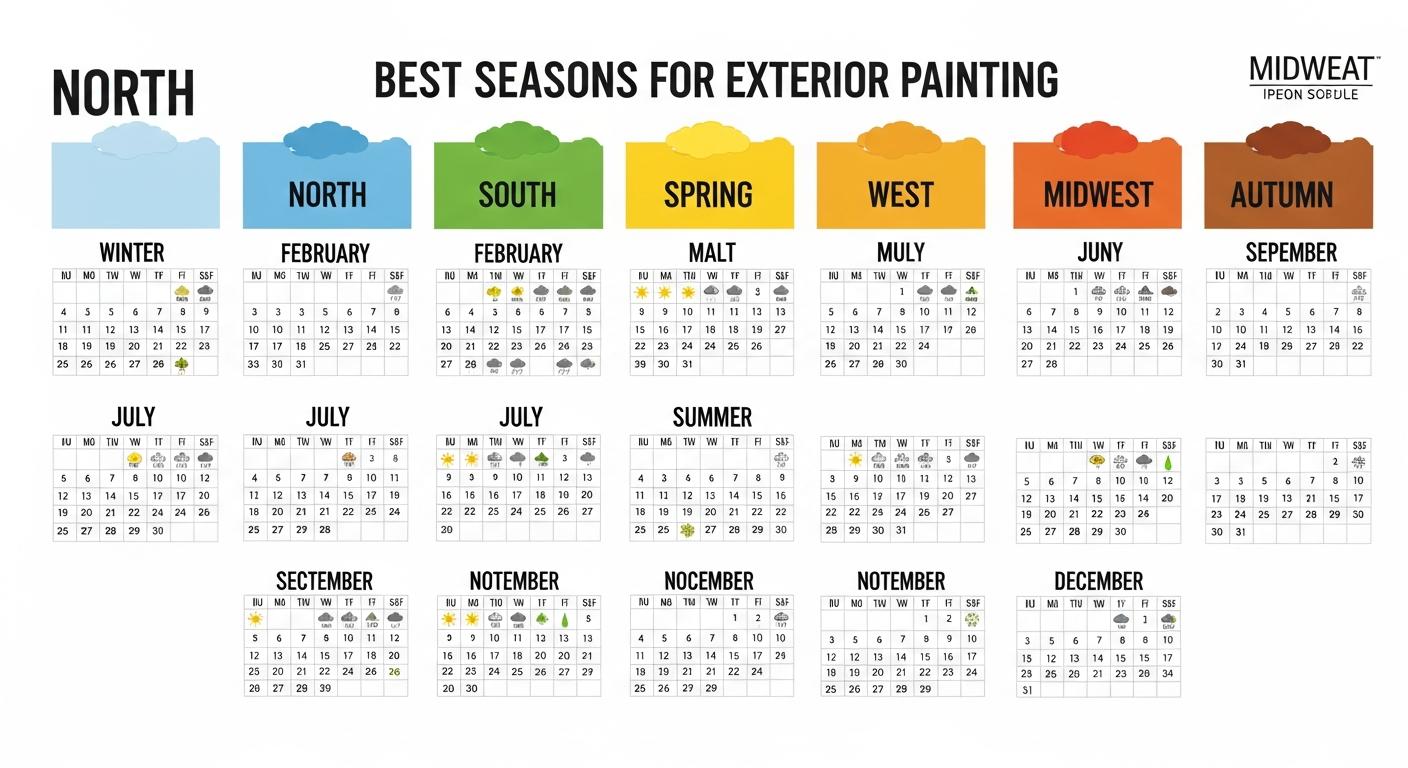
Timing your repaint correctly ensures the best adhesion, cure, and long-term performance. The ideal painting conditions are 50 to 85 degrees Fahrenheit air temperature, 40% to 70% relative humidity, and no rain forecast for 24 to 48 hours after application.
Spring and fall offer the optimal conditions in most regions. Moderate temperatures, lower humidity (compared to summer), and predictable weather windows make these seasons ideal for exterior painting. Avoid painting in the peak heat of summer when surface temperatures can exceed 100 degrees Fahrenheit on south-facing walls, causing premature drying, lap marks, and blistering.
Off-season painting can save money. Many painting contractors offer 10% to 15% lower rates in late fall and early spring when demand is slower. If your climate allows it, scheduling your project during these shoulder seasons gives you both better pricing and often more attentive service since contractors have fewer competing projects. Consult our pricing guide to budget your project effectively.
When planning your project timeline, allow for weather delays. Even in the best seasons, unexpected rain can push a project back by several days. If you are planning a DIY project, build in extra weekends to your schedule for weather contingencies.
Frequently Asked Questions
How often should I repaint my house exterior? The answer depends on your siding type, paint quality, climate, and maintenance habits. Wood siding typically needs repainting every 3 to 7 years, vinyl every 5 to 10 years if painted, stucco every 5 to 12 years, brick every 8 to 17 years, and fiber cement every 10 to 15 years. Using premium paint and maintaining your exterior through annual cleaning and prompt touch-ups pushes you toward the upper end of these ranges.
Can I just paint over peeling paint? No. Painting over peeling paint is one of the most common and costly mistakes homeowners make. The new paint will adhere to the old loose paint, not to the substrate, and will peel off along with the old paint, often within months. You must scrape all loose paint, sand the edges smooth, prime bare areas, and then apply your topcoat. Learn the complete process in our exterior painting preparation guide.
Does exterior paint protect against rot? Yes, intact exterior paint is your siding's primary defense against moisture absorption, which causes rot. Paint creates a moisture barrier that prevents water from penetrating the wood cells. When paint fails through peeling, cracking, or wearing through, the underlying wood is exposed to moisture and begins deteriorating. This is why prompt repainting when you see warning signs is so important.
What time of year is cheapest to paint a house? Late fall (October to November) and early spring (March to April) typically offer the best pricing. Painting contractors experience their lowest demand during these shoulder seasons and often discount their rates 10% to 15% to keep crews working. Winter can be even cheaper in mild climates, but temperature and moisture limitations restrict the available working days.
Preview Your New Paint Color Before Committing
If your home is showing any of these eight warning signs, now is the time to start planning your repaint. Before you commit to a color, upload a photo of your home to our AI House Painter and preview any paint color on your actual exterior. See how different colors look in different lighting conditions, compare warm and cool palettes, and make your decision with confidence.
You can also use HanoDecor's Exterior Visualizer to explore complete exterior transformations, including color schemes, siding options, and landscaping changes. Browse our design gallery for inspiration from real before-and-after transformations, and check out our curated exterior paint ideas for trending color combinations that will give your home a fresh, modern look.
When to Repaint Your House Exterior FAQs
Written by
Sarah Chen
Senior Color Consultant with 12 years of residential exterior design experience. Specializes in architectural color theory, paint technology, and curb appeal optimization.