Home Office Decor Ideas: Design a Productive, Stylish Workspace
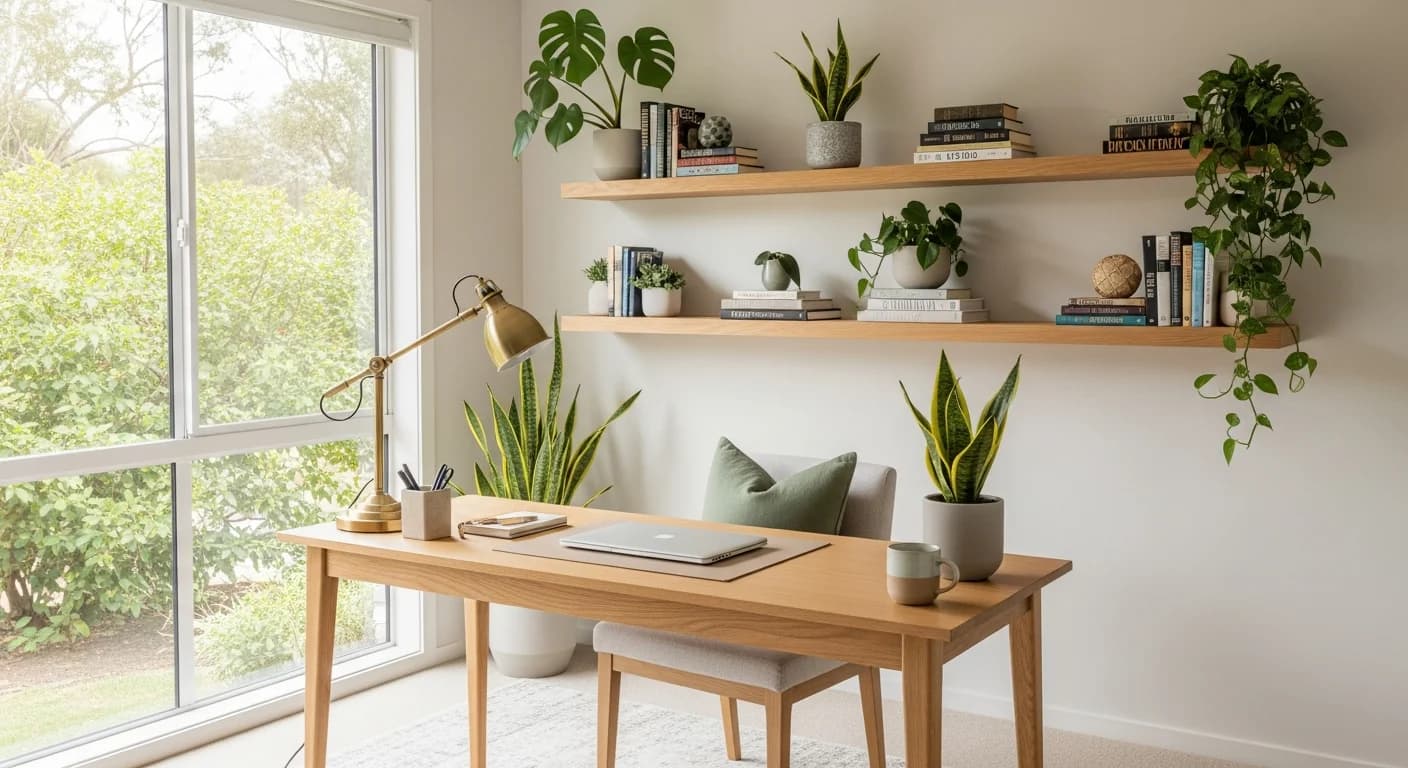
The way you decorate your home office directly affects how well you work. Research from the University of Exeter found that employees who have control over their workspace design are up to 32 percent more productive than those in lean, undecorated environments. With remote and hybrid work now a permanent fixture for millions of professionals, your home office decor is no longer an afterthought — it is a strategic investment in your daily performance, creativity, and mental well-being.
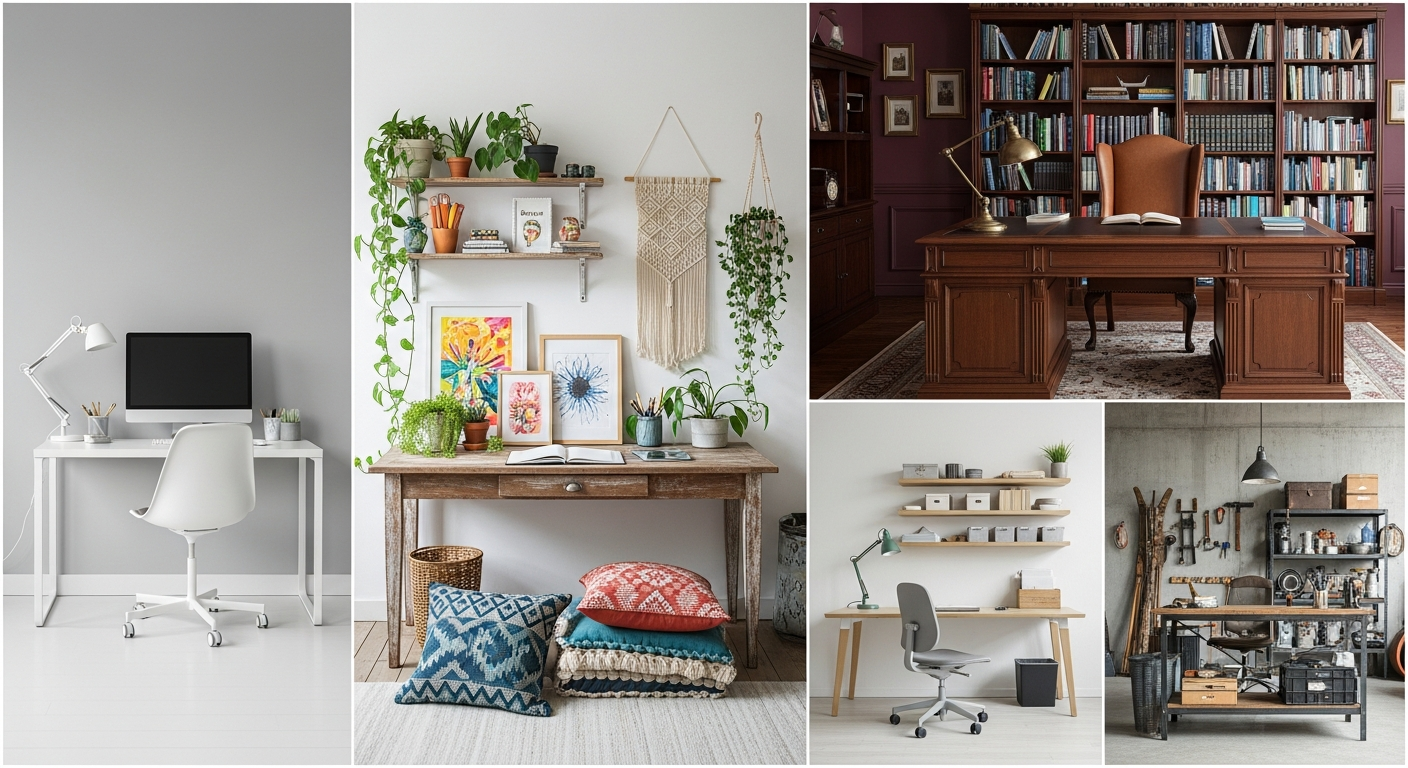
This guide covers every dimension of home office decorating: from desk setup and styling to wall decor, lighting design, storage solutions, and dedicated sections for styling workspaces for her and for him. You will also find ideas for small and shared offices, tips for creating professional Zoom backgrounds, and answers to the most common home office decor questions. For a broader look at decorating strategies across every room, explore our complete home decor ideas guide for 2026.
Quick Overview: Why Home Office Decor Matters
A thoughtfully decorated home office does more than look good on video calls. Color psychology research shows that blue and green tones boost concentration, while warm neutrals reduce stress. Proper lighting prevents eye strain and headaches. Organized surfaces lower cognitive load, allowing you to focus on deep work rather than visual clutter.
The best home office decor balances three priorities: productivity (ergonomic layout, task lighting, minimal distractions), personality (art, color, objects that inspire you), and professionalism (a background that communicates competence during video calls). Whether you have an entire spare room or a 30-inch closet nook, the principles remain the same. Start with function, layer in style, and let your workspace reflect who you are.
The sections below walk you through every element — desk organization, wall treatments, lighting layers, storage systems, and tailored ideas for different aesthetics and room sizes — with specific product recommendations, color palettes, and layout ideas you can implement this weekend.
Desk Setup and Styling
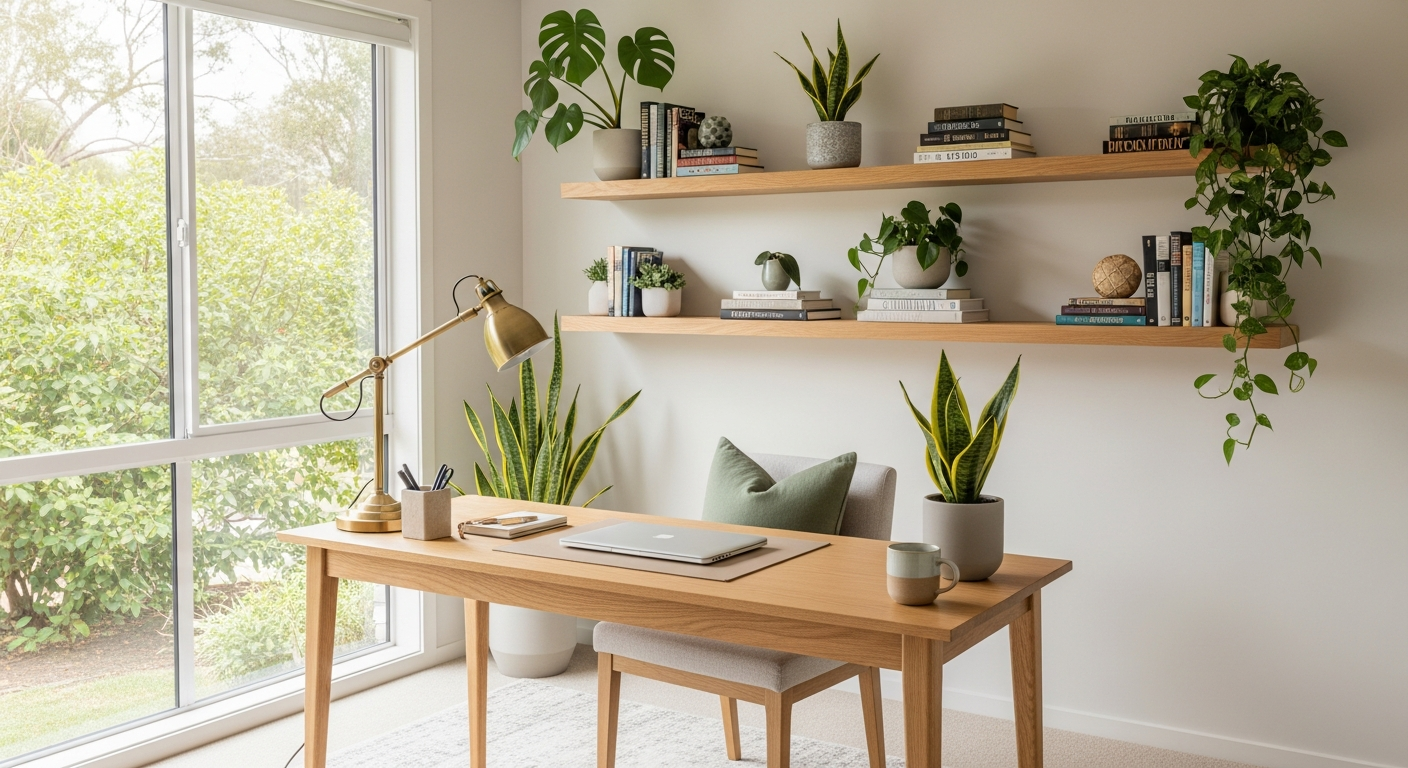
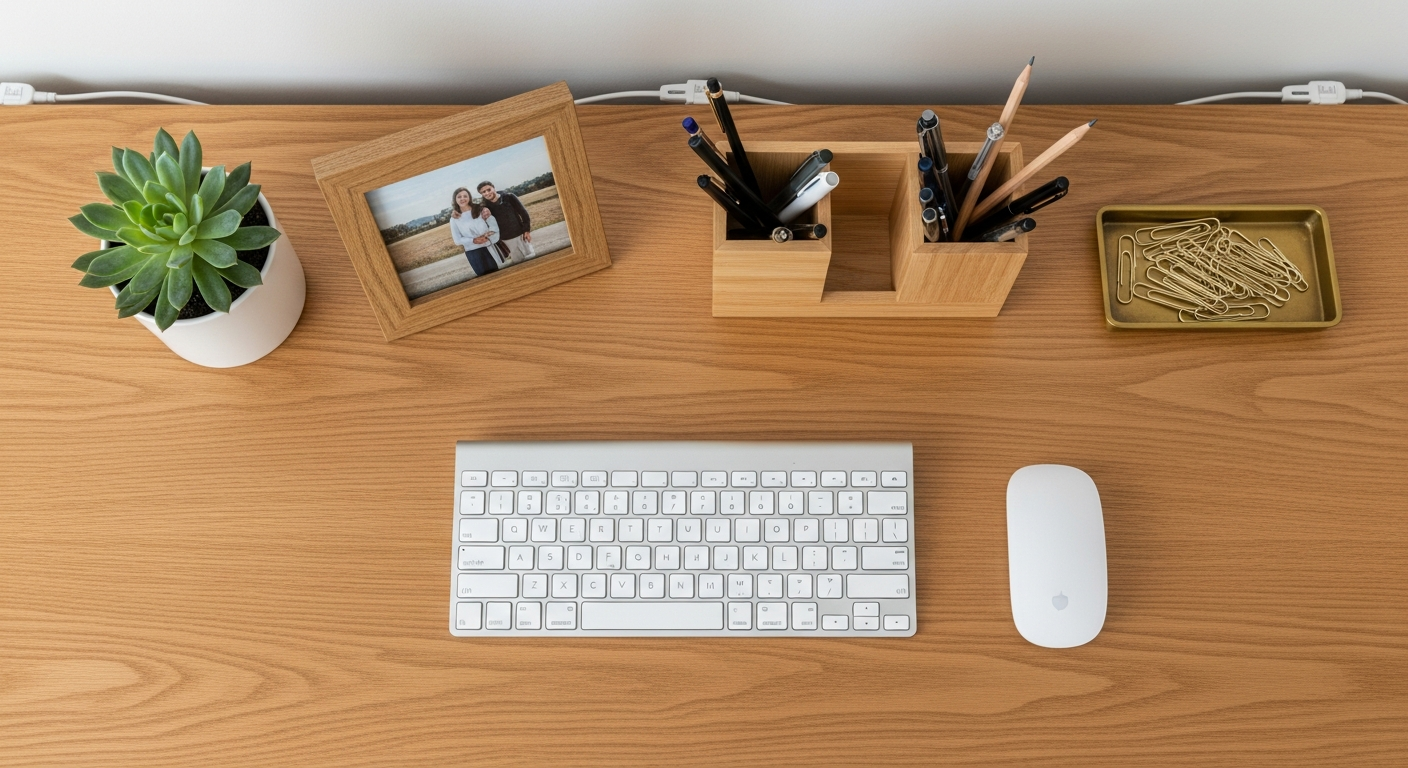
Your desk is the command center of your home office, and how you organize and style it sets the tone for every workday. The goal is a surface that feels clean and intentional without being sterile.
Monitor Stand Arrangements
A wooden or marble monitor riser adds both height and style while freeing valuable desktop space beneath it. Position your monitor at eye level — the space under the stand becomes prime real estate for a small tray holding pens, sticky notes, and your phone. For dual-monitor setups, matching risers or a single wide stand create visual symmetry. Monitor arms mounted to the desk edge offer the most flexibility and completely free the surface below.
Desktop Accessories and Desk Plants
Coordinated accessories unify your workspace. A matching pen cup, a small potted succulent or desk-friendly plant, a decorative clock, and a leather or cork desk pad anchor the composition. Choose accessories in a cohesive color family — brushed brass, matte black, walnut wood, or white ceramic all create pulled-together looks. A small pothos, snake plant, or ZZ plant on the desk corner adds life and has been shown to reduce stress and improve air quality.
Cord Management
Nothing undermines a styled desk faster than tangled cables. Use adhesive cable clips along the back edge, a cable management tray mounted underneath, or a fabric cable sleeve to bundle cords together. Wireless peripherals — keyboard, mouse, charging pad — eliminate cables entirely and create the cleanest possible aesthetic. For dual-monitor setups, a single USB-C dock reduces the cable count from eight or more down to one. Velcro cable ties are reusable and let you adjust as your setup evolves.
Desk Drawer Organization
Use drawer dividers, small bins, or bamboo organizers to create designated zones for supplies. The top drawer holds daily essentials (pens, notepad, chargers), while lower drawers store less-frequently used items. A tidy drawer system means your desktop stays clear because everything has a home.
Home Office Wall Decor
Walls are the largest decorating opportunity in any office, and they set the visual mood of the room. The right wall decor inspires without distracting.
Gallery Walls
A gallery wall behind or beside your desk creates visual interest and personality. Mix frame sizes and orientations, but maintain a consistent frame finish (all black, all natural wood, or all white) for cohesion. Include a mix of content: one or two pieces of art, a motivational quote print, a personal photo, and perhaps a small mirror or decorative object mounted on the wall. Space frames 2 to 3 inches apart for a collected, intentional look.
Pegboard Organizer
Pegboards offer customizable storage — hang headphones, scissors, tape, and small shelves exactly where you need them. Paint the pegboard to match your wall color so it blends in, or choose a contrasting color to make it a feature piece. For DIY enthusiasts, building a custom pegboard organizer is a satisfying weekend project that costs under fifty dollars in materials.
Whiteboard Integration
A framed whiteboard or glass dry-erase board serves as both decor and productivity tool. Wall-mounted glass boards in white, black, or clear look sleek and professional while giving you space to brainstorm, plan, and track goals. Position it within arm's reach of your desk for quick idea capture during calls.
Motivational Art
Choose art that energizes rather than relaxes — save the serene landscapes for the bedroom. Abstract art in your office color palette, typographic prints with meaningful quotes, or architectural photography all work well. For a modern aesthetic, oversized single pieces create a bold focal point without the complexity of a gallery arrangement.
Office Lighting That Works
Lighting is the most underestimated element in home office decor. Poor lighting causes eye strain, headaches, and afternoon fatigue. Great lighting makes the room feel larger, highlights your decor, and keeps you energized throughout the day.
Task Lighting
Every desk needs a dedicated task light. An adjustable desk lamp with a color temperature between 4,000K and 5,000K (cool white to daylight) provides optimal illumination for reading and screen work. Look for lamps with adjustable brightness and color temperature — many modern LED desk lamps offer both. Position the lamp on the opposite side of your dominant hand to minimize shadows while writing.
Ambient Lighting
Overhead lighting should be soft and diffused, not harsh. A flush-mount or semi-flush fixture with a warm white bulb (2,700K to 3,000K) creates comfortable background illumination. If your office has a ceiling fan, replace the stock light kit with an attractive shade. For rooms without overhead wiring, a floor lamp in the corner fills the same role. Avoid relying solely on overhead fluorescent lighting — it creates flat, institutional-feeling light.
Natural Light Optimization
Position your desk perpendicular to the window rather than facing it (which causes screen glare) or backing up to it (which creates silhouette effects on video calls). Sheer curtains diffuse harsh direct sunlight while preserving brightness. If your office faces north or gets limited natural light, a daylight-balanced LED panel mounted on the wall mimics natural light and improves mood during darker months.
Blue Light Considerations
Extended screen time exposes you to blue light that can disrupt sleep patterns and cause digital eye strain. Consider a monitor with a built-in blue light filter, or use software like f.lux to automatically warm your screen's color temperature as evening approaches. Blue-light-filtering glasses offer another layer of protection without altering your screen display. LED strip lighting behind your monitor in warm tones (2,700K) also reduces contrast between the bright screen and dark surroundings, easing eye fatigue.
Storage and Organization
A cluttered office drains focus and creates visual noise that competes with your work. Strategic storage keeps supplies accessible while maintaining the clean, styled look your office deserves.
Bookshelf Styling
Style office bookshelves using the rule of thirds: one-third books (some vertical, some horizontal stacks), one-third decorative objects (plants, framed photos, small sculptures), and one-third functional items (storage boxes, binders, tech accessories). Lean a small piece of art against the wall on a shelf for a casual, layered look. Color-coordinate book spines or turn them spine-in for a neutral, textural appearance that lets decorative objects stand out.
Filing Solutions
Traditional filing cabinets can be both functional and attractive. A mid-century modern credenza with file drawers doubles as a surface for a printer, lamp, or decorative display. For paperless offices, a single desktop file sorter or magazine holder keeps essential documents within reach. Woven baskets on shelves hide cables, office supplies, and miscellaneous items while adding texture. Label everything — labeled storage is the difference between organized and just hidden.
Floating Shelves
Floating shelves above or beside the desk provide both storage and display space without consuming floor area. Install them at varied heights for visual interest, or line them up in a grid for a minimalist look. Keep the palette coordinated with your desk accessories for a pulled-together feel. Heavier items go on lower shelves; lighter decorative pieces belong higher up.
Hidden Storage
The best storage is the kind you do not see. Ottoman seats with interior compartments, desk pedestals with deep drawers, and wall-mounted cabinets with doors all conceal clutter while maintaining your room's aesthetic. A printer housed inside a cabinet with a pull-out shelf, or a router hidden in a decorative box with ventilation holes, keeps technology accessible but invisible. Built-in cabinetry around a window creates a window-seat reading nook with drawers underneath — a dual-purpose solution that adds charm and hides office supplies.
Home Office Decor Ideas for Her
Designing a workspace that feels both productive and personally expressive is especially important when you spend eight or more hours a day there. These ideas create a home office for her that balances beauty with function.
Soft Colors and Feminine Touches
Soft sage green, dusty rose, warm cream, and muted lavender create calming yet sophisticated office environments. For a bolder approach, try deep teal with brass accents or charcoal with blush pink. Paint an accent wall behind the desk or use peel-and-stick wallpaper in a subtle botanical or geometric pattern to add personality without overwhelming the space.
Floral Accents and Curated Desk Accessories
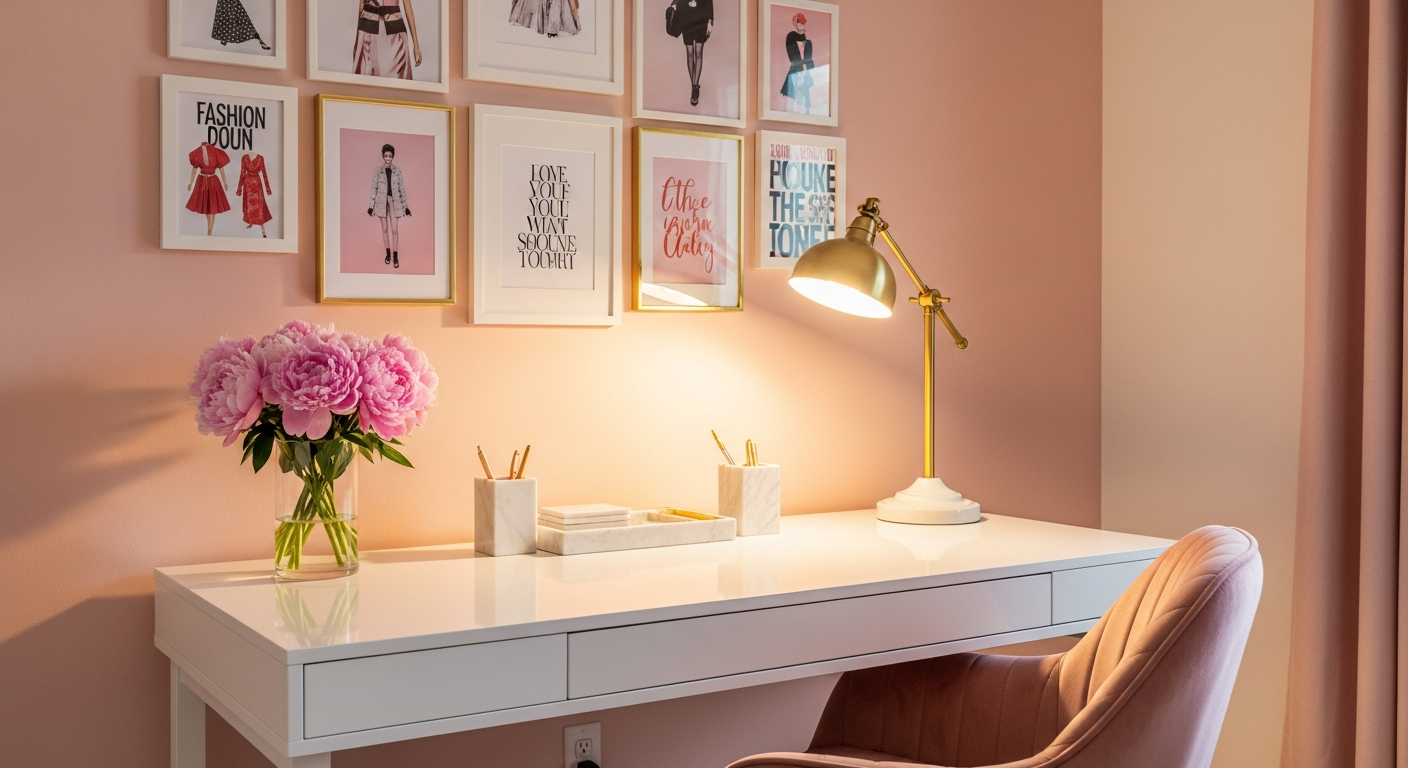
Coordinated desk accessories in marble, acrylic, or brushed gold elevate the workspace. A decorative tray for daily essentials, a ceramic mug for pens, a small vase with fresh flowers or dried stems, and a scented candle (unlit during work hours for a subtle visual accent) all contribute to a curated feel. Floral arrangements — whether fresh peonies, dried eucalyptus, or faux cherry blossoms — add softness and color that refreshes the space weekly.
Textiles and Comfort
A plush throw draped over the office chair, a textured cushion for lumbar support, and a soft area rug underfoot all add warmth. Choose fabrics in your color palette — linen, velvet, or bouclé textures add visual interest. Curtains in a complementary pattern or solid tie the room together. These elements make the office feel like a room you want to spend time in, not just a place you have to work.
Home Office Decor Ideas for Him
A masculine home office leans into rich materials, strong lines, and purposeful minimalism. These ideas create a home office for him that feels grounded and focused.
Dark Tones and Masculine Aesthetic
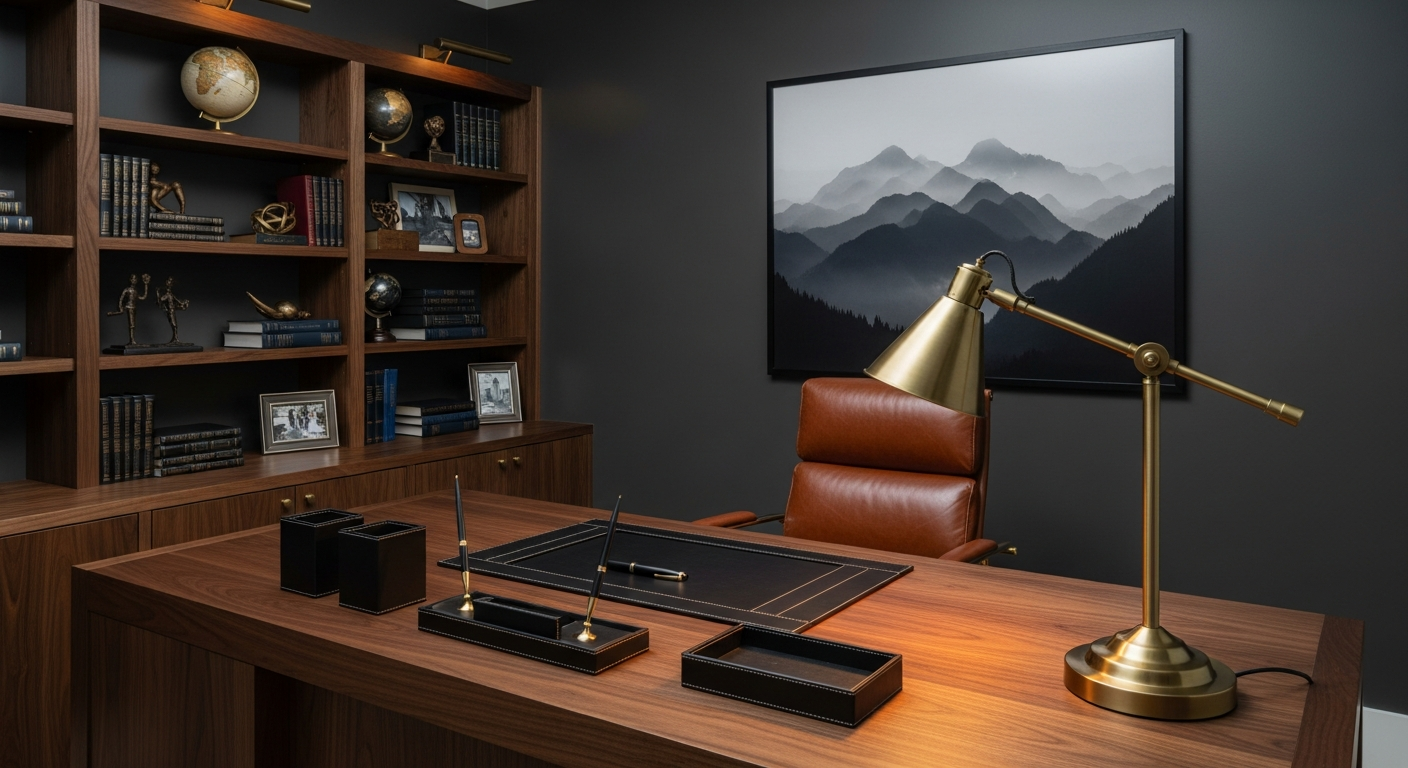
Deep charcoal, navy, forest green, espresso brown, and warm gray form the foundation. Pair dark walls with lighter furniture for contrast, or go tonal with a dark desk against a dark wall for a moody, enveloping feel. Materials matter: walnut or oak wood, aged leather, brushed steel, matte black metal, and concrete or stone accents all convey strength and sophistication.
Industrial Accents and Tech Integration
Industrial-style elements work naturally in masculine offices: an iron pipe shelving unit, a vintage desk lamp with an exposed Edison bulb, or a metal mesh desk organizer. For tech integration, consider a smart speaker built into the desk setup, USB-charging drawer outlets, and a cable management system that keeps multiple monitors, docking stations, and peripherals neatly organized. Mid-century modern pieces — a leather desk chair with walnut arms, a clean-lined credenza, or a Sputnik-style pendant light — add timeless style.
Display and Collections
Open shelving provides space for displaying collections: vintage cameras, architectural models, whiskey decanters, vinyl records, or curated book collections with spines facing out. A globe, a leather desk blotter, or a brass desk clock adds character without clutter. For sports or hobby enthusiasts, shadow boxes or floating shelves can showcase memorabilia while keeping the room feeling intentional rather than cluttered.
Small and Shared Office Solutions
Not everyone has a dedicated room for a home office. Fortunately, a productive workspace can fit into surprisingly small footprints — closets, hallway alcoves, under-stair nooks, and bedroom corners all work with the right approach. For more strategies on decorating compact spaces, see our guide to small home decor ideas.
Closet Offices
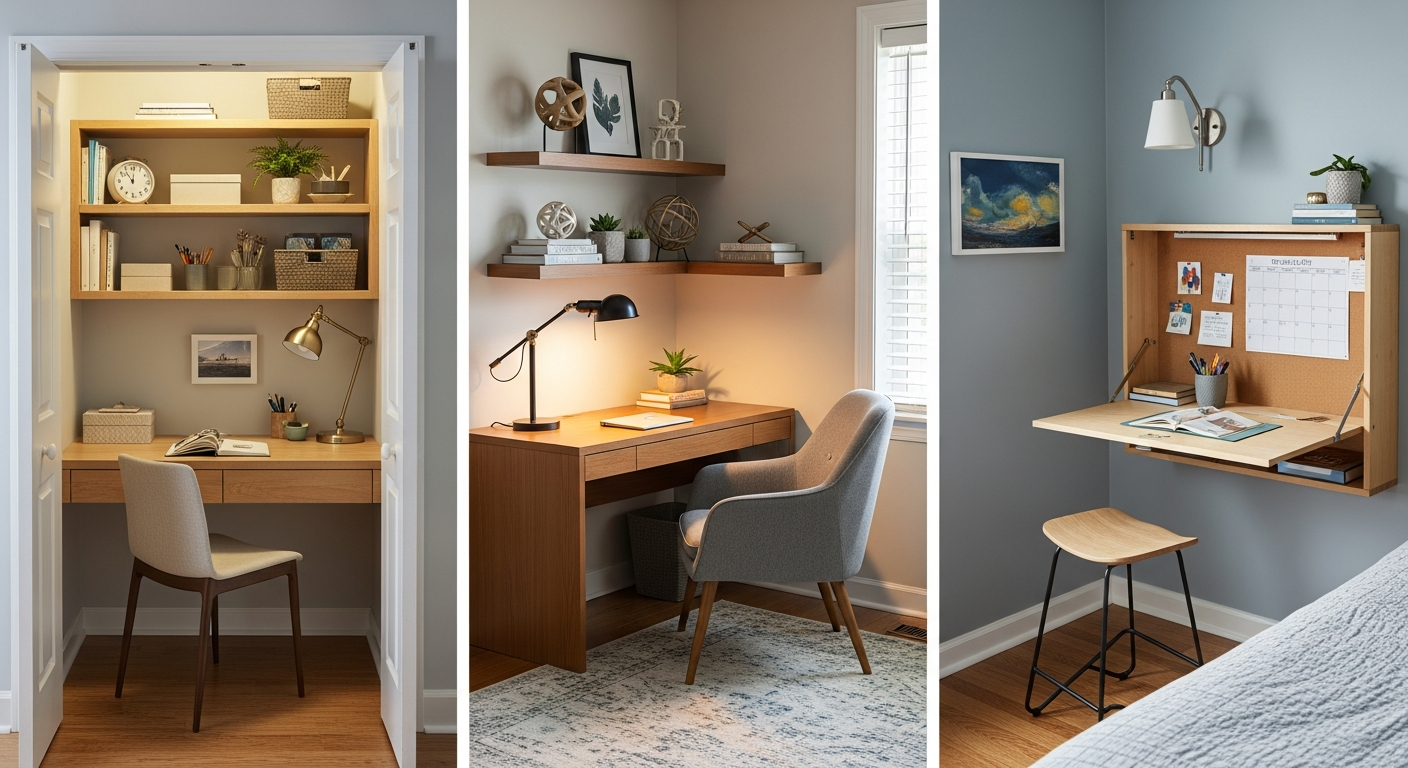
A reach-in closet converts into a complete office with a wall-mounted desk surface, floating shelves above, and a small task light. Remove the closet doors (or replace them with curtains or a barn door) to open the space visually. Paint the interior a contrasting color to define the workspace zone. A closet office keeps work contained and lets you literally close the door on your workday — a powerful psychological boundary when working from home.
Nook and Corner Offices
A corner desk or L-shaped configuration maximizes square footage in tight spaces. Wall-mounted monitors and floating desks keep the floor clear, making the room feel more spacious. In a bedroom corner office, use a room divider, curtain, or bookshelf to visually separate work from rest. A small rug under the desk creates a defined work zone even without physical barriers.
Dual-Purpose Rooms
When your office shares space with a guest room, living room, or dining room, furniture selection is everything. A secretary desk folds closed to hide your workspace. A console table behind the sofa becomes a standing desk. A dining table with a drawer does double duty for meals and meetings. Choose furniture that serves both purposes without looking like office equipment when not in use.
She-Shed and Backyard Offices
Prefabricated backyard offices — from converted sheds to purpose-built studio pods — offer complete separation between home and work. These spaces range from simple insulated sheds with electricity to fully finished structures with HVAC, plumbing, and fiber internet. The physical commute across the yard creates a transition ritual that improves work-life boundaries. Decorate a backyard office the same way you would an interior room: layered lighting, comfortable seating, wall art, plants, and a rug to add warmth and reduce echo.
Creating the Perfect Zoom Background
Your video call background is now part of your professional image. A curated bookshelf, a piece of art, or a styled floating shelf behind your chair creates a polished, intentional backdrop that communicates professionalism.
Background Composition
Position your camera so it captures the wall directly behind you, not a window (which causes backlighting) or a doorway (which invites interruptions and visual distractions). The ideal Zoom background includes some depth — a bookshelf 3 to 4 feet behind you, a piece of wall art, or a plant — rather than a flat, blank wall. Avoid clutter: edit your background the way you would style a photo, removing anything that does not add to the composition.
Lighting for Video Calls
Front-facing light is essential for video calls. A ring light or LED panel positioned behind your monitor illuminates your face evenly without creating harsh shadows. Avoid overhead-only lighting, which casts unflattering shadows under the eyes. A warm-toned accent light behind you (a table lamp on a shelf, LED strips behind a monitor) adds depth and separation from the background. Natural window light from the side provides beautiful, soft illumination during daytime calls.
Frequently Asked Questions
How do I decorate a home office on a budget?
Start with what you already own. Rearrange furniture, repurpose items from other rooms, and focus on the highest-impact changes first: a fresh coat of paint on an accent wall, coordinated desk accessories from a dollar store or thrift shop, and printed art in inexpensive frames. DIY pegboard organizers, floating shelves from reclaimed wood, and thrifted desk lamps add character without significant expense. Prioritize lighting and organization over decorative objects — function always delivers more value than aesthetics alone.
What colors are best for a home office?
Blue and green tones promote focus and calm, making them ideal for offices where you do deep, concentrated work. Warm neutrals (cream, beige, greige) create a soothing backdrop that works well on video calls. Yellow accents boost creativity and optimism. Avoid pure white walls, which can feel sterile and cause glare, and very dark colors in small offices, which can feel oppressive without sufficient lighting. The best approach is a neutral base with one or two accent colors that reflect your personality.
How do I make a small home office feel bigger?
Use light wall colors, a wall-mounted desk, and floating shelves to keep the floor clear. A large mirror on one wall reflects light and creates the illusion of depth. Choose furniture with visible legs (rather than pieces that sit directly on the floor) to maintain visual openness. Vertical storage — tall bookcases, pegboards, wall-mounted file organizers — draws the eye upward and maximizes every inch of wall space.
Should I use a standing desk in my home office?
A sit-stand desk offers health benefits including reduced back pain, improved circulation, and increased energy. Electric adjustable desks allow you to switch positions throughout the day. If budget is a concern, a desktop converter sits on top of your existing desk and lifts your monitor and keyboard to standing height. Style your standing desk the same way as a seated desk — coordinated accessories, cable management, and a desk mat create a polished look at any height.
What is the best lighting for a home office?
Layer three types of lighting: task lighting (adjustable desk lamp at 4,000K-5,000K for focused work), ambient lighting (overhead or floor lamp at 2,700K-3,000K for comfortable background illumination), and accent lighting (LED strips or shelf lamps at 2,700K for warmth and visual depth). Position your desk perpendicular to windows to benefit from natural light without screen glare. Avoid fluorescent overhead lights as your sole light source.
How do I set up a professional Zoom background?
Place a styled bookshelf or piece of art 3 to 4 feet behind your chair. Use front-facing lighting (ring light or LED panel behind your monitor) to illuminate your face evenly. Add a warm-toned accent light behind you for depth. Remove visual clutter from the frame and avoid sitting in front of windows, which causes backlighting. A few curated objects — a plant, a framed piece of art, a small stack of books — project professionalism without distraction.
How do I separate work and personal space when my office is in a shared room?
Use physical dividers like bookcases, curtains, or folding screens to create visual boundaries. A rug under your desk area defines the workspace zone. Choose a desk that closes or folds (secretary desk, fold-down wall desk) so you can physically shut down your workspace at the end of the day. Consistent lighting changes — switching from cool task light to warm ambient light — also signal the transition from work mode to personal time.
What plants are best for a home office?
Low-maintenance plants that thrive in indoor conditions are ideal: pothos (tolerates low light, trails beautifully from shelves), snake plants (nearly indestructible, excellent air purification), ZZ plants (glossy leaves, very drought-tolerant), succulents (compact, perfect for desk corners), and peace lilies (bloom in low light, filter indoor air pollutants). Avoid plants that need constant watering or bright direct sunlight unless your office provides those conditions. For more plant styling ideas, see our indoor plant decor guide.
Design Your Perfect Home Office
Your home office should be a space that makes you want to sit down and do your best work. Whether you are starting from scratch in a spare bedroom or reimagining a closet nook, the right combination of desk setup, wall decor, lighting, and personal touches transforms any space into a productive, beautiful workspace.
Ready to bring your home office vision to life? Use our Home Office Remodel Visualizer to experiment with layouts, color schemes, and decor arrangements before committing to any purchases. Upload a photo of your current space and see how different desk configurations, wall treatments, and lighting setups will look in your actual room.
For more whole-home decorating inspiration, explore our complete home decor ideas guide, or browse our design gallery to see real home office transformations. If you are ready to work with a professional designer, check our pricing and packages to find a plan that fits your budget and timeline.
Home Office Decor Ideas FAQs
Written by
Priya Sharma
Priya is an award-winning UX designer who previously led design teams at Airbnb and Pinterest. Her focus on user-centered design ensures that HanoDecor's tools are intuitive and accessible to everyone, regardless of their technical background.