How to Choose a Contractor for a Kitchen Remodel: 8 Expert Vetting Tips
Quick Summary
A comprehensive guide to selecting the right contractor for your kitchen remodel. Covers license and insurance verification, portfolio evaluation, reference checks, bid comparison strategies, contract must-haves, payment schedules, communication expectations, and common red flags that signal unreliable contractors.

Knowing how to choose a contractor for a kitchen remodel is arguably the most consequential decision you will make during the entire renovation process. A skilled, reliable general contractor keeps your project on schedule, within budget, and built to code, while a poor choice can lead to cost overruns, shoddy workmanship, and months of frustration. The National Association of Home Builders reports that 68% of homeowner complaints about remodeling projects trace back to contractor selection rather than design or material issues.
Kitchen remodels are among the most complex residential projects, involving plumbing, electrical, cabinetry, countertops, flooring, and sometimes structural modifications. The average kitchen renovation costs between $25,000 and $75,000, making contractor vetting worth every minute you invest. This guide walks you through eight proven tips that professional project managers use to screen, evaluate, and hire kitchen remodeling contractors who deliver quality results.
Why Contractor Selection Matters More in Kitchen Remodels
Unlike a bathroom refresh or a bedroom paint job, a kitchen remodel involves coordinating multiple licensed trades — electricians, plumbers, tile setters, cabinet installers, and countertop fabricators. Your general contractor acts as the project manager who sequences these trades, pulls permits, schedules inspections, and resolves conflicts between subcontractors. A disorganized contractor means idle workers, wasted materials, and a kitchen that stays torn apart far longer than necessary.
According to the Joint Center for Housing Studies at Harvard, kitchen renovations account for the highest share of homeowner disputes filed with state licensing boards. The complexity of the project amplifies every weakness in a contractor's process, from poor scheduling to vague change-order policies. Before you review a single portfolio photo, understand that your vetting process needs to evaluate organizational skills and communication just as much as craftsmanship. For a full overview of the remodeling process, see our complete kitchen remodel guide.

Tip 1 — Verify Licenses, Insurance, and Bonding
Every legitimate kitchen remodeling contractor should hold a valid state or local contractor license. Licensing requirements vary by state, but most require passing a trade exam, proving financial solvency, and maintaining continuing education. Ask for the license number and verify it directly through your state's contractor licensing board website. Never accept a photocopy or verbal assurance — confirm the license is active, the name matches the business entity, and no disciplinary actions are on record.
Beyond licensing, confirm the contractor carries general liability insurance (minimum $1 million per occurrence) and workers' compensation coverage for all employees. Request a Certificate of Insurance and call the insurance company directly to verify the policy is current. A bonded contractor provides an additional layer of protection — if the contractor fails to complete the project or violates the contract, the surety bond provides funds to hire a replacement. These three credentials — license, insurance, and bond — form the non-negotiable baseline for any contractor you consider.
Tip 2 — Review Their Kitchen-Specific Portfolio
A contractor who excels at bathroom tile work or basement finishing may lack the specialized experience needed for a complex kitchen renovation. Ask to see at least five completed kitchen remodel projects that match your scope — if you are doing a full gut renovation with layout changes, you want to see examples of similar complexity. Look for clean cabinet installations with consistent reveals, precise countertop seams, level tile work, and properly aligned backsplashes. Photos should include both before-and-after shots and in-progress images that reveal the quality of rough-in work behind finished surfaces.
Request to visit a recently completed kitchen in person if possible. Photographs can hide flaws that become obvious when you inspect joints, drawer alignment, and finish details up close. Pay attention to how cabinet doors close, whether countertop edges are perfectly smooth, and how grout lines align at corners. A contractor confident in their work will welcome the opportunity to showcase a finished project. Browse kitchen design ideas to clarify the style and quality level you expect before evaluating portfolios.
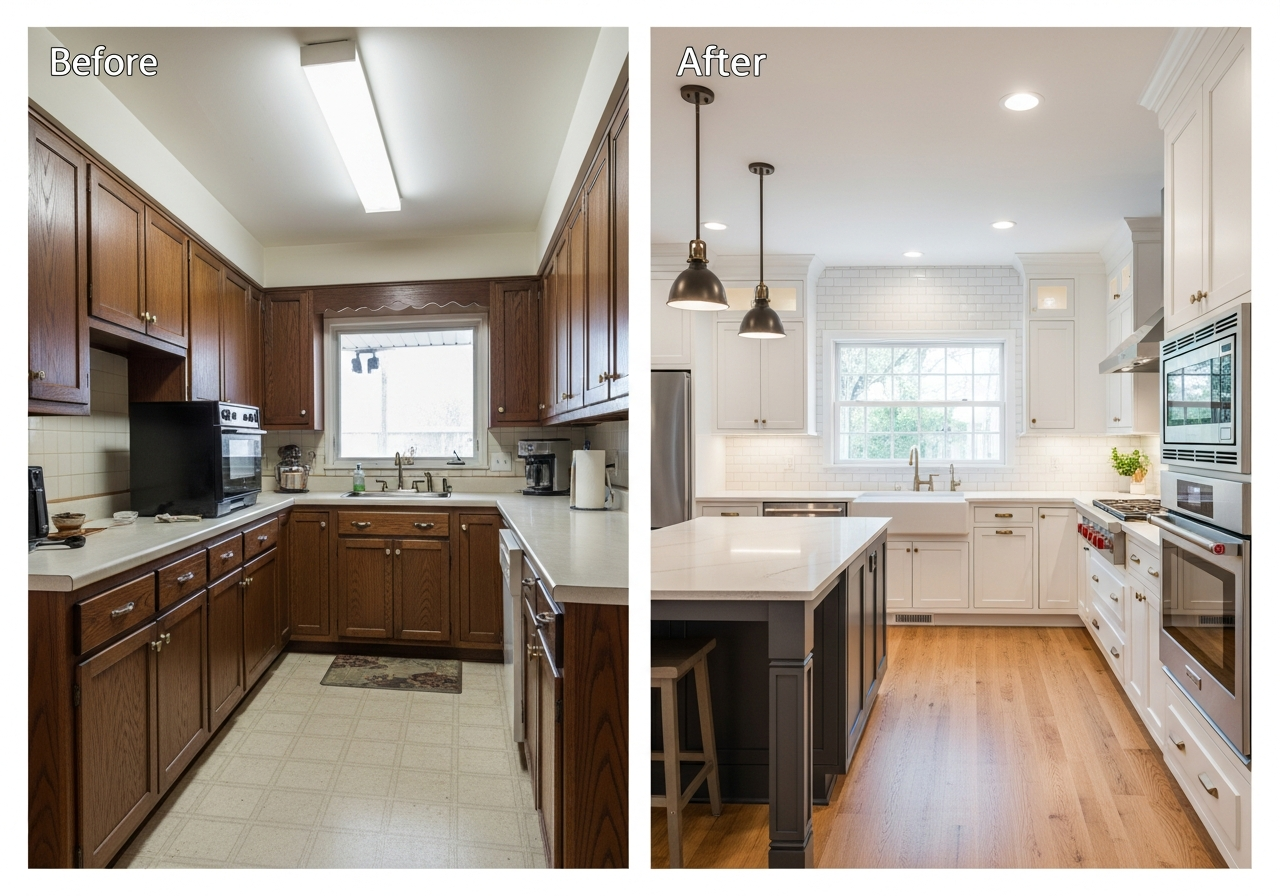
Tip 3 — Check References and Online Reviews Thoroughly
Ask every contractor candidate for at least three references from kitchen remodel clients completed within the past 12 months. When you call references, ask specific questions: Did the project finish on time? Were there cost overruns, and how were they communicated? How did the contractor handle unexpected problems like hidden water damage or code issues? Would you hire them again? The answers to these questions reveal far more about a contractor's reliability than any marketing material.
Supplement personal references with online review analysis. Check Google Business Profile, Houzz, and the Better Business Bureau for patterns in feedback. A single negative review among dozens of positive ones is normal, but repeated complaints about the same issue — missed deadlines, poor communication, or surprise charges — indicate systemic problems. Also verify the contractor's standing with your local home builders association and check court records for any pending lawsuits or liens filed by suppliers or subcontractors.
Tip 4 — Get Three Detailed Bids and Compare Apples to Apples
The industry standard is to collect at least three competitive bids for any kitchen remodel over $10,000. However, the lowest bid is not automatically the best value. A detailed bid should itemize every cost category — demolition, framing, plumbing rough-in, electrical rough-in, cabinetry, countertops, tile, flooring, painting, fixtures, appliance installation, permits, and cleanup. Vague line items like "kitchen renovation — $45,000" provide no basis for comparison and suggest the contractor has not thoroughly evaluated your project scope.
| Bid Component | Contractor A | Contractor B | Contractor C |
|---|---|---|---|
| Demolition & Disposal | $2,500 | $2,800 | $2,200 |
| Plumbing Rough-In | $4,200 | $3,900 | $4,500 |
| Electrical Rough-In | $3,800 | $3,500 | $4,000 |
| Cabinetry & Install | $12,000 | $14,500 | $11,800 |
| Countertops | $5,500 | $6,200 | $5,000 |
| Tile & Backsplash | $3,200 | $2,800 | $3,500 |
| Flooring | $2,800 | $3,100 | $2,600 |
| Painting & Finishing | $1,800 | $2,000 | $1,700 |
| Permits & Inspections | $800 | $750 | $900 |
| Total | $36,600 | $39,550 | $36,200 |
When bids vary by more than 15 to 20 percent, investigate the outlier. A significantly lower bid may indicate the contractor is cutting corners on materials, underestimating labor hours, or planning to use uninsured subcontractors. A significantly higher bid could reflect premium materials, more experienced tradespeople, or a longer warranty. Ask each contractor to explain their pricing methodology and identify what is included versus excluded. Understanding how to estimate kitchen remodel costs helps you evaluate bid accuracy.

Tip 5 — Insist on a Detailed Written Contract
A comprehensive remodeling contract protects both you and the contractor. The document should specify the full scope of work, a materials list with brand names and model numbers, the project timeline with start and completion dates, the total cost with a payment schedule, the change-order process, warranty terms, and dispute resolution procedures. Never rely on verbal agreements or handshake deals, regardless of how trustworthy the contractor seems during initial meetings.
Key contract clauses to include are a lien waiver requirement (the contractor provides waivers from all subcontractors and suppliers upon payment), a delay penalty for missed completion dates, a right to cure provision allowing the contractor to fix defects before you pursue legal remedies, and an arbitration clause specifying how disputes will be resolved. Have a real estate attorney review the contract before signing, especially for projects exceeding $25,000. The $300 to $500 attorney fee is negligible insurance against a five-figure mistake.
Tip 6 — Structure the Payment Schedule Strategically
Never pay more than 10% of the total project cost as a deposit. A common and fair payment structure ties payments to completed milestones: 10% at contract signing, 25% upon completion of demolition and rough-in, 25% after cabinetry and countertop installation, 25% after flooring and tile, and 15% upon final walkthrough and punch list completion. This structure keeps the contractor motivated to reach each milestone while limiting your financial exposure at any given point.
Be wary of contractors who demand large upfront payments — 50% deposits are a major red flag. Legitimate contractors have supplier relationships and credit lines that allow them to order materials without requiring full prepayment from homeowners. Always make payments by check or credit card for documentation purposes, never cash. Retain the final 10 to 15% until every punch list item is resolved to your satisfaction. For broader financial planning, explore our guide to financing a kitchen remodel.
Tip 7 — Establish Clear Communication Expectations
Communication breakdowns cause more kitchen remodel disputes than any other single factor. Before work begins, agree on how often you will receive progress updates (daily or weekly), the preferred communication channel (text, email, phone, or project management app), and who your primary point of contact will be. On larger projects, the contractor may assign a project manager or site supervisor — confirm that person has decision-making authority and is not just relaying messages.
Ask how the contractor handles change orders. Changes are inevitable in kitchen remodels — you might discover rotted subfloor during demolition or decide to upgrade your faucet mid-project. A professional contractor provides a written change order for every scope modification, including the cost impact and schedule impact, before any additional work begins. Contractors who perform extra work and present surprise invoices at the end of the project are violating best practices and potentially your contract terms.

Tip 8 — Watch for These Red Flags During the Vetting Process
Certain warning signs should immediately disqualify a contractor from consideration. These include refusing to provide a written estimate, pressuring you to sign a contract on the same day as the consultation, requesting payment in cash only, lacking a physical business address, being unable to provide proof of insurance, and offering a price that is dramatically lower than all other bids. A suspiciously low bid often means the contractor plans to cut costs through inferior materials or will hit you with change orders once the project is underway.
Other red flags include a contractor who badmouths competitors, cannot provide recent local references, wants to skip the building permit process to save time or money, or proposes starting immediately without a signed contract. Legitimate kitchen remodel contractors in 2026 typically have a backlog of two to six weeks — immediate availability can indicate low demand, which itself may signal quality or reliability concerns. Trust your instincts: if something feels off during the initial meeting, it will likely get worse once the project is underway.
How to Prepare Before Contacting Contractors
Your vetting process becomes more effective when you enter contractor meetings as an informed homeowner. Before making your first call, define your kitchen remodel scope — are you doing a cosmetic refresh, a mid-range renovation, or a full gut remodel with layout changes? Have a realistic budget range based on local market data, and create a prioritized wish list that distinguishes must-haves from nice-to-haves. Contractors respect homeowners who have done their homework, and your informed questions will help you evaluate their competence more accurately.
Gather inspiration photos from our kitchen remodel design guide to communicate your vision clearly. Use our kitchen remodel visualization tool to experiment with layouts, cabinet styles, and color palettes before meetings. The more specific your design direction, the more accurate the bids you will receive and the easier it becomes to compare proposals from different contractors. Read our guide on how to prepare for a kitchen remodel for a complete pre-project checklist.

Frequently Asked Questions
How many contractors should I interview for a kitchen remodel?
Interview at least three to five contractors and collect detailed written bids from your top three. This range gives you enough comparison data to identify fair market pricing while keeping the process manageable. Interviewing more than five contractors rarely improves your outcome and can lead to decision fatigue. Focus on quality conversations with well-vetted candidates rather than casting the widest possible net.
What is the average timeline for hiring a kitchen remodel contractor?
The full hiring process — from initial research to signing a contract — typically takes four to eight weeks. Allow one to two weeks for research and shortlisting, one to two weeks for in-home consultations, one to two weeks for bid preparation and review, and one week for contract negotiation and signing. Rushing this process to start sooner almost always leads to problems. See our guide on kitchen remodel timelines for the complete project duration.
Should I hire a general contractor or individual subcontractors?
For most kitchen remodels involving multiple trades, a general contractor is the better choice. A GC manages scheduling, coordinates subcontractors, handles permits, and provides a single point of accountability. Hiring individual subcontractors yourself can save 15 to 25% on labor costs but requires significant project management experience. If your remodel is limited to a single trade — such as cabinet refacing only — hiring a specialist directly makes sense.
What questions should I ask during the contractor interview?
Ask about their experience with kitchens specifically, their current workload and projected start date, who will be on-site daily, how they handle change orders, their warranty policy, and whether they carry workers' compensation insurance. Also ask for their most recent project that went over budget and how they handled it — the answer reveals their honesty and problem-solving approach better than any rehearsed pitch.
How do I handle disputes with my kitchen remodel contractor?
Start by reviewing your contract terms and documenting the issue with photos and written communication. Request a face-to-face meeting to discuss the concern and propose a resolution. If direct negotiation fails, invoke the dispute resolution clause in your contract — typically mediation before arbitration. Filing a complaint with your state contractor licensing board is appropriate for license violations, code issues, or abandonment. As a last resort, consult a construction attorney for projects involving significant financial disputes.
Related Articles
Continue your kitchen remodel planning with these related guides: How to Plan a Kitchen Remodel covers the complete planning process from start to finish. How to Remodel a Kitchen on a Budget shows where to save without sacrificing quality. Kitchen Remodel Cost 2026 Guide breaks down current pricing for every project component. How to Choose a Contractor for Any Remodel expands these vetting principles to whole-home projects.
Start Designing Your Kitchen Remodel with HanoDecor
Before you meet with contractors, use our AI-powered tools to visualize your dream kitchen and build a clear project scope. Upload a photo of your current kitchen and explore different cabinet styles, countertop materials, and layout configurations in seconds. The more defined your vision, the better bids you will receive from contractors.
Try the Kitchen Remodel Visualizer free — see your kitchen transformed with different styles, finishes, and layouts before committing to a contractor or budget. A clear design direction makes contractor conversations more productive and helps you evaluate whether each bidder truly understands your vision.
How to Choose a Contractor for a Kitchen Remodel FAQs
Written by
Emily Rodriguez
Interior Design Editor covering living spaces, styling trends, and room makeovers. Former Architectural Digest contributor with a focus on accessible, budget-conscious design.