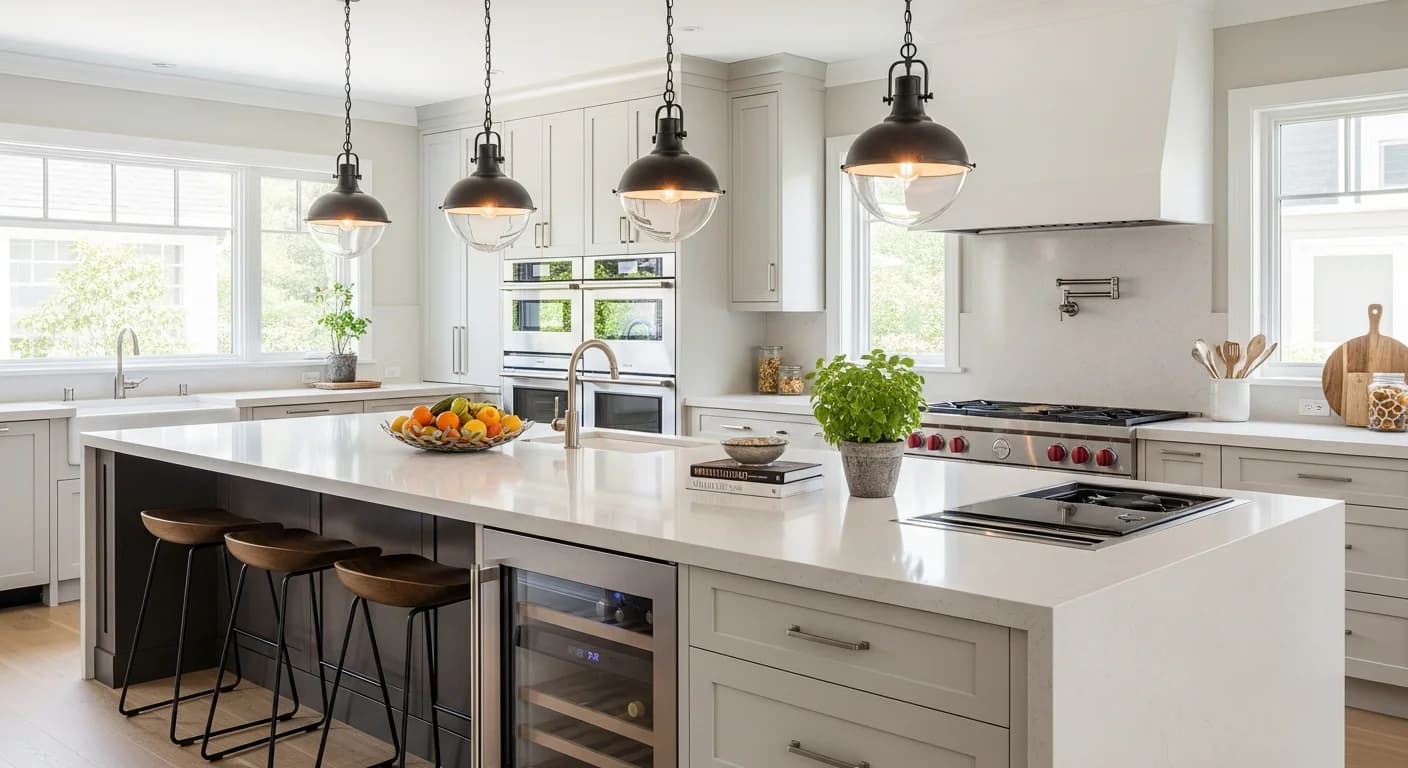
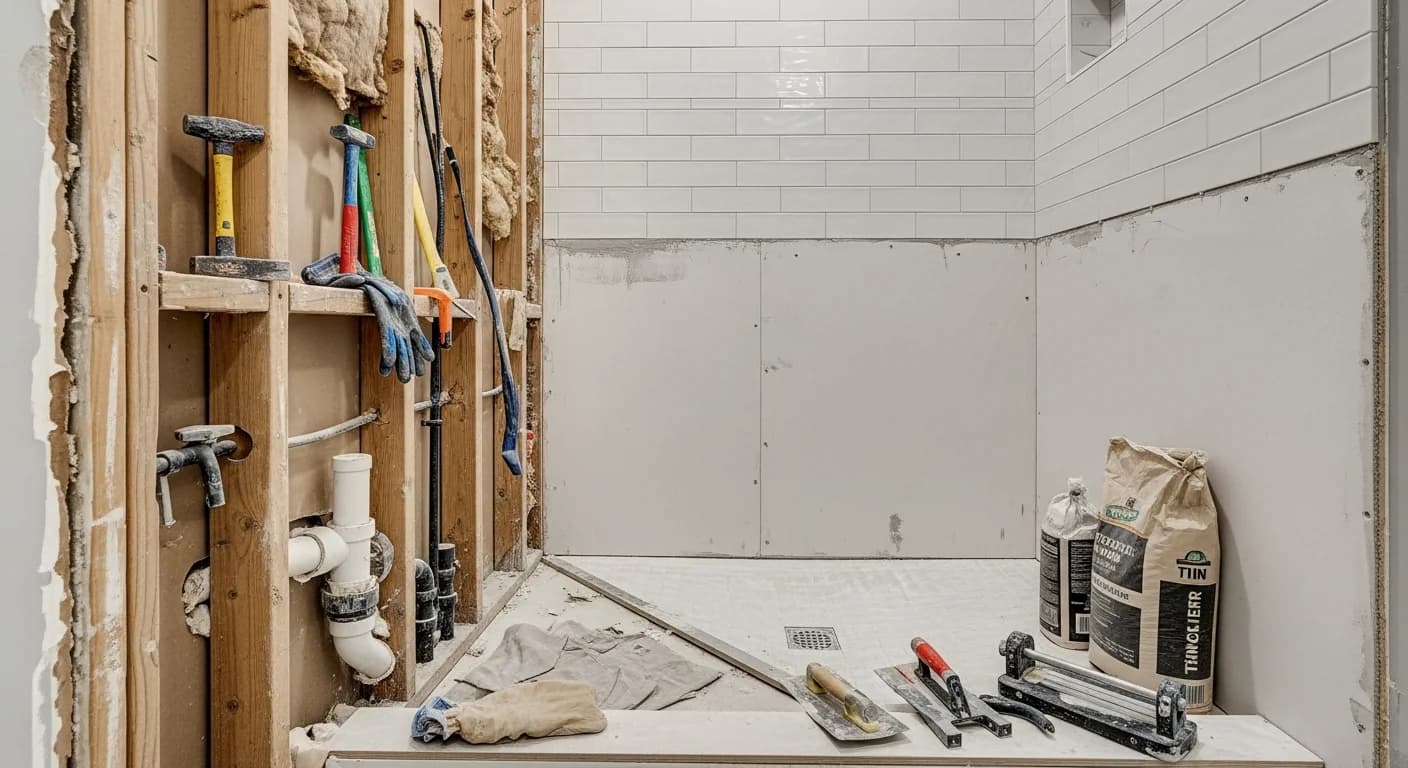
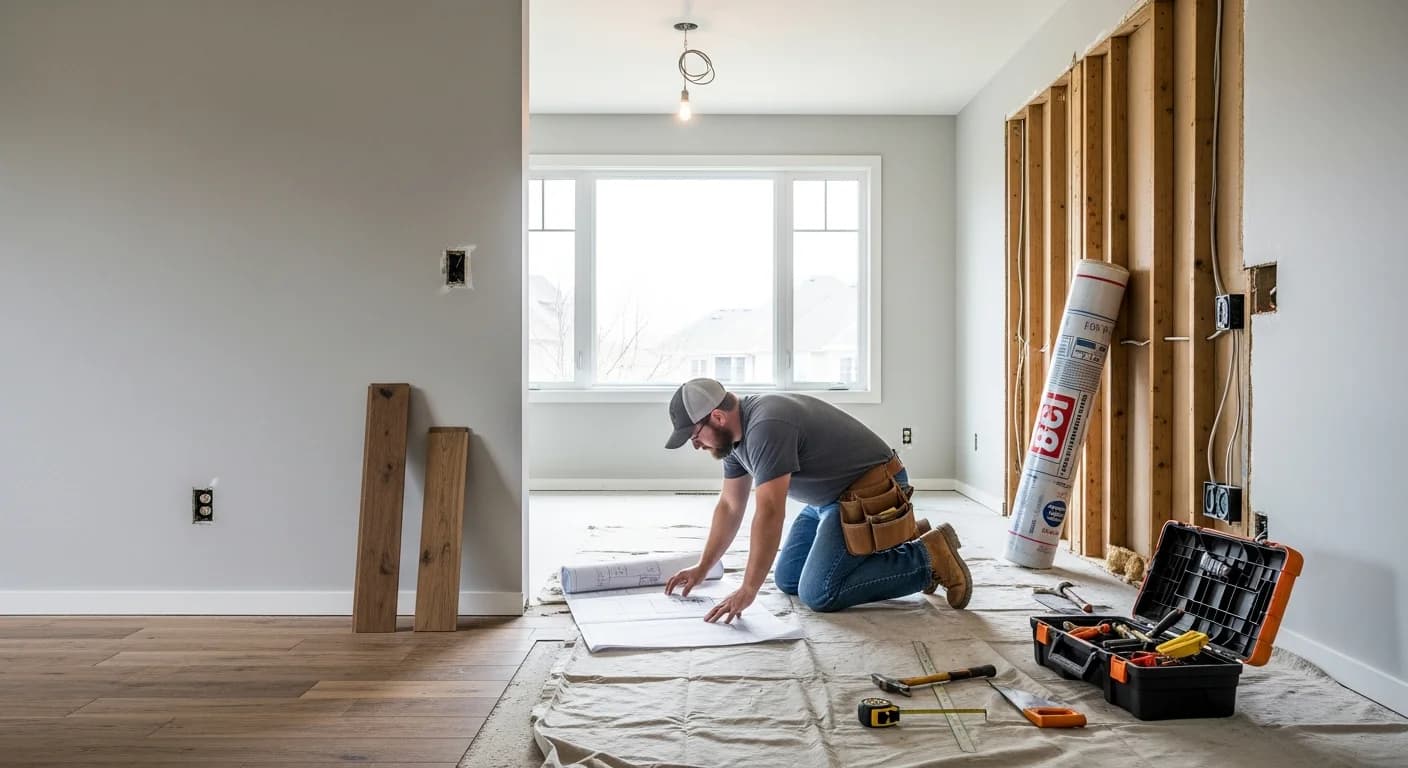
How to Estimate the Cost of a Kitchen Remodel: Line-Item Budget Builder
Quick Summary
A comprehensive guide to estimating kitchen remodel costs using a line-item budget builder approach. Covers cabinets, countertops, flooring, appliances, plumbing, electrical, labor rates, permit fees, and contingency planning so homeowners can forecast total project costs accurately before breaking ground.
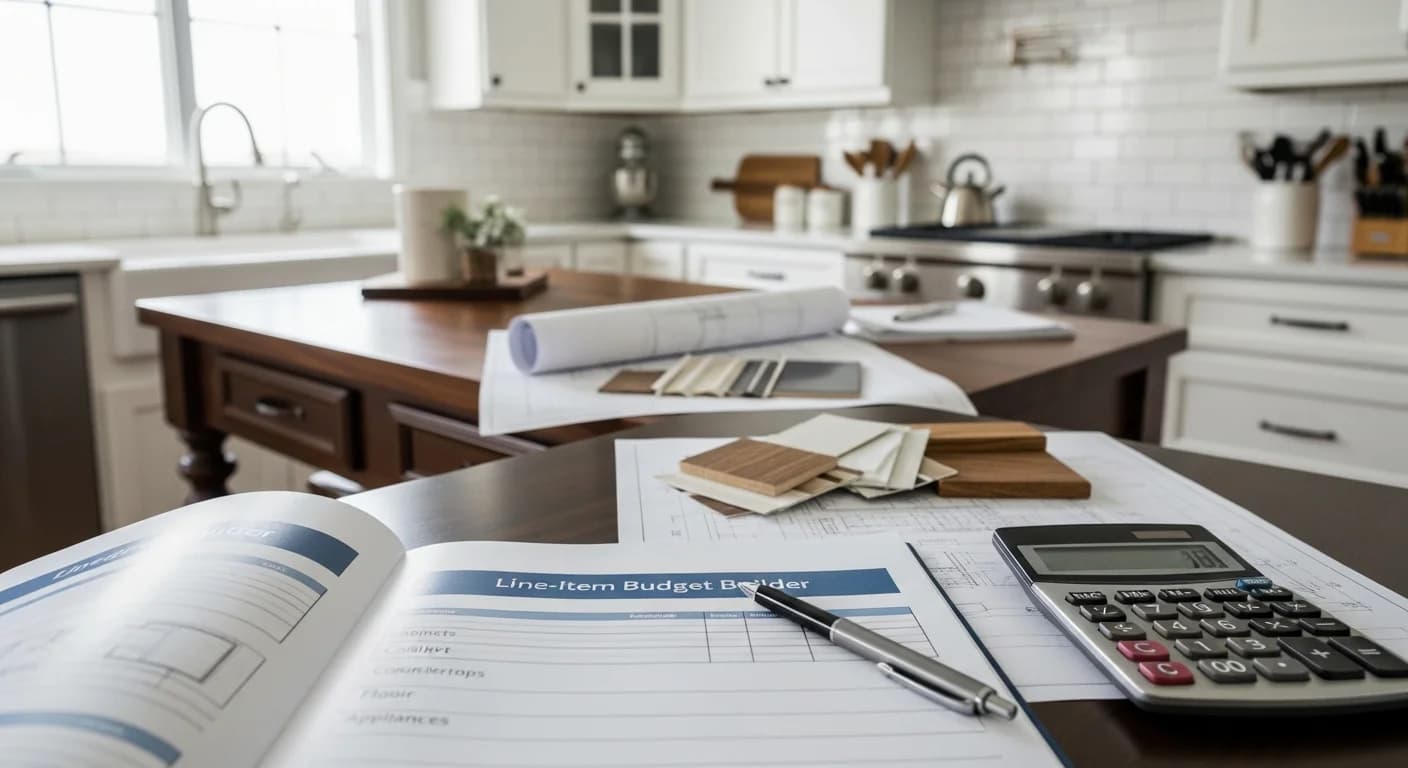
Understanding how to estimate the cost of a kitchen remodel is the single most important step before signing a contract or swinging a hammer. Without a detailed budget, homeowners routinely overshoot their spending by 20 to 40 percent, turning a dream kitchen into a financial headache. A line-item approach breaks the project into discrete categories — cabinets, countertops, flooring, appliances, plumbing, electrical, labor, permits, and contingency — so you can see exactly where every dollar goes.
According to the National Association of Home Builders, the average kitchen remodel in the United States costs between $25,000 and $75,000, with high-end projects exceeding $150,000. Those ranges are wide because kitchens vary enormously in size, scope, and material quality. A line-item budget builder eliminates guesswork by assigning real-world price ranges to each component, giving you a customized estimate rather than a generic national average. This guide walks through every cost category with 2026 pricing data so you can build a reliable forecast.
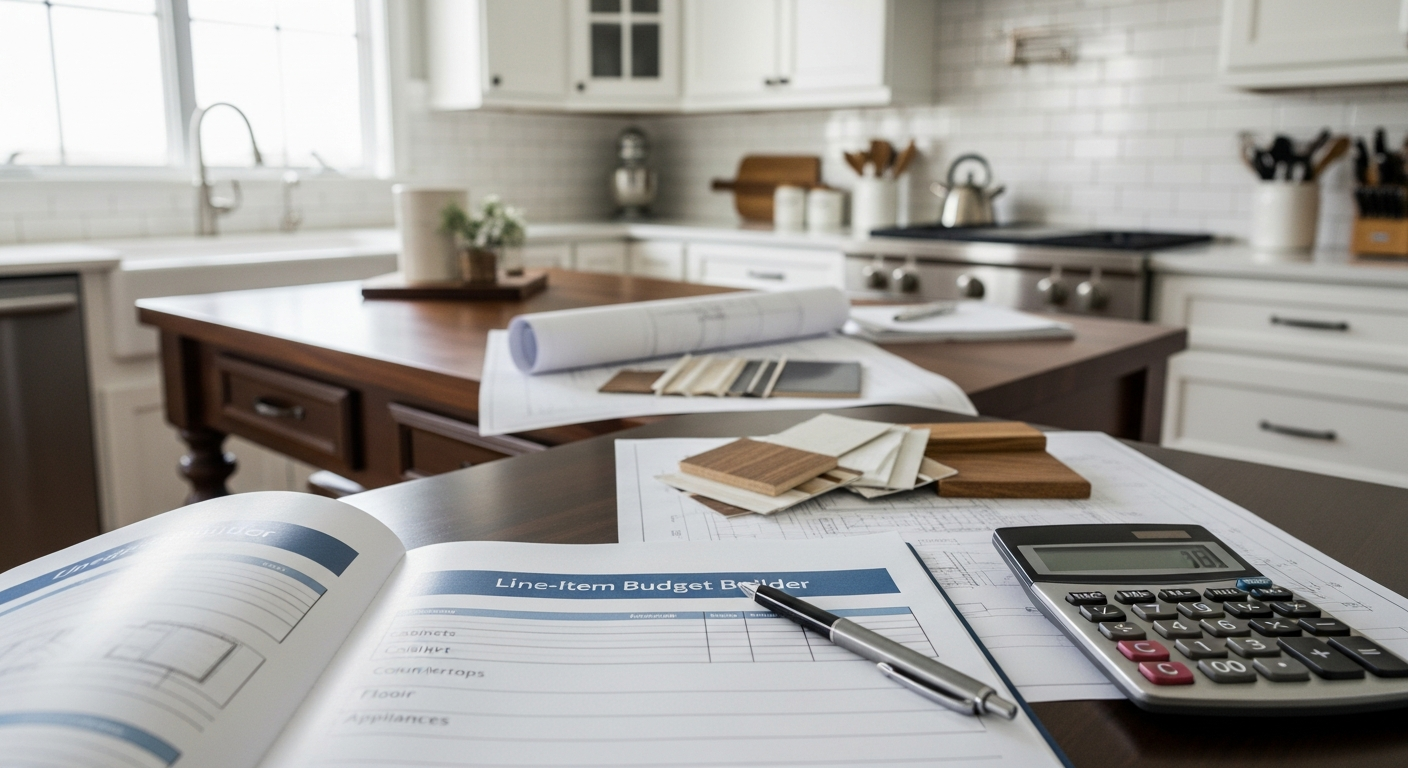
Why a Line-Item Budget Outperforms a Lump-Sum Estimate
Many contractors provide a single lump-sum bid that bundles materials, labor, and overhead into one number. While convenient, lump-sum estimates hide where your money is actually going. A line-item budget separates each cost category so you can compare bids apples-to-apples, identify areas where you can save, and make informed trade-offs. For example, you might choose stock cabinets to free up budget for a premium countertop, a decision that is invisible inside a lump-sum figure.
Line-item budgets also protect you from scope creep. When every item has a dollar figure attached, adding a pot-filler faucet or upgrading to soft-close drawers becomes a conscious financial decision rather than an afterthought that inflates the final invoice. Before you start building your budget, read our kitchen remodel planning guide to define your project scope and priorities.
Cabinets: The Largest Single Expense
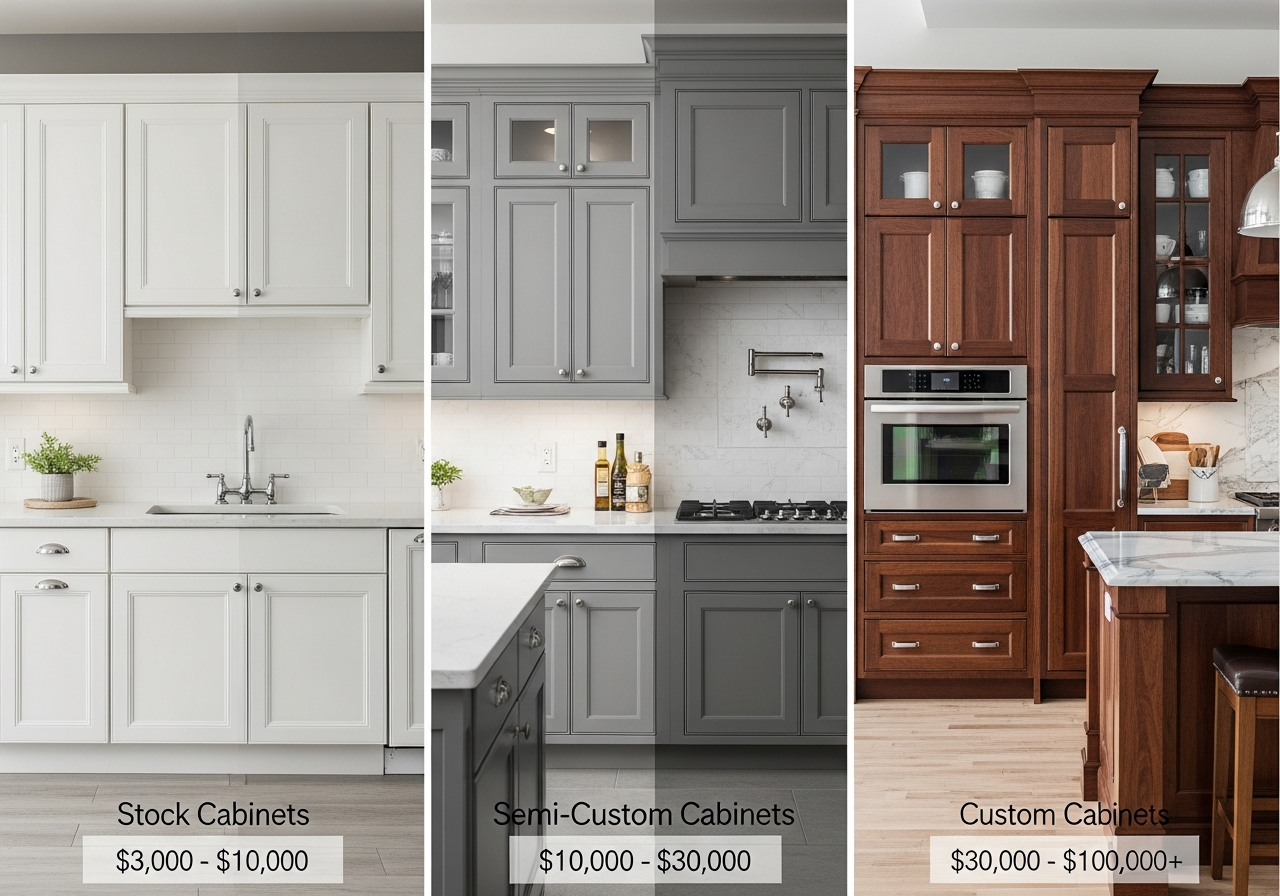
Cabinetry typically accounts for 30 to 40 percent of a kitchen remodel budget, making it the single largest line item. Stock cabinets from big-box retailers cost $75 to $250 per linear foot installed. Semi-custom cabinets with more door-style and finish options run $150 to $650 per linear foot. Fully custom cabinets built to exact specifications range from $500 to $1,500 per linear foot. A typical 25-linear-foot kitchen therefore spans from roughly $1,875 for basic stock to $37,500 for full custom.
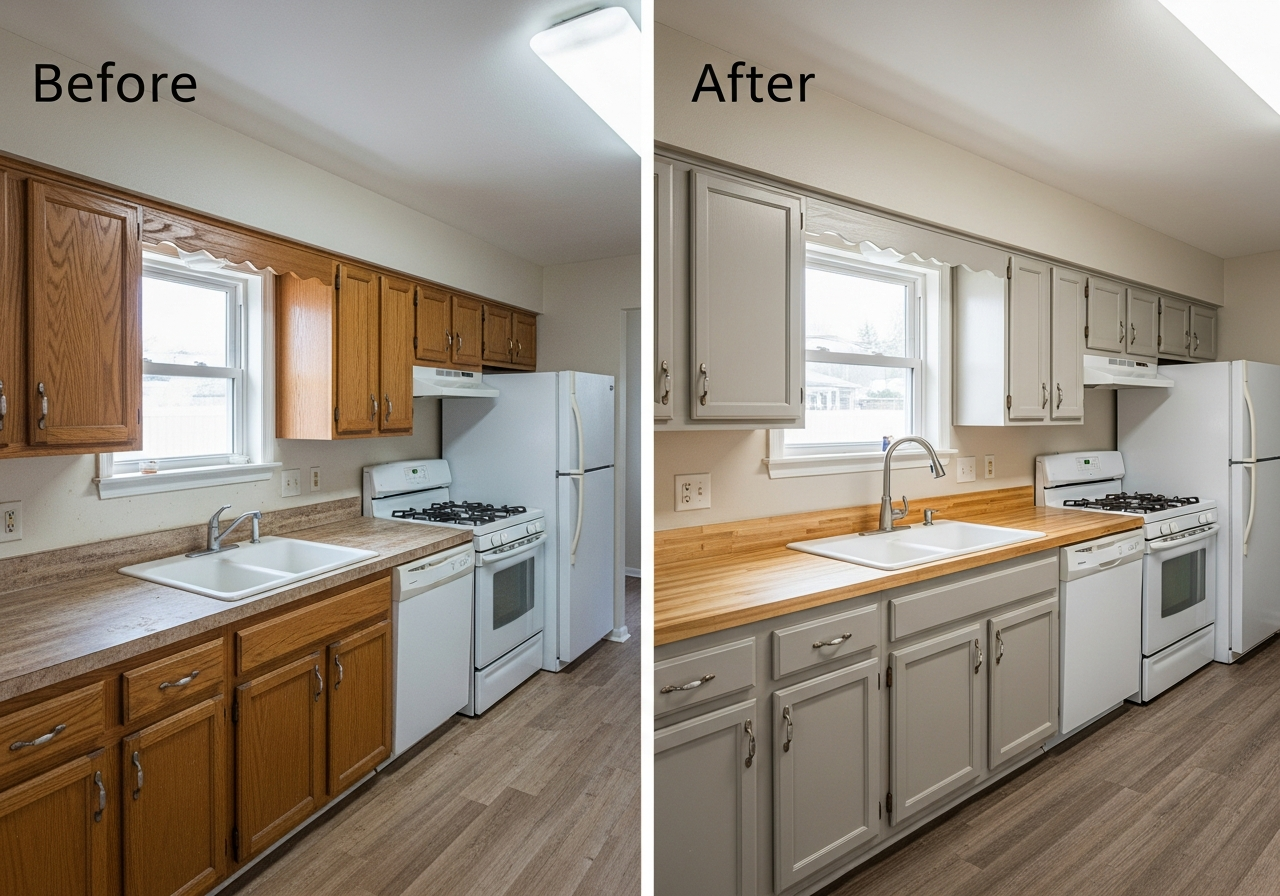
If your existing cabinet boxes are structurally sound, refacing versus replacing can cut cabinetry costs by 40 to 60 percent. Refacing involves applying new doors, drawer fronts, and veneer over existing boxes, typically costing $4,000 to $10,000 for a full kitchen. Add soft-close hinges, pull-out organizers, and new hardware for another $500 to $2,000 and the result looks nearly identical to new cabinets at a fraction of the price.
Countertops: Material Costs Per Square Foot
Countertop material is the second-largest material expense, typically consuming 10 to 15 percent of the total budget. Laminate remains the most affordable option at $10 to $40 per square foot installed, while butcher block runs $40 to $100. Engineered quartz — the most popular mid-range choice — costs $50 to $150 per square foot including fabrication and installation. Natural granite ranges from $40 to $200, and premium marble or quartzite can reach $100 to $300 per square foot.
A standard kitchen with 40 to 50 square feet of countertop surface translates to $2,000 to $15,000 depending on material. Edge profile, sink cutouts, and seam placement add $200 to $800. Waterfall edges on islands increase material usage by 15 to 25 percent. For a full comparison of surface options, see our guide to designing a kitchen remodel.
Appliances: Budget, Mid-Range, and Premium Tiers
Appliance packages typically account for 15 to 20 percent of a kitchen remodel budget. A basic four-piece package — refrigerator, range, dishwasher, and microwave — from a mid-tier brand costs $3,000 to $6,000. Upgrading to professional-grade appliances pushes that range to $10,000 to $25,000 or more. Energy Star certified appliances may cost 10 to 15 percent more upfront but save $50 to $100 annually on utility bills, recouping the difference within five to seven years.
When estimating appliance costs, factor in delivery fees ($75 to $200), haul-away for old units ($25 to $75 each), and any electrical or gas line modifications required for new configurations. A 36-inch range that replaces a 30-inch model may require cabinet modifications costing $300 to $800 and a new gas line extension at $200 to $500. These ancillary costs are easy to overlook but can add $500 to $2,000 to the appliance line item.
Flooring, Backsplash, and Finish Materials
Flooring for a 150-square-foot kitchen ranges from $750 for vinyl plank to $3,000 for porcelain tile to $4,500 for hardwood. Installation labor adds $3 to $8 per square foot depending on complexity. Backsplash tile covers 15 to 30 square feet in most kitchens, costing $300 to $3,000 for materials plus $500 to $1,500 for installation. Explore trending options in our kitchen backsplash ideas guide.
Finish materials also include paint ($150 to $400 for a full kitchen), trim and molding ($200 to $800), cabinet hardware ($100 to $600), and light fixtures ($200 to $2,000 total). These smaller line items often get lumped into an "other" category, but collectively they can represent 5 to 8 percent of the total budget. Itemizing them prevents the common surprise of discovering you need $2,000 more for finishes after the major work is complete.
Labor Costs: What Contractors, Plumbers, and Electricians Charge
Labor typically represents 35 to 40 percent of a kitchen remodel budget. General contractors charge $50 to $150 per hour or 15 to 25 percent of total project cost as a management fee. Plumbers charge $75 to $150 per hour for sink relocation, dishwasher hookups, and gas line work. Licensed electricians charge $75 to $130 per hour for circuit upgrades, outlet additions, and under-cabinet lighting installation. Tile installers bill $5 to $15 per square foot depending on pattern complexity.
| Trade | Hourly Rate | Typical Kitchen Hours | Estimated Cost |
|---|---|---|---|
| General Contractor | $50 – $150 | 80 – 200 | $4,000 – $30,000 |
| Plumber | $75 – $150 | 8 – 24 | $600 – $3,600 |
| Electrician | $75 – $130 | 8 – 32 | $600 – $4,160 |
| Tile Installer | $40 – $80 | 16 – 40 | $640 – $3,200 |
| Painter | $35 – $70 | 8 – 16 | $280 – $1,120 |
To get accurate labor estimates, request itemized bids from at least three contractors. Our contractor selection guide explains how to compare bids, verify licensing, and negotiate fair pricing. Labor costs vary by 30 to 50 percent between regions, so local quotes are essential for an accurate budget.
Permits, Inspections, and Design Fees
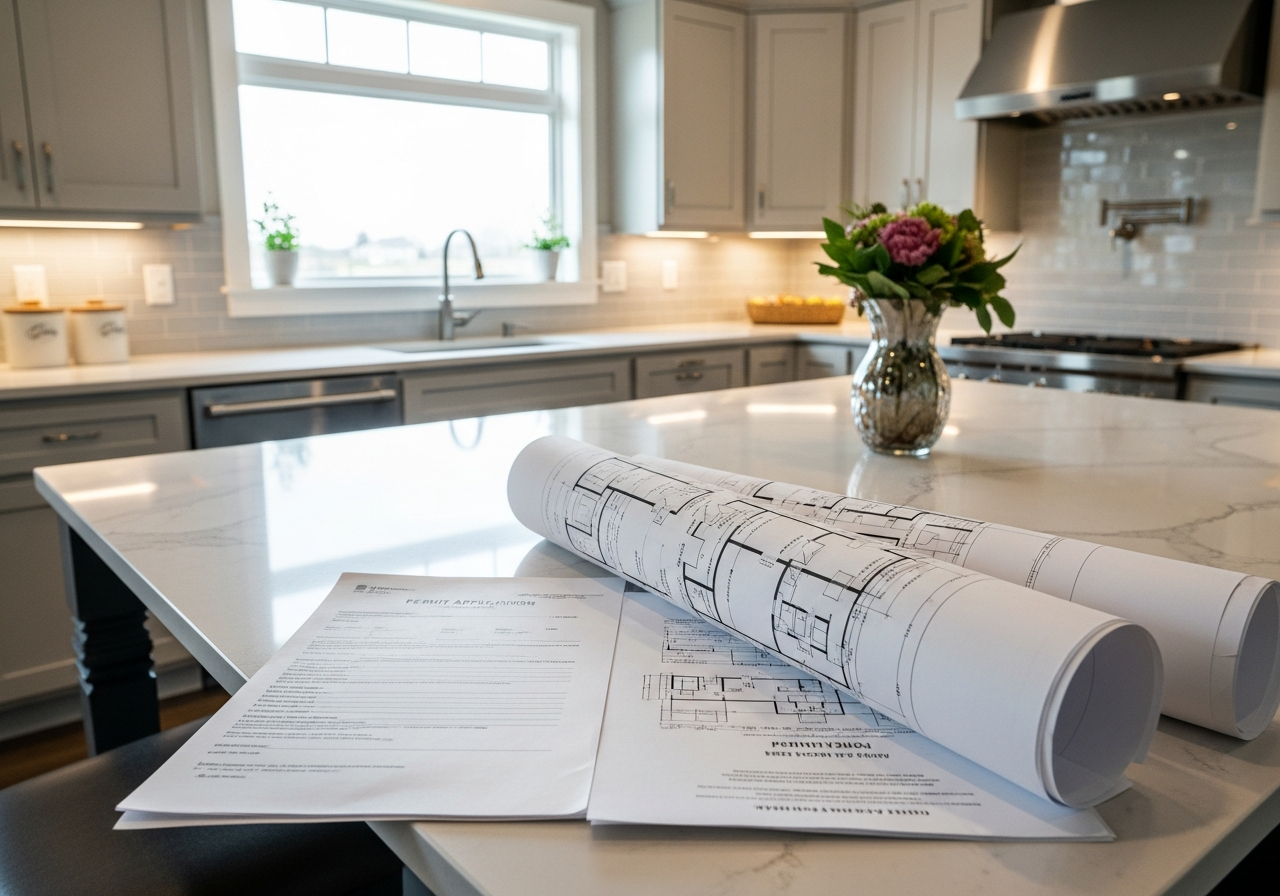
Building permits for kitchen remodels range from $200 to $2,000 depending on your municipality and project scope. Electrical and plumbing permits are often separate, adding $100 to $500 each. Inspection fees may be included in the permit cost or billed separately at $50 to $200 per visit. Skipping permits to save money is risky — unpermitted work can result in fines, insurance claim denials, and complications when selling the home.
Professional kitchen design services cost $1,500 to $5,000 for a complete plan including 3D renderings, material specifications, and construction drawings. Some cabinet showrooms and home improvement stores offer complimentary design services when you purchase cabinets through them, effectively bundling the design fee into the cabinet cost. Factor these soft costs into your line-item budget so they do not catch you off guard.
Contingency Reserve: How Much to Set Aside
Every kitchen remodel budget needs a contingency reserve to cover unexpected costs — hidden water damage behind walls, outdated wiring that requires upgrading, or subfloor rot beneath old vinyl. Industry best practice is to set aside 10 to 20 percent of your total estimated cost as contingency. For a $50,000 project, that means reserving $5,000 to $10,000 for surprises. Older homes (pre-1980) and gut remodels warrant the higher end of that range because they carry greater risk of concealed issues.
If your contingency fund goes unused, congratulations — you have extra money for an upgrade or savings. If it gets tapped, you will be grateful the buffer existed. Never treat contingency as a spending category or allocate it to wish-list items before the project is complete. For more on managing remodel finances, see our kitchen remodel financing guide.
Building Your Line-Item Budget: Step-by-Step Process
Start by measuring your kitchen and creating a simple floor plan. Count linear feet of cabinets, square feet of countertop, square feet of flooring, and square feet of backsplash. These measurements form the multipliers for your cost-per-unit calculations. Next, decide your quality tier — budget, mid-range, or premium — for each category. You do not need to choose the same tier across every line item; mixing tiers is a smart strategy for staying on budget while splurging on high-impact elements.
Use a spreadsheet with columns for category, quantity, unit cost low, unit cost high, subtotal low, and subtotal high. Add every category discussed above, sum the columns, then add your contingency percentage. The result is a realistic cost range for your specific kitchen. Compare this range against your available funds to determine which upgrades to include and which to defer. You can also use our Kitchen Remodel Cost Estimator to generate an instant estimate based on your kitchen size and selections.

Sample Budget: Mid-Range 150 Square Foot Kitchen
Below is a sample line-item budget for a mid-range remodel of a 150-square-foot kitchen with 25 linear feet of cabinets and 45 square feet of countertop. This example uses semi-custom cabinets, quartz countertops, mid-tier appliances, porcelain tile flooring, and ceramic subway tile backsplash. Labor is based on national average rates with a general contractor managing subcontractors.
| Category | Low Estimate | High Estimate |
|---|---|---|
| Cabinets (semi-custom) | $8,750 | $16,250 |
| Countertops (quartz) | $2,250 | $6,750 |
| Appliance package | $3,500 | $6,000 |
| Flooring (porcelain tile) | $1,500 | $3,000 |
| Backsplash | $600 | $2,500 |
| Plumbing | $1,000 | $3,600 |
| Electrical | $800 | $4,000 |
| Labor (GC + subs) | $6,000 | $15,000 |
| Permits and design | $800 | $3,000 |
| Finishes (paint, hardware, fixtures) | $650 | $3,000 |
| Subtotal | $25,850 | $63,100 |
| Contingency (15%) | $3,878 | $9,465 |
| Grand Total | $29,728 | $72,565 |
This mid-range example lands between $30,000 and $73,000 — a wide spread that narrows significantly once you select specific products. The low end reflects builder-grade selections with minimal layout changes, while the high end includes layout modifications, premium quartz, and professional-grade appliances. Compare this with our full 2026 kitchen remodel cost guide for additional tier breakdowns.
Cost-Saving Strategies That Maintain Quality
Keeping plumbing and gas lines in their original locations eliminates $2,000 to $8,000 in relocation costs. Choosing stock cabinets with upgraded hardware delivers a semi-custom look at 50 percent less cost. Selecting a mid-priced quartz for perimeter counters and reserving premium stone for a small island top splits the difference visually while saving $1,500 to $3,000. These strategic trade-offs let you invest where it matters most without inflating the total budget.
Timing also matters. Ordering materials during holiday sales or end-of-season clearance events can save 15 to 30 percent on cabinets and appliances. Some contractors offer lower rates for projects scheduled during their slow season, typically January through March. For more budget-stretching strategies, explore our budget kitchen remodel guide.
Frequently Asked Questions
How much does the average kitchen remodel cost in 2026?
The average kitchen remodel costs $25,000 to $75,000 in 2026, according to data from the National Kitchen and Bath Association. Minor cosmetic refreshes start around $5,000 to $15,000, while full gut remodels with layout changes and premium materials can exceed $150,000. Your final cost depends on kitchen size, material quality, labor rates in your region, and the extent of structural or mechanical changes.
What percentage of the budget goes to labor?
Labor typically represents 35 to 40 percent of a kitchen remodel budget. This includes the general contractor's fee, plumber, electrician, tile installer, painter, and any specialty trades such as a countertop fabricator. In high-cost metropolitan areas, labor can climb to 45 to 50 percent of the total project cost due to higher hourly rates and permit requirements.
How long does it take to remodel a kitchen?
A minor kitchen remodel takes 4 to 6 weeks, a mid-range remodel runs 6 to 10 weeks, and a full gut remodel with layout changes spans 10 to 16 weeks. Custom cabinetry can extend timelines by 6 to 12 weeks for fabrication. Read our detailed kitchen remodel timeline for a phase-by-phase schedule breakdown.
Should I get multiple contractor bids?
Always obtain at least three itemized bids from licensed and insured contractors. Comparing line-item bids reveals which contractors charge more for specific trades, which include items others exclude, and where there may be room for negotiation. The lowest bid is not always the best value — evaluate the contractor's experience, references, warranty terms, and communication style alongside price.
What is the biggest hidden cost in kitchen remodels?
Structural and mechanical surprises behind walls are the most common hidden costs. Water damage, outdated wiring, asbestos-containing materials, and inadequate framing for new heavy countertops can add $2,000 to $10,000 to the project. A 15 percent contingency reserve in your line-item budget protects against these unexpected discoveries without derailing the entire project.
Estimate Your Kitchen Remodel Cost with HanoDecor
Ready to build your own line-item kitchen remodel budget? Our interactive Kitchen Remodel Cost Estimator generates a customized cost range based on your kitchen dimensions, material preferences, and project scope. Input your measurements, select your quality tier, and get an instant breakdown by category — no contractor visit required.
You can also upload a photo of your current kitchen to our AI Room Designer to visualize different material and layout combinations before committing to a budget. Browse kitchen design ideas for real-project inspiration at every price point.
Related Articles
Continue building your kitchen remodel knowledge with these related guides: How to Remodel a Kitchen: Complete Guide, How to Prepare for a Kitchen Remodel, How to Budget for a Remodel, DIY Kitchen Remodel Guide for Beginners, and Modern Kitchen Remodel Trends 2026.
How to Estimate the Cost of a Kitchen Remodel FAQs
Written by
Emily Rodriguez
Interior Design Editor covering living spaces, styling trends, and room makeovers. Former Architectural Digest contributor with a focus on accessible, budget-conscious design.