How to Remodel a Kitchen on a Budget: 12 Cost-Cutting Strategies That Work
Quick Summary
A comprehensive guide to remodeling a kitchen on a budget using 12 cost-cutting strategies. Covers cabinet refacing vs. replacement, DIY backsplash installation, open shelving, affordable countertop alternatives, smart appliance shopping, keeping the existing layout, painting techniques, hardware upgrades, lighting swaps, flooring options, phased renovation timelines, and when to hire vs. DIY.
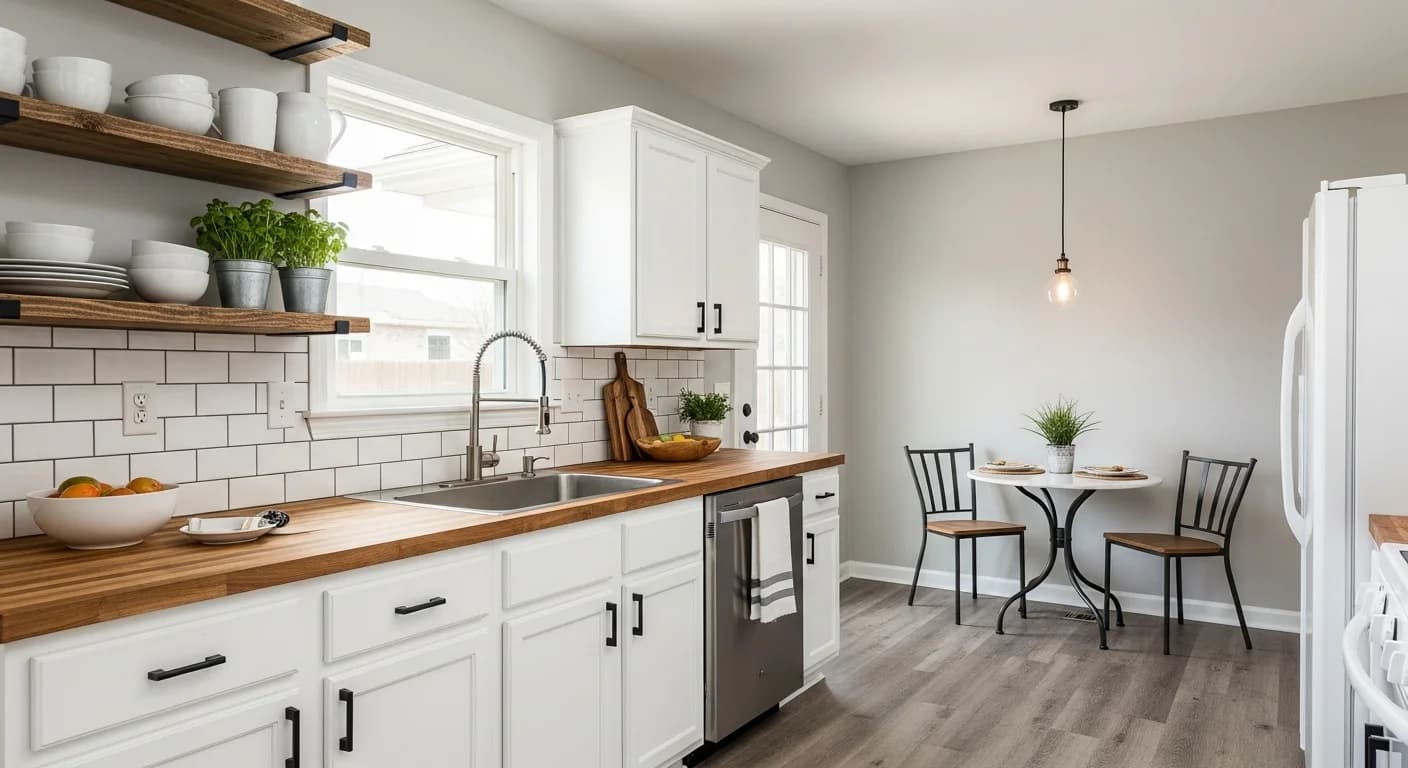
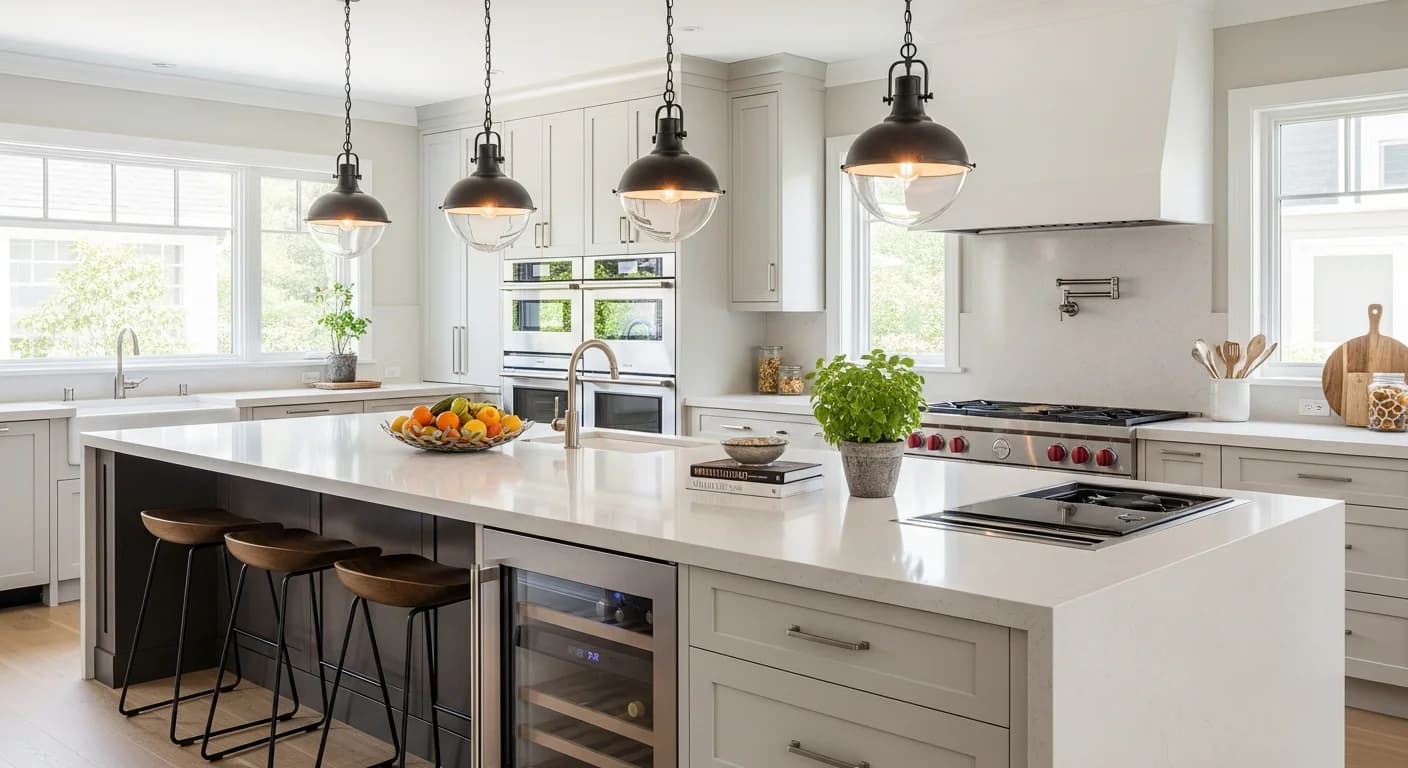
Figuring out how to remodel a kitchen on a budget is the number-one challenge homeowners face when they want a fresh cooking space without a five-figure price tag. The national average kitchen remodel now costs roughly $27,000, and a mid-range renovation can climb to $50,000 or more when cabinets, countertops, and appliances are all replaced. But savvy homeowners are completing stunning kitchen transformations for $8,000 to $15,000 by focusing on high-impact, low-cost upgrades and strategic DIY work.
Whether you are preparing a home for sale, refreshing a dated galley kitchen, or simply tired of laminate countertops from the 1990s, these 12 cost-cutting strategies let you achieve a modern, functional kitchen without draining your savings. Each strategy includes realistic cost ranges, DIY feasibility ratings, and before-and-after impact assessments so you can prioritize the upgrades that deliver the greatest return on investment.
Why Budget Kitchen Remodels Deliver the Best ROI
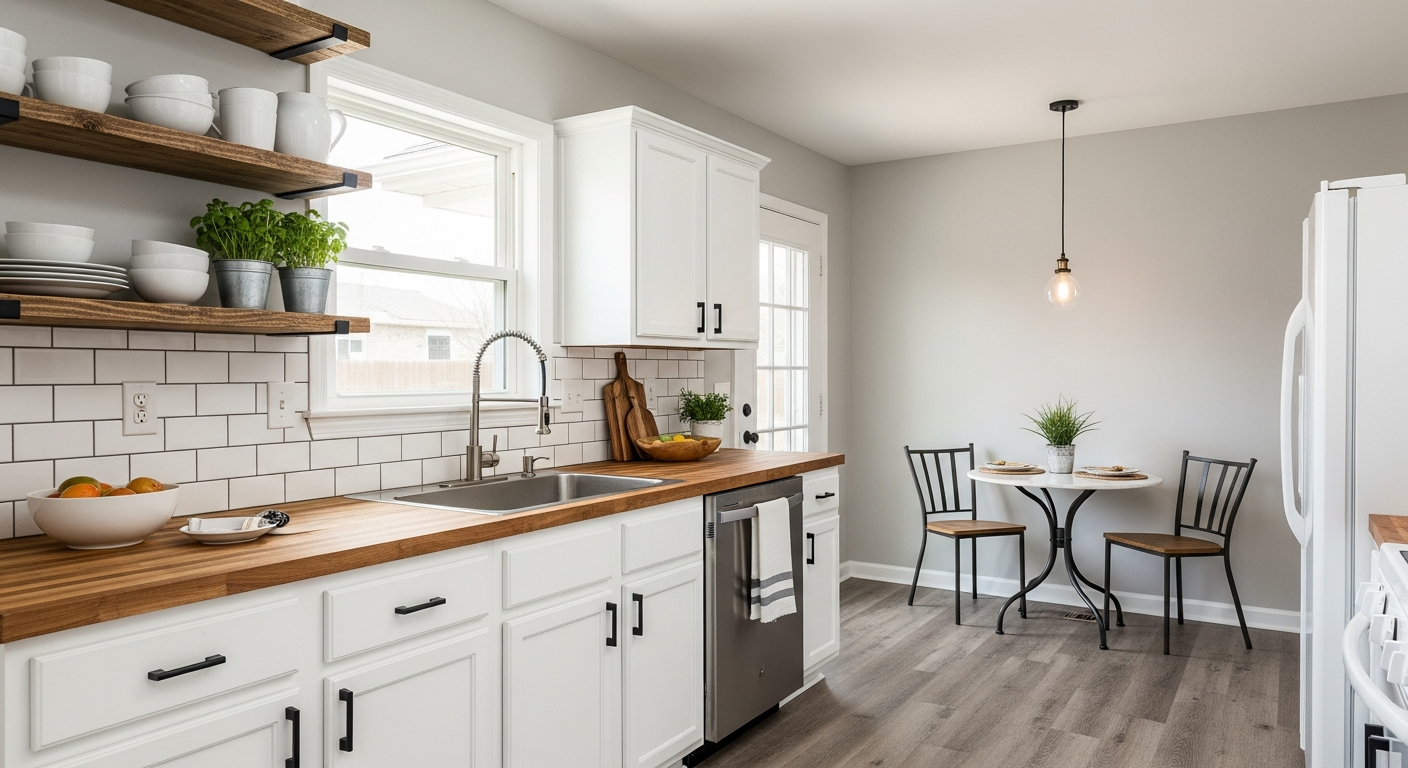
Minor kitchen remodels consistently outperform major renovations in return on investment. According to Remodeling Magazine's 2025 Cost vs. Value Report, a minor kitchen remodel recoups approximately 96% of its cost at resale, compared to just 49% for an upscale major renovation. The reason is straightforward: budget remodels focus on cosmetic improvements that dramatically change the look and feel without the structural work, plumbing relocations, and premium materials that inflate major renovation costs.
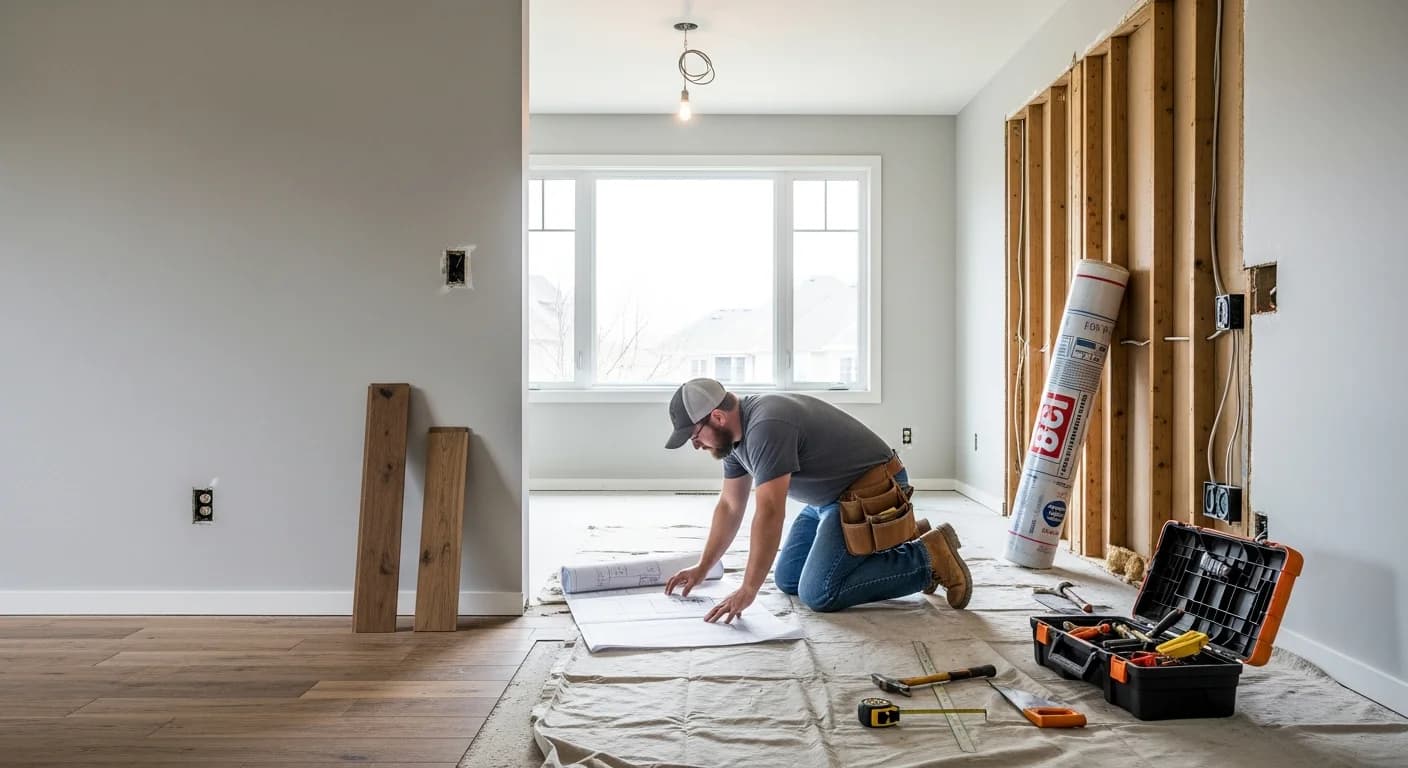
The key principle behind a successful budget kitchen remodel is working with your existing layout. Moving plumbing, gas lines, or electrical runs is where costs escalate rapidly — relocating a sink alone can add $1,500 to $3,500 to your project. By keeping the kitchen footprint intact and focusing on surface-level transformations, you can allocate more of your budget toward visible improvements that make the biggest visual impact. For a full cost breakdown, see our kitchen remodel cost guide.
Strategy 1 — Reface or Paint Cabinets Instead of Replacing
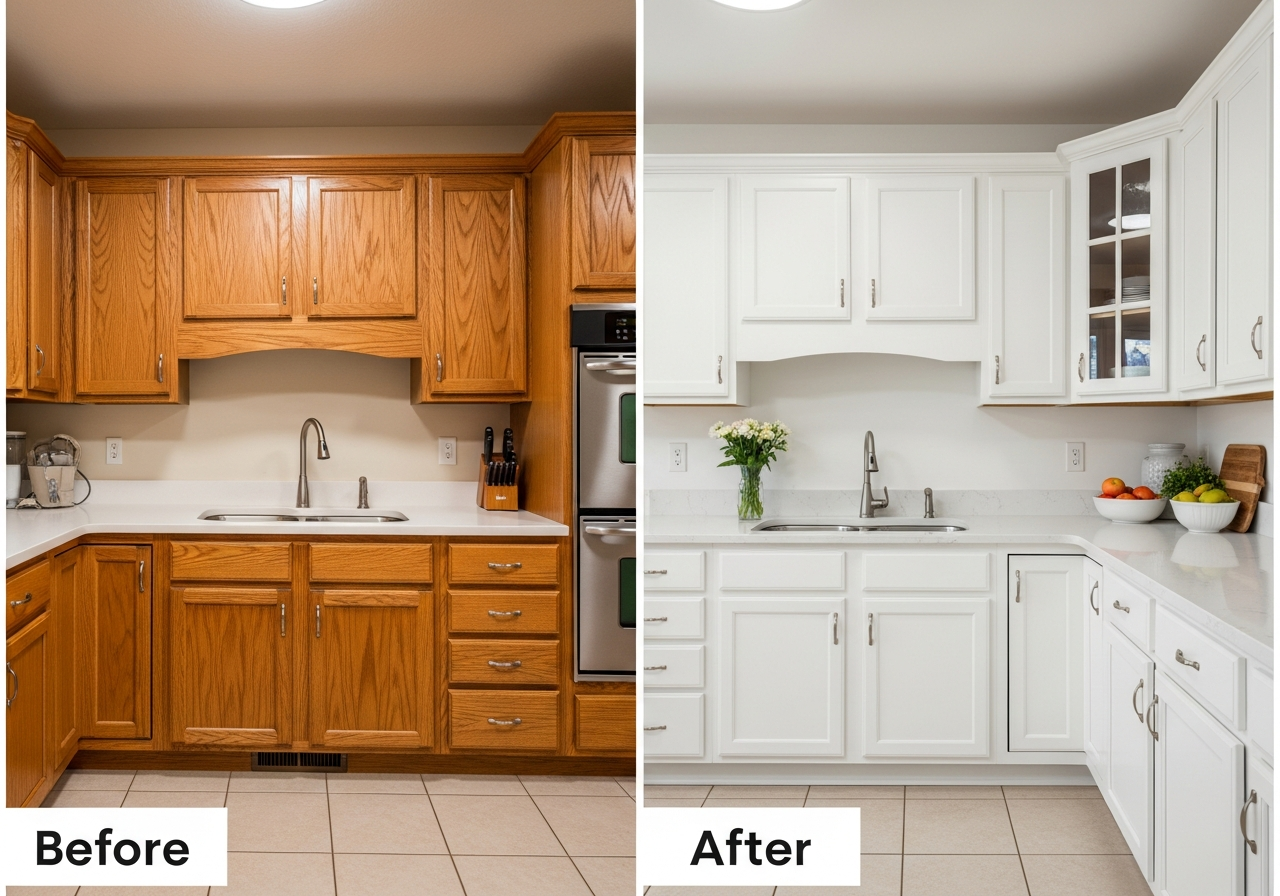
Cabinets consume 30 to 40 percent of a typical kitchen remodel budget. New custom cabinets can cost $15,000 to $30,000, while semi-custom options range from $8,000 to $15,000. Cabinet refacing — replacing just the doors and drawer fronts while keeping the existing boxes — costs $4,000 to $9,000 and delivers a nearly identical visual result. If your cabinet boxes are structurally sound and the layout works, refacing is the single highest-impact budget strategy available.
For an even lower-cost option, painting existing cabinets costs $1,500 to $4,000 professionally or $200 to $600 as a DIY project. The key to a professional finish is proper preparation: remove all doors and hardware, clean with TSP solution, sand lightly with 120-grit sandpaper, apply a bonding primer like Zinsser BIN or KILZ, and use a cabinet-grade paint such as Benjamin Moore Advance or Sherwin-Williams Emerald Urethane. Two thin coats with a foam roller produce a factory-smooth finish. Learn more about this process in our cabinet refacing vs. replacing guide.
Strategy 2 — Install a DIY Backsplash
A new backsplash transforms the visual centerpiece of your kitchen and is one of the most accessible DIY projects for beginners. Subway tile remains the most popular and affordable option at $2 to $5 per square foot for materials. Peel-and-stick tile alternatives cost $3 to $8 per square foot and require no mortar, trowel, or wet saw. A standard 30-square-foot backsplash can be completed in a single weekend for $100 to $300 in materials.
For traditional tile installation, rent a wet saw for $50 per day and budget $30 to $60 for thinset mortar and grout. Start from the center of your focal wall and work outward for symmetrical cuts. Use tile spacers for consistent grout lines, and seal the grout with a penetrating sealer to prevent staining. For backsplash pattern inspiration, browse our kitchen backsplash ideas gallery.
Strategy 3 — Swap Hardware for an Instant Upgrade
Replacing cabinet knobs and pulls is the fastest, cheapest kitchen upgrade with the highest visual return. New hardware costs $2 to $10 per piece, and a typical kitchen with 30 cabinets and drawers requires $60 to $300 in hardware. Choose a finish that complements your faucet and light fixtures — brushed gold, matte black, and brushed nickel are the most popular finishes in 2026. If your existing cabinets have different hole spacing, use a drilling template to ensure consistent placement.
While you are updating hardware, consider replacing the kitchen faucet. A quality pull-down faucet costs $150 to $350 and takes 30 to 60 minutes to install with basic plumbing tools. Modern touchless faucets with spot-resistant finishes add both convenience and a premium feel to a budget renovation.
Strategy 4 — Choose Affordable Countertop Alternatives
Granite and quartz countertops cost $50 to $150 per square foot installed, making them the second-largest kitchen remodel expense after cabinets. Budget-friendly alternatives deliver a similar aesthetic at a fraction of the cost. Butcher block countertops cost $20 to $40 per square foot and add warmth and texture to any kitchen style. Laminate countertops have improved dramatically — premium options like Formica 180fx mimic natural stone convincingly at $10 to $30 per square foot.
| Countertop Material | Cost per Sq Ft (Installed) | Durability | DIY Friendly? |
|---|---|---|---|
| Laminate | $10 – $30 | Moderate | Yes |
| Butcher Block | $20 – $40 | Moderate | Yes |
| Tile | $15 – $35 | High | Moderate |
| Quartz | $50 – $150 | Very High | No |
| Granite | $60 – $150 | Very High | No |
Another budget option is concrete overlay countertops, which can be applied over existing laminate for $8 to $15 per square foot in materials. Products like Ardex Feather Finish create a modern industrial look when sealed properly. For a detailed comparison of countertop materials and their long-term performance, check our kitchen design guide.
Strategy 5 — Add Open Shelving to Replace Upper Cabinets
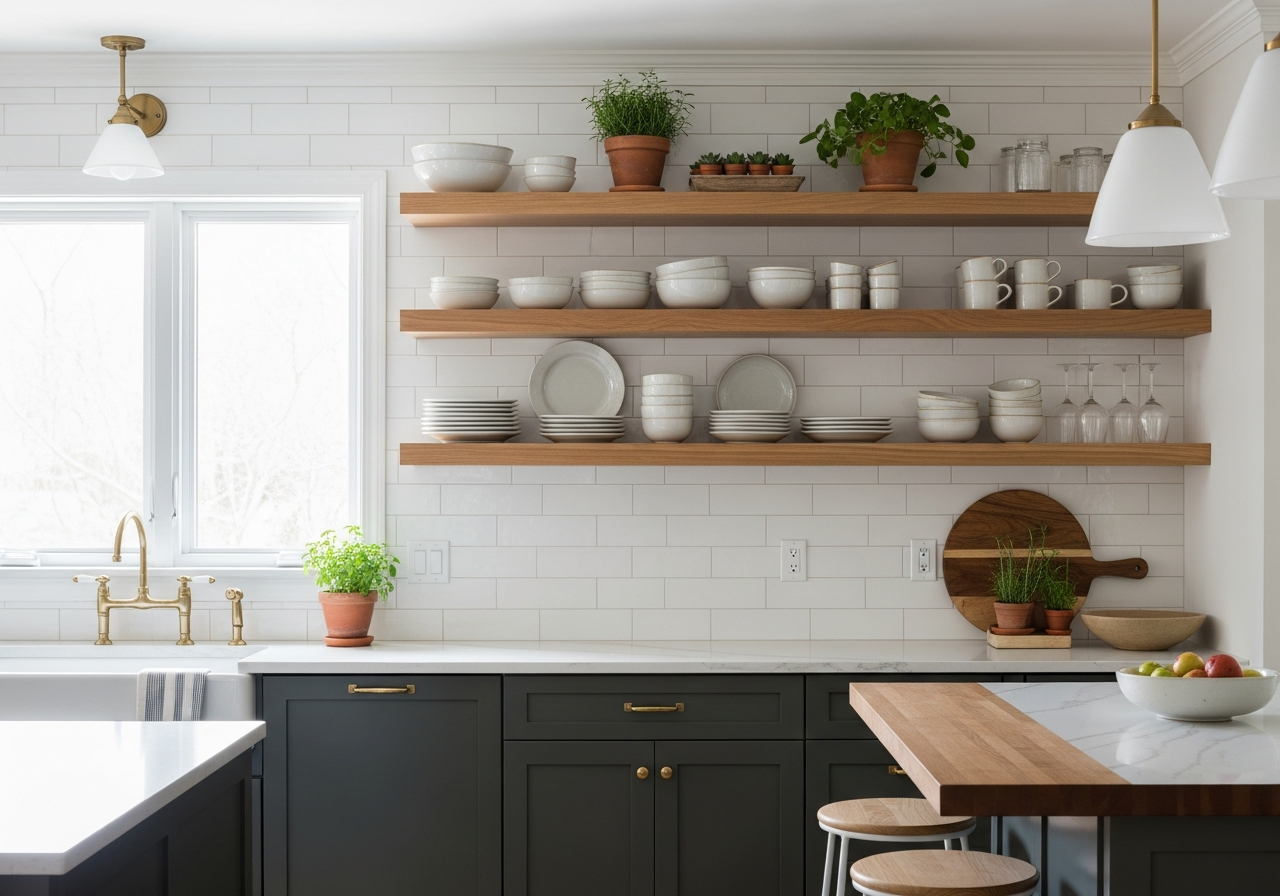
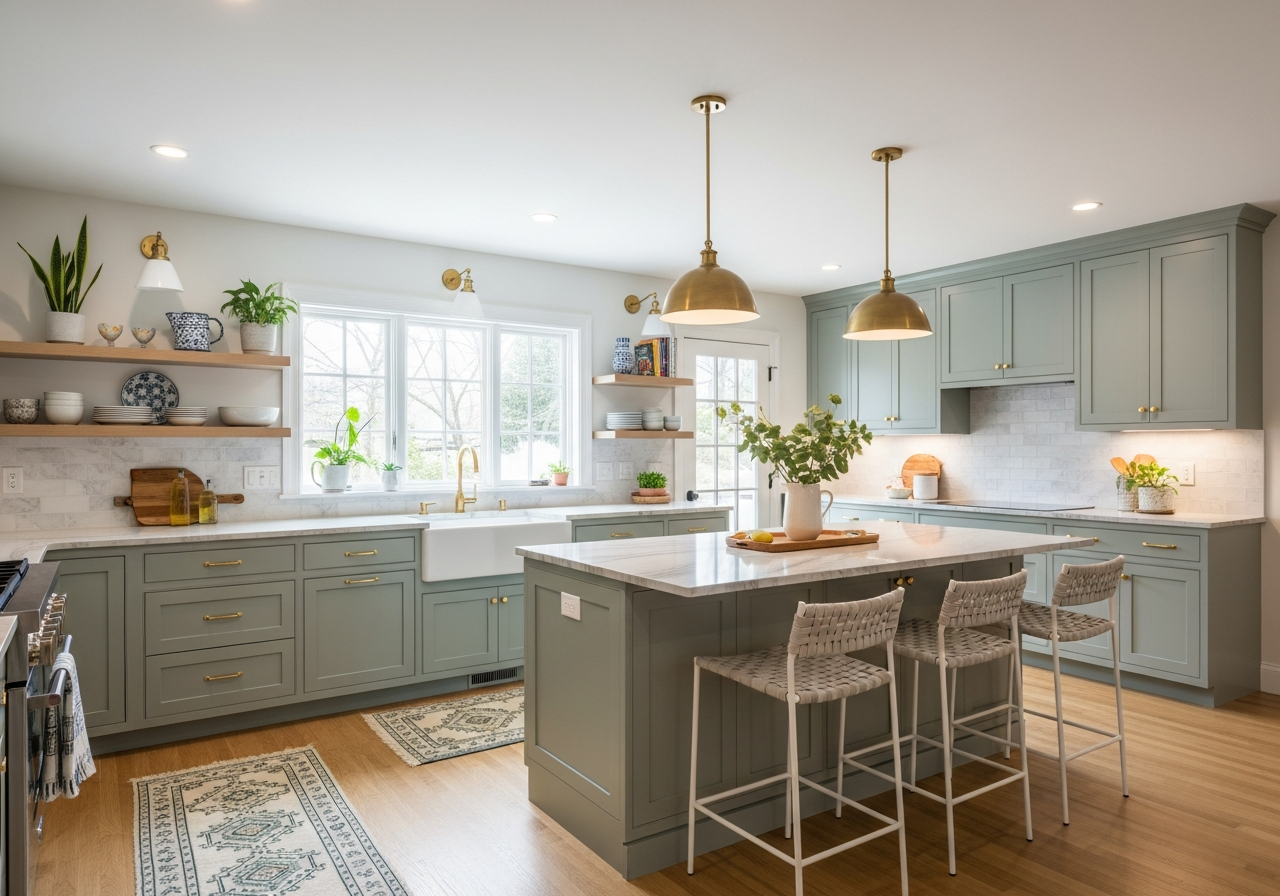
Removing one or two upper cabinets and replacing them with open shelving creates an airy, modern look while saving money on cabinetry. Floating wood shelves cost $15 to $50 per shelf using stained pine or reclaimed wood, compared to $200 to $600 per linear foot for new upper cabinets. Open shelving works best flanking a window, above a coffee station, or on a feature wall where you can display curated dishware, plants, and cookbooks.
The trade-off is maintenance: open shelves require regular dusting and intentional styling. Limit open shelving to 4 to 6 feet of wall space and keep frequently used items accessible while storing less photogenic items behind closed cabinet doors. This hybrid approach gives you the visual lightness of open shelving without the clutter challenges of a fully open kitchen.
Strategy 6 — Shop Smart for Appliances
New appliances account for 15 to 20 percent of a kitchen remodel budget, but strategic shopping can cut appliance costs by 30 to 50 percent. Holiday sales during Presidents Day, Memorial Day, Labor Day, and Black Friday consistently offer the deepest discounts. Scratch-and-dent models from appliance retailers are typically 20 to 40 percent below retail with the same manufacturer warranty — a small cosmetic imperfection on the side of a refrigerator becomes invisible once it is installed between cabinets.
Consider buying appliance packages (refrigerator, range, dishwasher, microwave) from a single manufacturer to qualify for bundle rebates of $300 to $1,000. Energy Star-certified appliances save $50 to $100 annually on utility bills, effectively paying back their modest price premium within two to three years. If your existing appliances function well, simply replacing the panel fronts on a dishwasher or applying stainless steel contact film can update their appearance for under $100 each.
Strategy 7 — Update Lighting for Maximum Impact
Lighting upgrades deliver dramatic visual impact at a modest cost. Replacing a flush-mount ceiling fixture with a pendant light or semi-flush mount costs $50 to $200 for the fixture and 30 minutes of installation time. Under-cabinet LED strip lights ($20 to $60 for a full kitchen) illuminate countertops and create ambient warmth that makes the entire space feel more inviting. Battery-powered puck lights are an even easier option that requires no wiring at all.
For a more significant upgrade, install recessed can lights on a dimmer switch. A four-light recessed lighting kit costs $100 to $200, and installation takes two to four hours for someone comfortable with basic electrical work. Combine recessed ambient lighting with task-focused under-cabinet lights and one decorative pendant over the sink or island for a professionally layered lighting scheme. See our recessed lighting installation guide for step-by-step instructions.
Strategy 8 — Upgrade Flooring Affordably
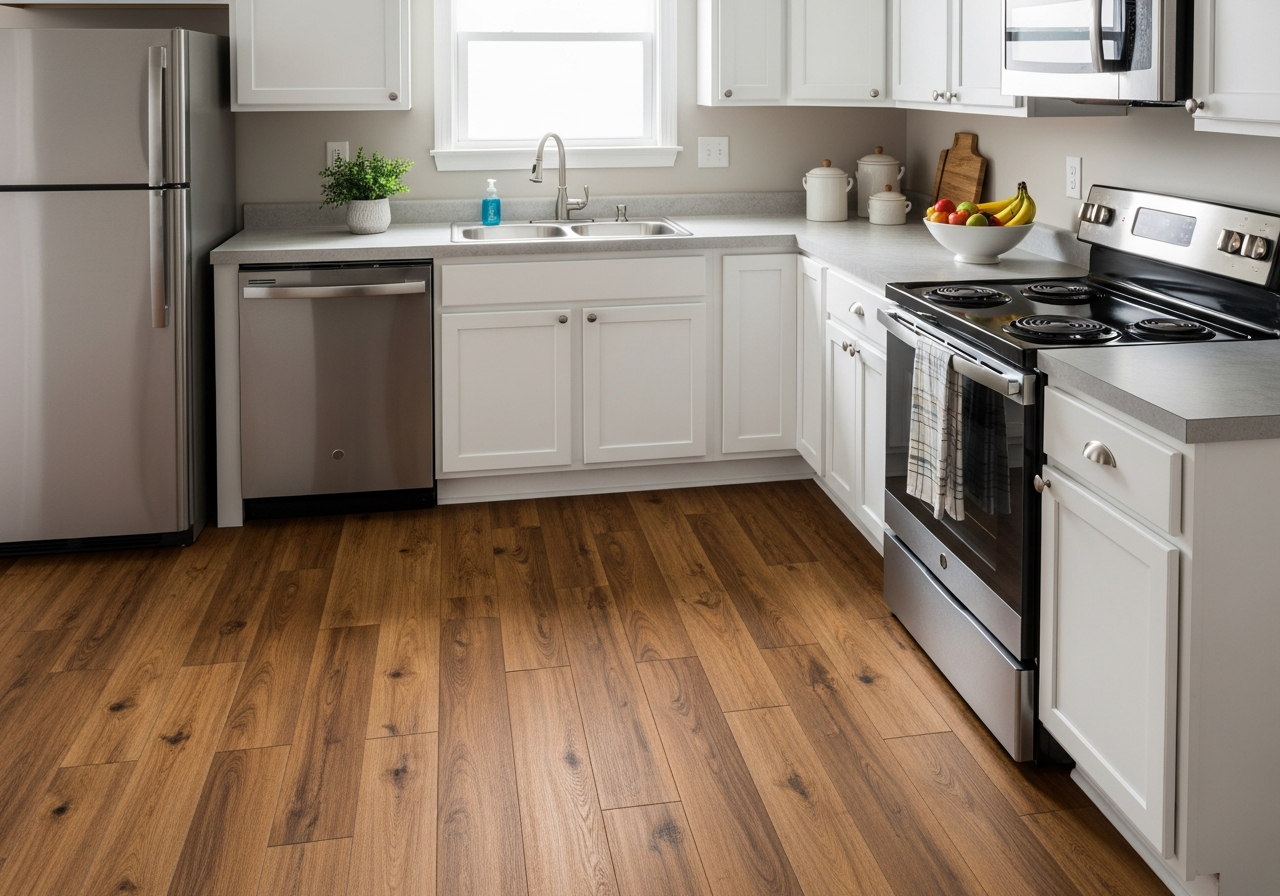
Luxury vinyl plank flooring has become the go-to budget flooring option for kitchen remodels, costing $2 to $5 per square foot for materials. LVP is waterproof, durable, comfortable underfoot, and available in convincing wood and stone patterns. Click-lock installation requires no adhesive and can be completed by a homeowner in a single day for a standard kitchen. A 150-square-foot kitchen floor costs $300 to $750 in LVP materials compared to $1,500 to $3,000 for ceramic tile or hardwood.
If your existing floor is in decent condition, consider painting it. Porch and floor paint in a checkerboard or solid pattern transforms concrete or worn wood floors for under $100. Epoxy floor coatings designed for kitchens cost $50 to $150 and create a seamless, easy-to-clean surface that resists stains and moisture.
Strategy 9 — Phase Your Renovation Over Time
One of the smartest budget strategies is phasing your kitchen remodel into manageable stages rather than tackling everything at once. A phased approach lets you spread costs over several months or even a year while enjoying incremental improvements. Phase one might include painting cabinets and replacing hardware (Month 1), phase two adds a new backsplash and countertops (Month 3), and phase three upgrades appliances and lighting (Month 6). This staggered timeline keeps each phase under $3,000 to $5,000.
Phasing also lets you live with each change before committing to the next, reducing expensive regret-driven modifications. You can adjust your color palette, hardware finish, or material choices as you see how earlier phases look in your space. For a structured phasing plan, consult our kitchen remodel planning guide.
Strategies 10–12 — Quick Wins That Add Up
Strategy 10 — Paint walls and trim. A fresh coat of paint costs $100 to $300 for an entire kitchen and takes a single weekend. Choose light, neutral colors to make the space feel larger and brighter. White, soft gray, and warm greige are the most popular kitchen wall colors for resale value.
Strategy 11 — Replace the sink. A new undermount or farmhouse sink costs $150 to $400 and dramatically changes the look of your countertop area. Pair it with a modern faucet for a cohesive upgrade that draws the eye.
Strategy 12 — Add a kitchen island on wheels. If your kitchen lacks counter space, a rolling butcher-block island costs $150 to $500 at retailers like IKEA, Target, or Wayfair. It provides extra prep surface, storage, and a casual dining spot without the $3,000 to $10,000 cost of a built-in island. For island design ideas, browse our kitchen island ideas guide.
What to DIY vs. What to Hire Out
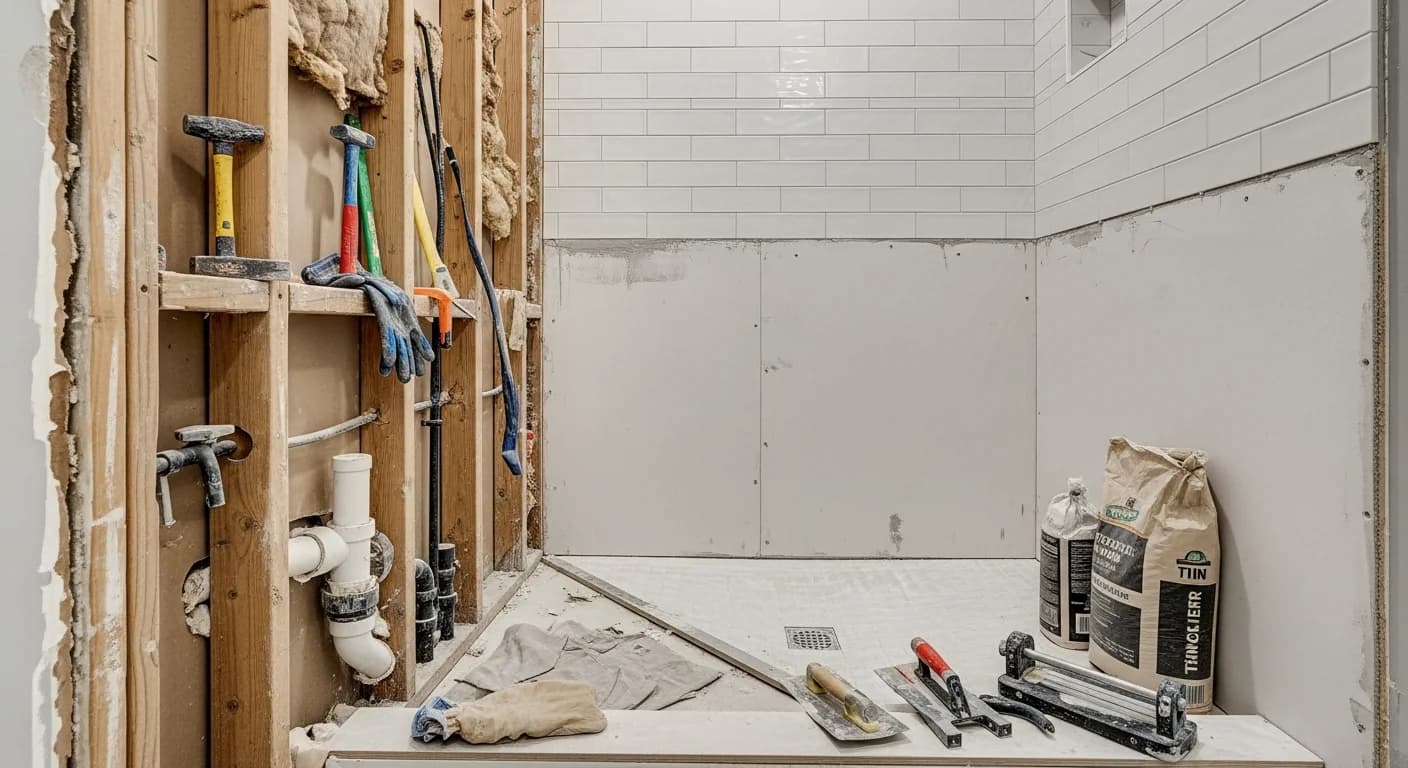
Knowing which tasks to handle yourself and which require a professional is critical for staying on budget without compromising safety. Painting, hardware installation, backsplash tiling, open shelving mounting, and flooring installation are excellent DIY projects that save 40 to 60 percent on labor costs. Electrical work beyond simple fixture swaps, gas line connections, plumbing rough-ins, and countertop templating and installation should be left to licensed professionals.
If you are hiring a contractor for specific tasks, get at least three itemized bids and verify licensing, insurance, and references. A skilled handyman can handle many mid-level tasks at $40 to $75 per hour versus a general contractor's $75 to $150 per hour rate. Read our guide to choosing a kitchen remodel contractor for vetting tips and red flags to watch for. You can also explore DIY kitchen remodel basics for step-by-step beginner instructions.
Frequently Asked Questions
What is the cheapest way to remodel a kitchen?
The cheapest kitchen remodel focuses on cosmetic updates: painting cabinets ($200 to $600 DIY), replacing hardware ($60 to $300), adding a peel-and-stick backsplash ($100 to $250), updating light fixtures ($50 to $200), and painting walls ($100 to $200). This combination produces a dramatic visual transformation for under $1,500 total while keeping all existing appliances, countertops, and flooring in place.
Can you remodel a kitchen for $5,000?
Yes. A $5,000 kitchen remodel typically covers painted cabinets, new hardware, a tile or peel-and-stick backsplash, updated lighting, new faucet, and fresh paint on walls. You may also fit in luxury vinyl plank flooring at this budget. The key constraint is keeping your existing layout, appliances, and countertops. If countertops are a priority, allocate $1,500 to $2,500 for butcher block or laminate and reduce spending in other areas.
Is it worth remodeling a kitchen before selling?
A minor kitchen remodel is one of the highest-ROI home improvements, recouping approximately 96 percent of costs at resale according to the 2025 Cost vs. Value Report. Focus on universally appealing updates: neutral paint colors, clean white or gray cabinets, modern hardware, and updated lighting. Avoid overly personalized choices like bold cabinet colors or trendy countertop materials that may not appeal to all buyers.
How long does a budget kitchen remodel take?
A DIY budget kitchen remodel typically takes three to six weekends spread over one to three months, depending on the scope of work. Painting cabinets alone requires two weekends (one for prep and priming, one for painting). A backsplash takes one weekend. Hardware, lighting, and paint can each be completed in a single day. Phasing the project over several months makes the workload manageable for homeowners with full-time jobs. See our kitchen remodel timeline guide for detailed scheduling.
Should I finance a budget kitchen remodel?
For remodels under $10,000, a 0%-APR credit card or personal savings are usually the most cost-effective financing options. Home equity loans and HELOCs make more sense for projects exceeding $15,000 where the lower interest rate offsets closing costs. Avoid dipping into emergency funds — a budget kitchen remodel should enhance your financial position, not jeopardize it. Explore all options in our kitchen remodel financing guide.
Related Articles
Continue planning your kitchen transformation with these related guides: How to Remodel a Kitchen: Complete Guide covers the full renovation process from start to finish. How to Estimate Kitchen Remodel Cost helps you build an accurate budget. Modern Kitchen Remodel Trends 2026 highlights the latest design directions. And for more room ideas, explore our kitchen design gallery.
Start Planning Your Budget Kitchen Remodel
Ready to see what your kitchen could look like after a budget-friendly makeover? Use our AI Kitchen Remodel tool to upload a photo of your current kitchen and preview transformations instantly. Experiment with painted cabinet colors, backsplash patterns, countertop materials, and lighting styles before spending a single dollar. You can also try the AI Room Designer for broader layout visualization and design exploration.
How to Remodel a Kitchen on a Budget FAQs
Written by
Lisa Wang
Sustainable Design Writer focused on eco-friendly materials, energy efficiency, and budget-conscious home improvement. LEED Green Associate with expertise in low-impact renovation strategies.